LE BOURGET, France: France, Germany and Spain agreed Monday to develop a European fighter jet and air combat system, as they bolster efforts to reduce their dependency on the United States.
Defense ministers from the three countries signed an agreement at the Paris Air Show that lays out how the countries will cooperate on the project, which would include a new-generation combat aircraft.
French President Emmanuel Macron presided over the signing. The project fits in with his ambition to increase European cooperation at a time when the United States under President Donald Trump is showing an increasing reluctance to support the continent militarily.
It’s going to take time though. The Future Combat Air System (FCAS) is not expected to be operational until 2040. Requirements for the air combat system that will also include drones will be decided by 2027 and the development phase should start by 2030.
French Defense minister Florence Parly said the deal is “concrete proof that Europe is capable of anticipating tomorrow’s great strategic challenges.”
“The FCAS is a major asset to tackle the power struggles of the second half of the 21st century. What is happening today is historic,” she said.
Dassault Aviation and Airbus are set to build the jets which will eventually replace Rafale and Eurofighters.
The program was launched by Macron and German Chancellor Angela Merkel in 2017. Airbus says it will be connected and operable with a wide variety of aircraft, satellites, NATO systems as well as land and naval combat systems.
Authorities have not said how much it would cost but the dpa news agency estimates it could be $112 billion.


![]()


France, Germany sign European jet fighter deal
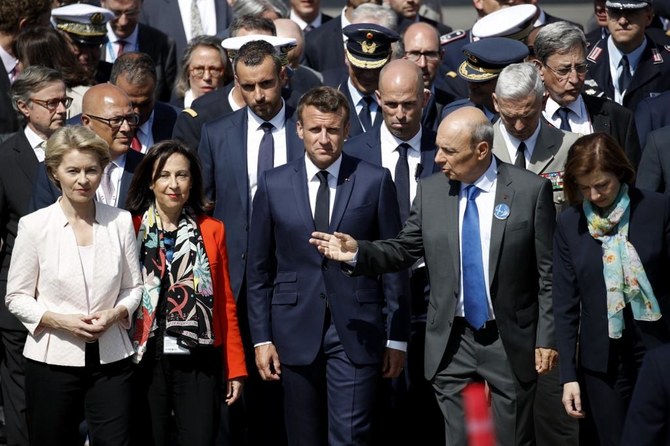
France, Germany sign European jet fighter deal
- The new agreement will include a new generation combat aircraft
- The development phase is expected to start by 2030


UK defense minister suggests Putin’s ‘hidden hand’ behind Iran tactics
LONDON: UK Defense Minister John Healey suggested on Thursday that Russia was influencing Iran’s use of drone attacks in its war with the United States and Israel.
Healey said Russian President Vladimir Putin’s “hidden hand” may be behind some of the tactics deployed by Tehran in the Middle East conflict, which started when the United States and Israel struck Iran on February 28.
He told reporters that officials were analyzing an Iranian-made drone that hit the UK’s Akrotiri air force base in Cyprus on March 1 “for any evidence of Russian or any other foreign components and parts.”
“We will update you and appropriately publish any findings from that when we’ve got them,” he said during a visit to Britain’s military headquarters in Northwood, near London.
“But I think no one will be surprised to believe that Putin’s hidden hand is behind some of the Iranian tactics, potentially some of their capabilities as well, not least because one world leader that is benefiting from the sky high oil prices at the moment is Putin,” he added.
Russia is a close ally of Iran, with the two agreeing last year to help each other counter “common threats.”
US President Donald Trump said Saturday he had no indication Russia was supporting Iran in the war, but that if they were, it was not “helping much.”
Nick Perry, the British military’s chief of joint operations, told Healey there were “definitively” signs of a link between Russia and Iran, including Iran’s use of drones “as learned from the Russians.”
No one was injured when the drone hit a hangar at Akrotiri. British warplanes shot down a further two drones heading for the base the same day.
Guy Foden, a brigadier in the British army, briefed Healey that UK troops based at a military base housing international coalition troops in Irbil, Iraq, had helped shoot down two Iranian drones on Wednesday.
Healey said Russian President Vladimir Putin’s “hidden hand” may be behind some of the tactics deployed by Tehran in the Middle East conflict, which started when the United States and Israel struck Iran on February 28.
He told reporters that officials were analyzing an Iranian-made drone that hit the UK’s Akrotiri air force base in Cyprus on March 1 “for any evidence of Russian or any other foreign components and parts.”
“We will update you and appropriately publish any findings from that when we’ve got them,” he said during a visit to Britain’s military headquarters in Northwood, near London.
“But I think no one will be surprised to believe that Putin’s hidden hand is behind some of the Iranian tactics, potentially some of their capabilities as well, not least because one world leader that is benefiting from the sky high oil prices at the moment is Putin,” he added.
Russia is a close ally of Iran, with the two agreeing last year to help each other counter “common threats.”
US President Donald Trump said Saturday he had no indication Russia was supporting Iran in the war, but that if they were, it was not “helping much.”
Nick Perry, the British military’s chief of joint operations, told Healey there were “definitively” signs of a link between Russia and Iran, including Iran’s use of drones “as learned from the Russians.”
No one was injured when the drone hit a hangar at Akrotiri. British warplanes shot down a further two drones heading for the base the same day.
Guy Foden, a brigadier in the British army, briefed Healey that UK troops based at a military base housing international coalition troops in Irbil, Iraq, had helped shoot down two Iranian drones on Wednesday.
Latest updates



© 2026 SAUDI RESEARCH & PUBLISHING COMPANY, All Rights Reserved And subject to Terms of Use Agreement.