KARACHI: One woman lawmaker’s campaign against misogyny in Pakistan’s impoverished Balochistan province has turned into a baby-sized ray of hope for working women as the provincial assembly announced this week that it would set up a daycare facility on its premises.
Liaquat Shahwani, spokesperson of the Balochistan government, said the daycare center would have qualified attendants, toys and “an environment where the children don’t miss their mothers.”
Pakistan’s National Assembly opened a daycare center in 2017 but this is the first time a provincial assembly will have a facility offering care for children of working parents.
The move comes after a campaign launched by Mahjabeen Sheran, a lawmaker who serves as the provincial secretary for law, parliamentary affairs and women’s development, and hails from Kech, one of Pakistan’s lowest ranked districts in gender parity.
In April, Sheran faced a child-care emergency when her babysitter couldn’t show up and she had to decide between taking care of her nine-month-old baby Ayan Sheran or attending a parliamentary session. She decided to take her baby to work with her.
The move caused an uproar on the floor of the house as Sheran was jeered at and taunted, and ordered to leave the assembly where men are in a 54:11 majority. When she demanded written orders, lawmakers from all political parties forced her out, her confused baby boy cradled in her arms.
“They were staring as though I had done something very wrong,” Sheran told Arab News. “The comments were so insulting for a woman and a mother.”
Devastated and embarrassed, Sheran didn’t show up to the next session.
“I was completely shattered, but when I saw social media flooding with messages in my support I stood up, not only for myself but for the right of every working woman whose natural attachment with her children is considered a hurdle by bigots,” she said.
Sheran belongs to the ruling Balochistan Awami Party, and in the weeks that followed her removal from the assembly floor, she held meetings with several top officials, including the province’s Chief Minister Jam Kamal Khan, who finally said he would open a daycare center in the Balochistan assembly for representatives as well as employees.
Akhtar Hussain Langove, a male member of the Balochistan assembly, said with the exception of a few, most men in the assembly stood by their fellow female lawmakers in their campaign for social inclusion.
“What happened on the floor of the house should never have occurred,” he said. “Our female colleagues have double the responsibilities; they are legislators but they are also mothers who have to take care of their children.”
The new center is slated for opening in a few weeks but Sheran says she won’t stop there: her mission now is to have a new law passed to make it mandatory for offices and workplaces across the province to provide daycare services.
“Every building has mandatory services like restrooms and parking, so why shouldn’t offices have daycare centers to help more women be employed and contribute?” Sheran said.
“We, the ones being considered the most backward province, will prove this is possible, and others will follow,” Sheran said as she posed for a photograph with her son, the baby who has caused a small revolution in conservative Balochistan. “The future belongs to women. No one can’t strike us out through any excuse. Not anymore.”


![]()

In Pakistan’s Balochistan province, a baby-sized ray of hope for women lawmakers
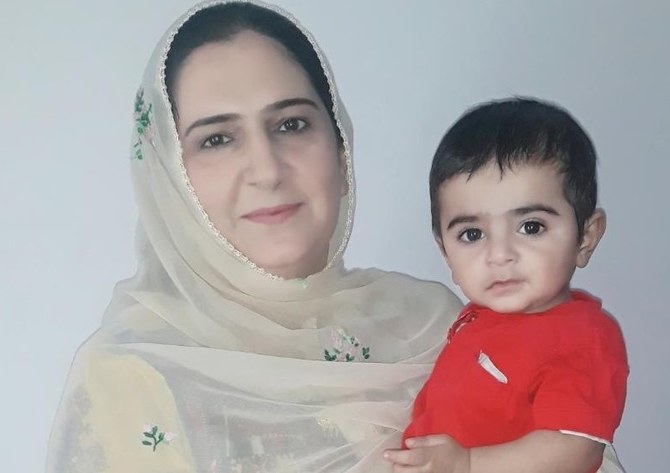
In Pakistan’s Balochistan province, a baby-sized ray of hope for women lawmakers
- Impoverished province will be first to set up daycare facilities at its provincial assembly
- MP Mahjabeen Sheran was forced to leave the assembly floor in April for bringing along her baby
Latest updates


© 2026 SAUDI RESEARCH & PUBLISHING COMPANY, All Rights Reserved And subject to Terms of Use Agreement.