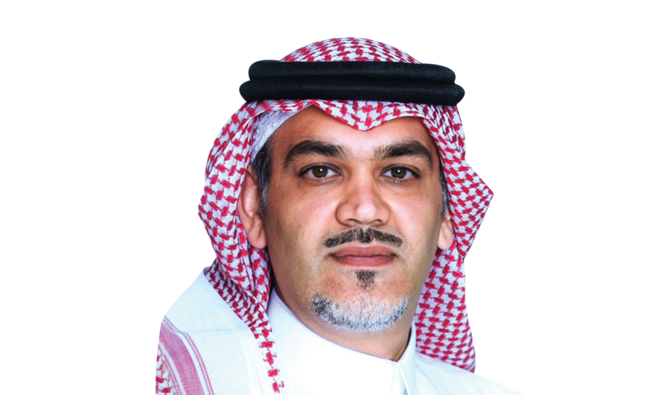
Fahd Al-Saif, president of the Debt Management Office at the Saudi Ministry of Finance

Fahd Al-Saif
Updated 15 June 2019
Follow

Fahd Al-Saif, president of the Debt Management Office at the Saudi Ministry of Finance

  • Previously, Al-Saif was deputy managing director of the Saudi British Bank (SABB), part of the HSBC Group

Fahd Al-Saif is president of the Debt Management Office (DMO) at the Saudi Ministry of Finance.

He is head of the ministry’s Public, Private and Privatization Office and a board member in the National Center of Privatization.

Before his appointment as president of the DMO in July 2017, Al-Saif was deputy managing director of the Saudi British Bank (SABB), part of the HSBC Group.

He was previously a board member of HSBC Saudi Arabia Ltd. and a member of the advisory committee of the Capital Markets Authority.

Al-Saif, who holds a bachelor’s degree in MIS from King Fahd University of Petroleum and Minerals, has more than 20 years’ experience in corporate, investment banking, global banking and capital markets with SABB and HSBC. 

He was HSBC’s Saudi Arabia principal contact for corporate finance and capital markets in relation to ECM (IPO, rights issues, private placements) and DCM (sukuk and bond issuance, banks loans and syndication and financing services solutions).

The DMO is responsible for securing the Kingdom’s financing needs and has a key role in the implementation of structural, economic and financial reforms in line with the National Transformation Program 2020 and Saudi Vision 2030.

The office recently received three GlobalCapital awards — “Most Impressive Emerging Markets Issuer,” “Most Impressive Middle East Sovereign Issuer” and “Most Impressive Middle East Funding Official.” Al-Saif accepted the awards at a high-level gathering of industry leaders, government representatives and bankers in London.


Ramadan in Madinah: A blend of tradition and modernity

Updated 5 sec ago
Follow

Ramadan in Madinah: A blend of tradition and modernity

  • Ramadan iftar tables in the neighborhoods have evolved into a community initiative that promotes solidarity and neighborliness

MADINAH: In the holy city of Madinah, Ramadan highlights a seamless blend of ancestral traditions and modern celebrations, as residents decorate homes and streets with lanterns.

Women play a central role in creating this spiritual atmosphere, transitioning from handmade ornaments to curated prayer spaces and Ramadan diaries for children.

Social solidarity remains the city’ cornerstone, manifested through the exchange of Ramadan baskets and the organization of massive communal iftar meals at the Prophet’s Mosque and in local neighborhoods.

Ramadan iftar tables in the neighborhoods have evolved into a community initiative that promotes solidarity and neighborliness.

The project has been undertaken by “Mujtamaei,” the Neighborhood Centers Association in Madinah Region, in partnership with the Madinah Regional Municipality, and covers 97 locations across residential districts.

The initiative organizes daily iftar gatherings that bring together residents, volunteers, and partner entities, reflecting strong community cohesion and fostering volunteerism and social connection among neighborhood residents and visitors during the holy month.

The program provides more than 80,000 iftar and sahoor meals, benefiting over 40,000 individuals, with 1,600 volunteers overseeing site organization and service delivery in accordance with quality and safety standards.

The project is part of a community development system that expands annually, focusing on increasing volunteer participation and strengthening partnerships, thereby reinforcing social values and revitalizing the spirit of neighborliness in Madinah.