GENEVA: A World Health Organization panel decided on Friday not to declare an international emergency over Congo’s Ebola outbreak despite its spread to Uganda this week, concluding such a declaration could cause too much economic harm.
Congo’s epidemic is the second worst ever, with 2,108 cases of Ebola and 1,411 deaths since last August. This week it reached Uganda, where three cases were recorded, all in people who had arrived from Congo. Two of them died.
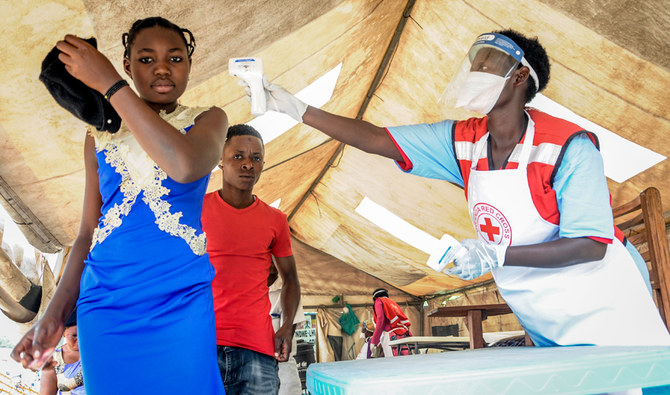
In a statement, the panel of 13 independent medical experts on the WHO’s Emergency Committee urged neighboring “at risk” countries to improve their preparedness for detecting and managing imported cases, “as Uganda has done.” “This is not a global emergency, it is an emergency in the Democratic Republic of Congo, a severe emergency and it may affect neighboring counties,” Dr. Preben Aavitsland, the panel’s acting chair told a news conference at the UN agency’s headquarters in Geneva.
“It was the view of the Committee that there is really nothing to gain by declaring a PHEIC (Public Health Emergency of International Concern), but there is potentially a lot to lose.”
Such a declaration would risk creating restrictions on travel or trade “that could severely harm the economy in the Democratic Republic of Congo,” Aavitsland said.
WHO director-general Tedros Adhanom Ghebreyesus, speaking by telephone from Kampala, said: “The spread of Ebola to Uganda is a new development but the fundamental dynamics of the outbreak haven’t changed.”
Ugandan authorities have now drawn up a list of 98 contacts, or contacts of contacts, potentially exposed to the Ebola virus, of whom 10 are considered “high risk,” said Mike Ryan, executive director of WHO’s emergencies program. Vaccination of those contacts and health workers with a Merck experimental vaccine is to start on Saturday, he said.
Some medical groups had urged the committee to declare an emergency which would have led to boosting public health measures, funding and resources.
Lawrence Gostin, a global health law professor at Georgetown University Law School, voiced disappointment that the panel had failed to declare an emergency for the third time.
“The @WHO was criticized for delay in declaring a PHEIC in W Africa. Will it’s failure in DRC affect legitimacy?” Gostin tweeted. He said he admired the panel members but disagreed with their conclusion.
Only four emergencies have been declared in the past decade, including the worst ever Ebola outbreak, which hit West Africa in 2014-2016. The others were an influenza pandemic in 2009, polio in 2014 and the Zika virus in 2016.
Ryan told Reuters on Friday that there had been no sign of local transmission of Ebola virus in Uganda.
“No evidence yet...But we’re not out of the woods yet,” he said, noting that the incubation period is up to 21 days.


![]()

WHO panel decides not to declare international Ebola emergency
WHO panel decides not to declare international Ebola emergency
- Such a decision would lead to boosting public health measures, funding and resources, and could include recommendations on trade and travel
- There have been 2,084 cases and 1,405 deaths since being declared in August


Latest updates


© 2026 SAUDI RESEARCH & PUBLISHING COMPANY, All Rights Reserved And subject to Terms of Use Agreement.