


RIYADH: The King Salman Humanitarian Aid and Relief Center (KSRelief) hosted a symposium titled “Saudi humanitarian aid, past and present” on Wednesday on the sidelines of the Warsaw Humanitarian Expo 2019.
The Warsaw Humanitarian Expo 2019 (WHE2019), from June 11 to 13, run by the Ministry of Foreign Affairs, is the first expo on humanitarian and development matters organized in Poland, and the only one taking place in central and eastern Europe.
The symposium was attended by KSRelief Supervisor General Abdullah Al-Rabeeah, Saudi Ambassador to Poland Mohammed bin Hussain Madani, officials from the Saudi Ministry of Foreign Affairs and diplomatic corps, humanitarian and human rights organizations, and media professionals.
Speaking at the symposium, Al-Rabeeah highlighted that King Salman had supported humanitarian work early on through responsibilities including heading several government and grassroots committees for disaster relief in Egypt, Pakistan, Sudan, Bosnia and Herzegovina.
The KSRelief chief added that the Kingdom’s foreign aid efforts had reached record amounts in the past few years, with the volume of Saudi aid, provided impartially to 81 countries, exceeding $86 billion between 1996 and 2018.
King Salman gave directives on May 13, 2015 to establish KSRelief to provide humanitarian and relief programs.
“Since its inception, KSRelief has implemented 1,011 projects in 44 countries worth $3,439,139,000, with 225 projects worth $389,682,000 targeting women and 234 projects worth $529,463,000 targeting children,” he said.
Al-Rabeeah added: “Saudi Arabia hosts 12 million immigrants of different nationalities representing 37 percent of its population, making it rank second in the world in the number of immigrants, preceded only by the United States.”
He noted that 561,911 of these immigrants are Yemenis, 262,573 are Syrians and 249,669 are from Myanmar.
“Under the guidance of King Salman, KSRelief has established the first transparent platform in the region, the Saudi Humanitarian Aid Platform, to act as an accurate and reliable reference that provides information and guides researchers and media professionals on the Kingdom’s external contributions, which are being built over three stages, the first of which includes documenting aid since 2007, the second includes documenting aid since 1996, while the third includes documenting aid since 1975.”
KSRelief had recently launched the electronic “Volunteer Platform,” which allows donors to make contributions online using credit cards and other online payment methods and track programs supported by KSRelief.
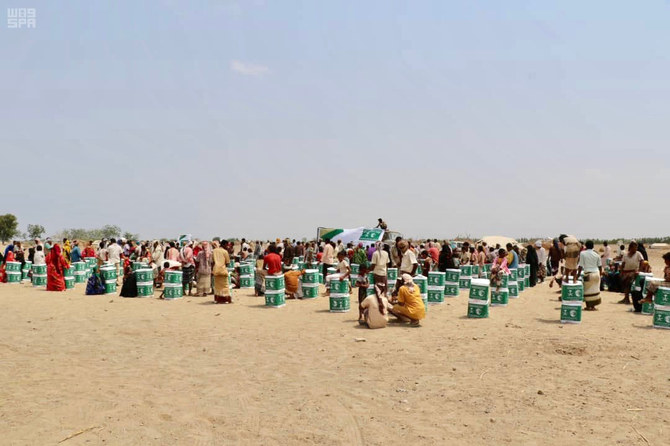
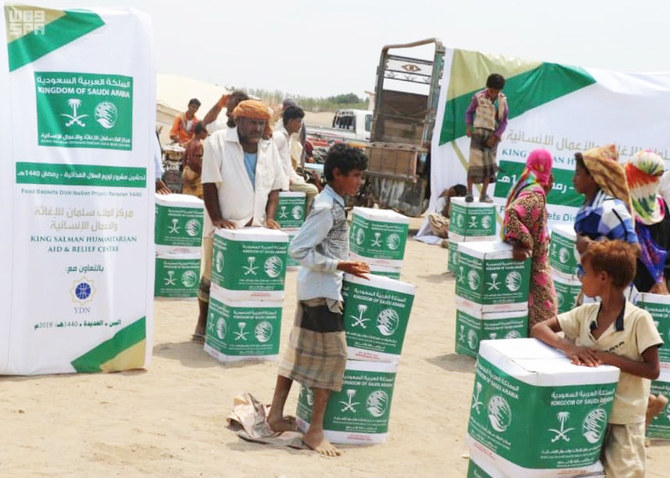
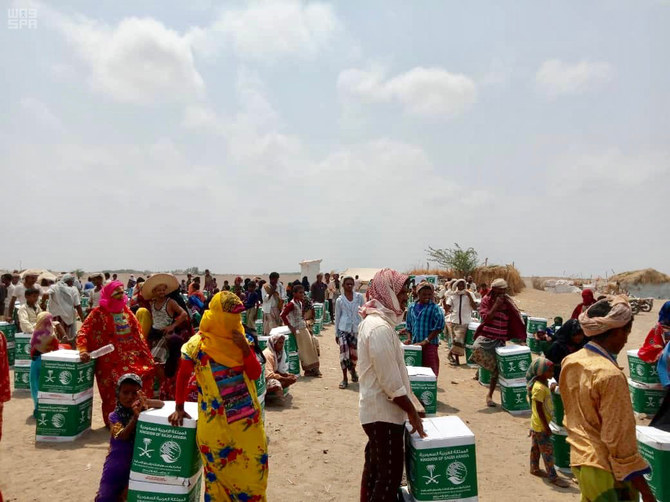
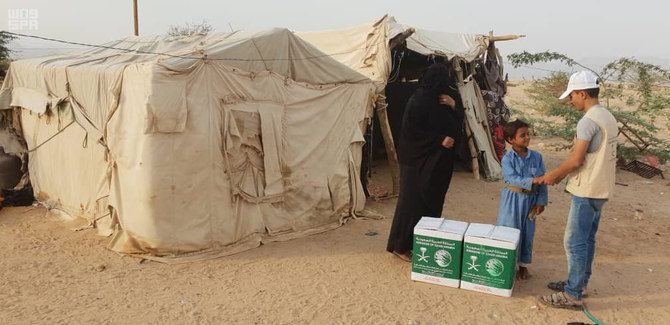
He said that Saudi aid to Yemen had exceeded $12 billion since 2015, including aid provided through KSRelief, aid provided to Yemeni refugees inside the Kingdom, development and government assistance, and support allocated to the Central Bank of Yemen.
Al-Rabeeah highlighted that the Saudi program to separate conjoined twins successfully conducted 74 separations in 20 countries across three continents.
He said that KSRelief supported 78 projects worth $352,966,000 in Palestine, 191 projects worth $267,056,000 in Syria, and 11 projects worth $6,188,000 in Djibouti.
On the margins of the WHE 2019, Al-Rabeeah met Minister of Foreign Affairs Jacek Czaputowicz and reviewed bilateral relations between the Kingdom and Poland, and discussed means of enhancing them in the humanitarian field.


