

Survivors of Houthi missile attack describe moment explosion ripped through Abha airport

1 / 12
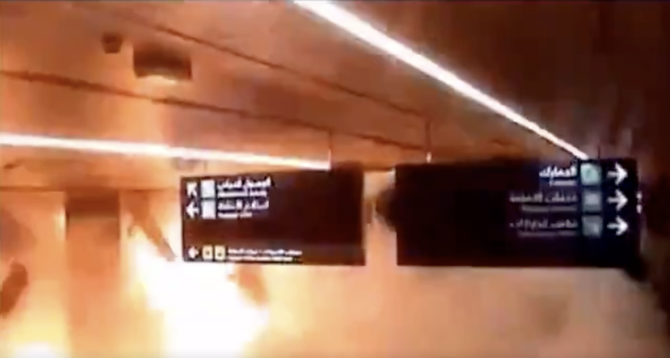
The Iran-aligned Houthi movement, which is locked in a war with the Arab coalition in Yemen, claimed responsibility for the attack on Abha Airport. (Screenshot/Twitter)
2 / 12
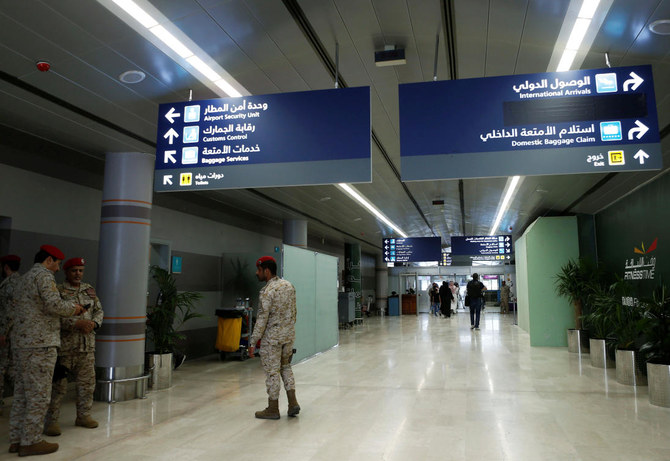
Saudi security officers are seen at Saudi Arabia's Abha airport, after it was attacked by Yemen's Houthi group in Abha, Saudi Arabia June 13, 2019. (Reuters)
3 / 12
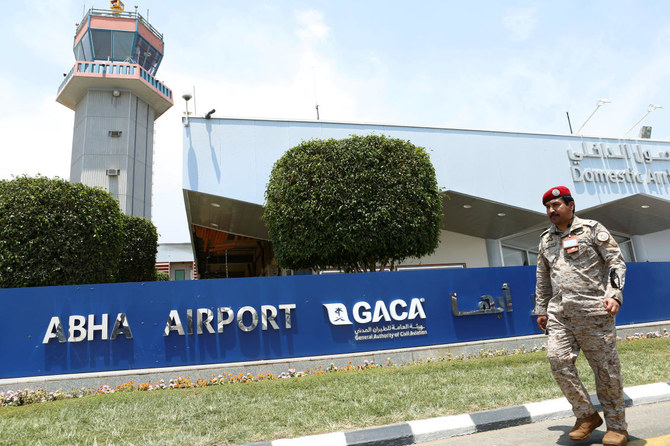
A Saudi security officer walks past the Saudi Arabia's Abha airport, after it was attacked by Yemen's Houthi group in Abha, Saudi Arabia June 13, 2019. (Reuters)
4 / 12
Workers fix the damages of Saudi Arabia's Abha airport, after it was attacked by Yemen's Houthi group in Abha, Saudi Arabia June 13, 2019. (Reuters)
5 / 12
A picture taken during a guided tour with the Saudi military on June 13, 2019 shows a worker fixing inspecting the damage at Abha airport in the popular mountain resort of the same name in the southwest of Saudi Arabia, one day after a Yemeni rebel missile attack on the civil airport, wounding 26 civilians. (AFP)
6 / 12
A picture taken during a guided tour with the Saudi military on June 13, 2019 shows a worker fixing inspecting the damage at Abha airport in the popular mountain resort of the same name in the southwest of Saudi Arabia, one day after a Houthi missile attack on the civil airport, wounding 26 civilians. (AFP)
7 / 12
A picture taken during a guided tour with the Saudi military on June 13, 2019 shows workers fixing the damage at Abha airport in the popular mountain resort of the same name in the southwest of Saudi Arabia, one day after a Yemeni rebel missile attack on the civil airport, wounding 26 civilians. (AFP)
8 / 12
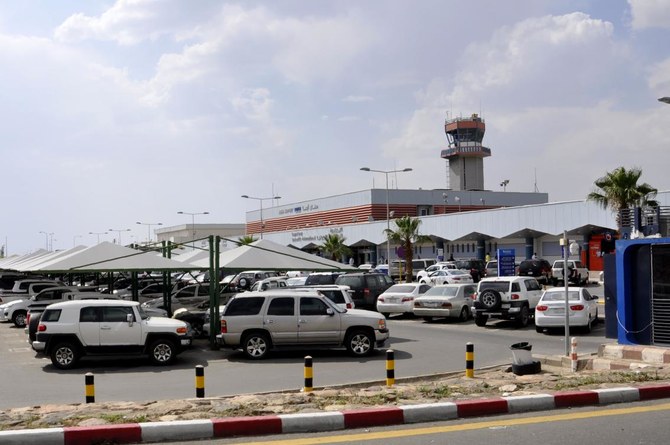
Cars are parked in front of Abha airport in southwestern Saudi Arabia's mountainous resort, on June 12, 2019. (AFP)
9 / 12
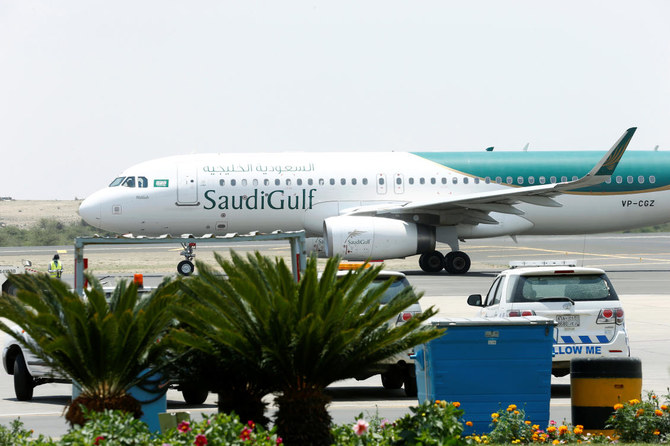
A Saudi Gulf airplane is seen at Saudi Arabia's Abha airport, after it was attacked by Yemen's Houthi group in Abha, Saudi Arabia June 13, 2019. (Reuters)
10 / 12
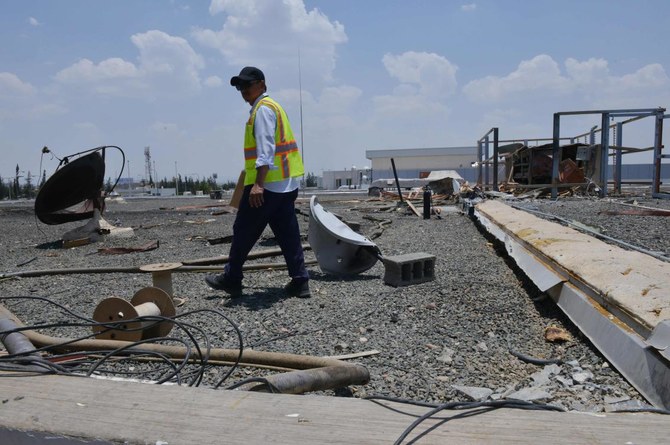
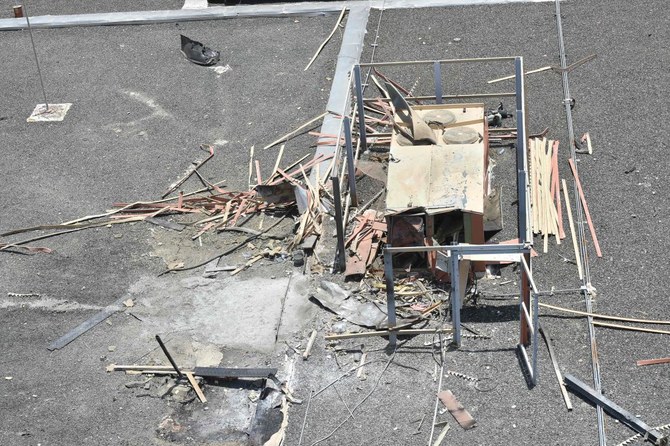
A picture taken during a guided tour with the Saudi military on June 13, 2019 shows damage on the roof of Abha airport in the popular mountain resort of the same name in the southwest of Saudi Arabia, one day after a Houthi missile attack on the civil airport, wounding 26 civilians. (AFP)
11 / 12
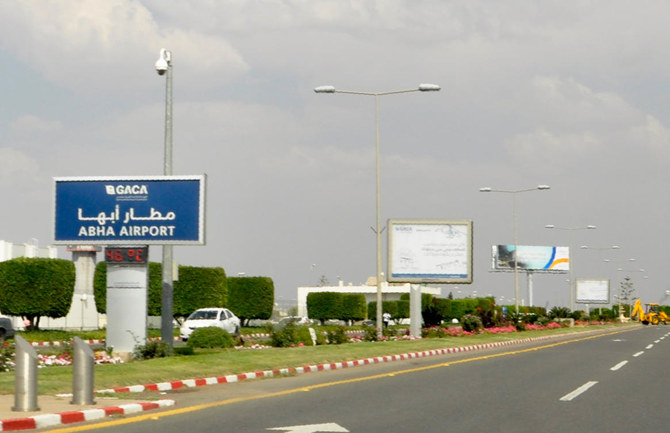
A sign on the side of a road leads the way to Abha airport in southwestern Saudi Arabia's mountainous resort, on June 12, 2019. (AFP)
12 / 12
Workers fix the damages of Saudi Arabia's Abha airport, after it was attacked by Yemen's Houthi group in Abha, Saudi Arabia June 13, 2019. (Reuters)
Updated 15 June 2019
Follow

Survivors of Houthi missile attack describe moment explosion ripped through Abha airport

  • The Houthis have for years targeted Saudi cities and infrastructure with drones and missiles
  • The strike on a civilian target inside Saudi Arabia came at a time of elevated tensions in the region between Iran and Gulf Arab allies of the United States

ABHA: As Nadia Assiri waited inside a regional Saudi Arabian airport for her sister to arrive from the capital Riyadh, an explosion threw her to the floor and ignited a fire.
Nearby, shrapnel tore through the arm and leg of another woman, Indian-national Um Karim, when a missile hit the arrivals hall of Abha airport where she had been sitting in the early hours of Wednesday morning after a night flight.
"While we were sitting we heard a noise and then saw fire and the blast threw me far," said Assiri, a 33-year-old Saudi.
Um Karim's son-in-law said that the explosion shook the car as the family came to pick her up. "I was scared there would be a second blast," he told Reuters.
The Houthis said a cruise missile strike destroyed the control tower.
The Iran-aligned Houthi movement, which is locked in a war with the Arab coalition in Yemen, claimed responsibility for the attack. The coalition said 26 people were hurt, including Saudi, Yemeni and Indian nationals.
The Coalition responded on Thursday with air strikes around the Houthi-held Yemeni capital Sanaa that it said targeted the group's military assets.
The Saudi airport that was struck, Abha, is about 200 km (125 miles) north of the border with Yemen. When media visited the airport on Thursday, it smelled of fresh paint. The flat bitumen roof of the arrivals hall had been patched up, but scorch marks could be seen.


The Houthis, who control Yemen's capital and the territory where most of the population lives, have for years targeted Saudi cities and infrastructure with drones and missiles, most of which have been intercepted by Saudi defence systems.
The strike on a civilian target inside Saudi Arabia came at a time of elevated tensions in the region between Iran and Gulf Arab allies of the United States.
"The fact that civilians have been injured (in Abha) puts additional pressure on the Saudis to respond to this attack. This just adds more fuel to the fire," said Jean-Marc Rickli, a defence expert at the Geneva Centre for Security Policy.
On Wednesday, the coalition said evidence indicated that Iran's Revolutionary Guards had supplied the Houthis with the weapon used in the Abha attack. The spokesman for the Arab coalition said on Thursday the fact the missiles were not intercepted did not mean there was a failure in Saudi defences.
Last month the Houthis claimed responsibility for an armed drone strike on two oil-pumping stations in Saudi Arabia, the first time they had struck the kingdom's oil infrastructure.
The coalition intervened in Yemen in 2015 to try to restore a government ousted from power in Sanaa by the Houthis.


Al-Qatif Street Food Festival celebrates Saudi culinary arts

Updated 5 sec ago
Follow

Al-Qatif Street Food Festival celebrates Saudi culinary arts

  • The festival showcases Saudi food culture as a vital component of national identity

AL-QATIF: The Culinary Arts Commission has launched the Al-Qatif Street Food Festival, which runs until Dec. 30.

The festival offers visitors a rich cultural experience that highlights Saudi culinary arts in a setting that reflects the authenticity and diversity of the Kingdom’s national cuisine, reinforcing the presence of heritage within the contemporary cultural landscape.

The festival showcases Saudi food culture as a vital component of national identity through live cooking stations at which traditional dishes are prepared and presented by experts.

The event features six pavilions that allow visitors to explore a wide variety of foods and beverages made from local ingredients, reflecting the Kingdom’s diverse environments and regional flavors.

The festival also presents a range of accompanying cultural experiences designed to enrich the visitor journey and encourage engagement with food as both an artistic and knowledge-based experience.

These include a dedicated children’s pavilion, tasting spaces, and innovative beverage experiences inspired by Saudi products.