


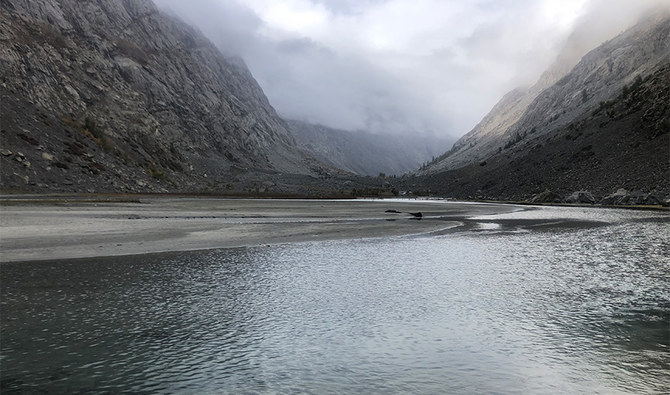

PESHAWAR: More than 2 million Pakistanis visited the country’s militancy-scarred northwestern Khyber Pakhtunkhwa province over Eid-al-Fitr holidays, the province’s Tourism Corporation said on Tuesday, as Pakistan pushes to capitalize on improving security across the country and revive a dormant tourist industry.
Pakistan was last a prominent tourist stop in the 1970s when the “hippie trail” brought international travelers through the walnut and apricot orchards of the Swat Valley and Kashmir on their way to India and Nepal.
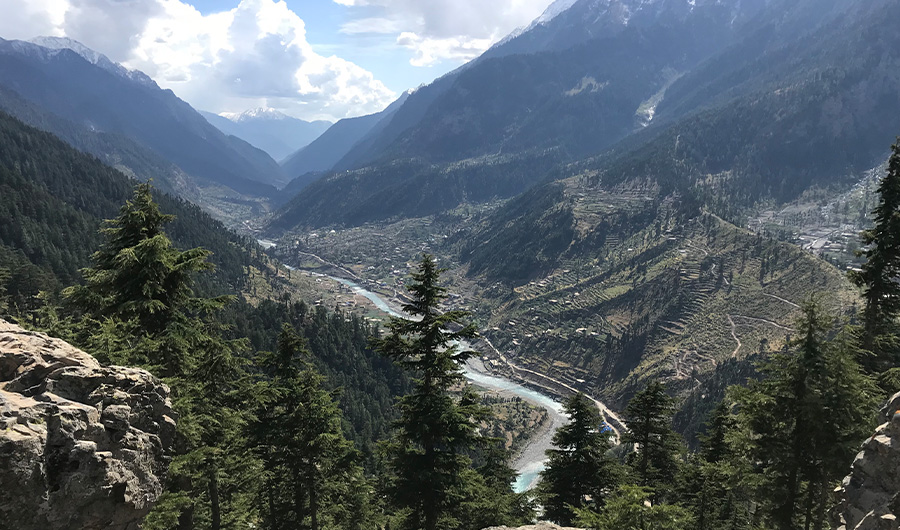
Pishmal valley as seen on July 9, 2018 from Bayun near one of Pakistan’s most famous tourist destinations of Kalam. (AN Photo)
Since then, deteriorating security and the imposition of a harsh interpretation of Islamic laws by militants has chipped away at the number of visitors. The country’s northwestern Khyber Pakhtunkhwa province and erstwhile semi-autonomous tribal regions, now merged into Khyber Pakhtunkhwa along the border with Afghanistan, bore the brunt of violence by Taliban and other insurgents. But as security has improved dramatically in recent years and militant attacks are down sharply, the government of Prime Minister Imran Khan hopes a new era can be opened for the tourism industry.
“There are many more new destinations waiting to be explored,” Khyber Pakhtunkhwa tourism minister Atif Khan told Arab News. “Improved security in the province and its newly-merged tribal districts mean people would soon be able to visit heavenly beautiful places like Tirah valley in Khyber tribal district,” he added, referring to a tribal region long known for its difficult terrain and governance challenges posed by its location on the porous border with Afghanistan.
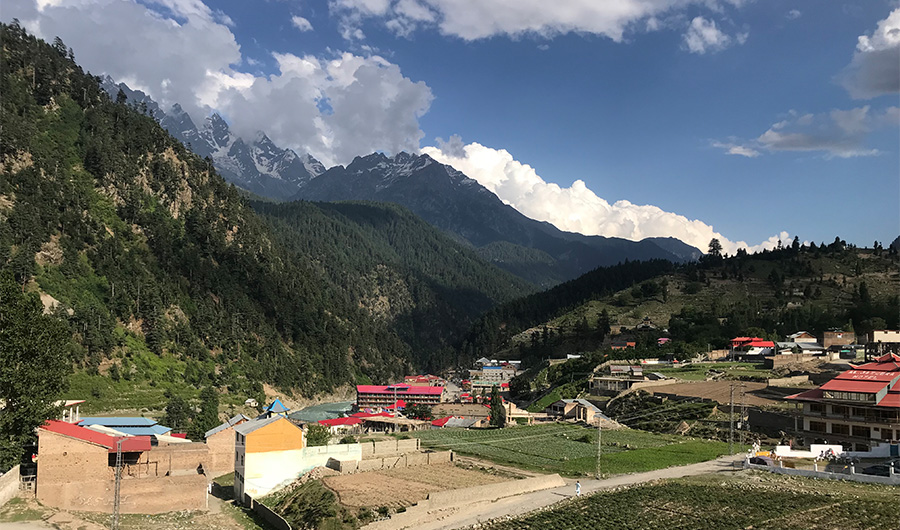
Kalam Valley attracts thousands of tourists from Pakistan and an increasing number of foreign tourists. Pictured here on June 30, 2018. (AN Photo)
Sajjad Hameed, the general manager of the Tourism Corporation Khyber Pakhtunkhwa, said two million tourists had visited different parts of the province over the six-day Eid holiday.
“On the occasion of Eid al Fitr, almost twenty lakh (2 million) tourists went to pleasant tourist destinations in different areas of Khyber Pakhtunkhwa,” the ruling PTI government said on its official Twitter handle last week, adding that most people had gone to Swat, but also to Kumrat in Dir Upper, and Kaghan, Naran and Nathiagali in the Hazara division.
According to figures released by Deputy Inspector General of Police of Malakand Division, Said Wazir, police at the Ashiret check-post on the Chitral side of the Lawari Tunnel registered 11,000 vehicles carrying 71,000 tourists entering the district through the Tunnel.
According to Ishtiaq Khan, superintendent of traffic police Abbottabad, nearly 100,000 vehicles carrying over 0.4 million people entered Abbottabad over the Eid break. Police sources in Malakand division reported over 147,000 vehicles and more than one million tourists entering Malakand division during just the first three days of Eid.
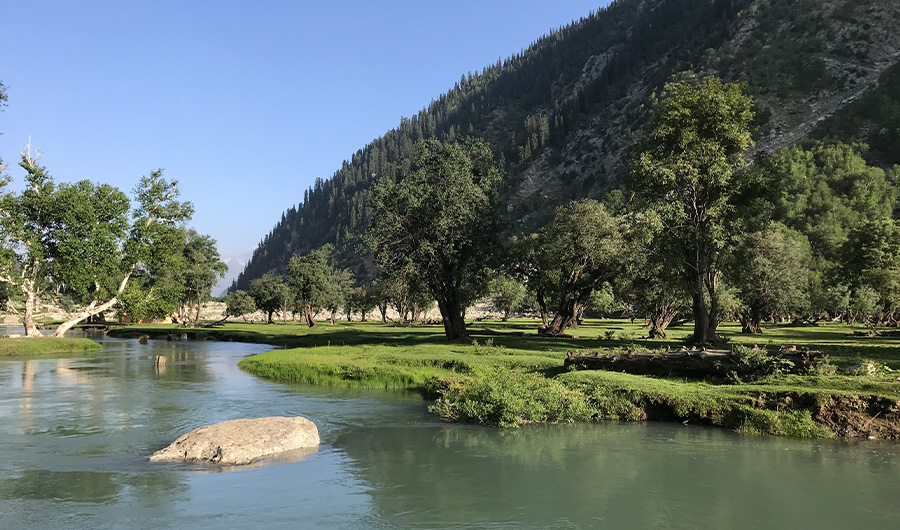
Shahi Bagh is a tranquil off-road tourist spot about 12 kilometers west of Gabral Valley in Upper Swat, Pakistan; July 14, 2018. (AN Photo)
Galiyaat Development Authority put the number of vehicles, including motorcycles, entering the area at 63,000, while an estimated 400,000 tourists visited the Galiyaat during Eid.
Seth Matiullah, President of the Naran Hotels Association, said all 317 hotels on Naran Road, were at 100 percent occupancy through the Eid holiday.
“The hotels, tents and camping pods were all full,” he said. “The overflow meant many tourists had to sleep in their cars. This is the best start to our season in many decades.”
Applauding the efforts of the provincial government in promoting tourism, Matiullah said tourists had been impressed with improved traffic management and health and rescue services.
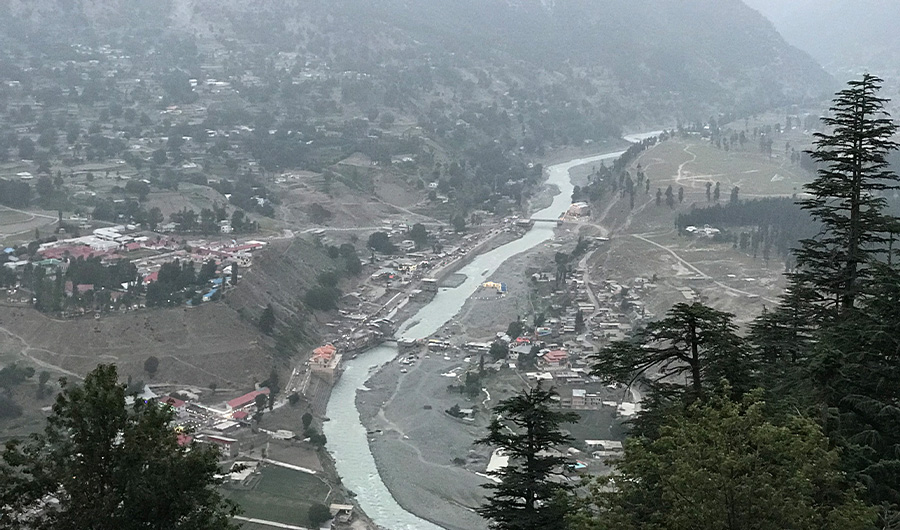
A view of Kalam Bazar from Bayun Valley on July 9, 2018. (AN Photo)
“When tourists are happy, they tell others to visit the same places also,” he said. “The health department even set up a first of its kind emergency health unit at the 10,578-feet-high Saiful Malook lake to assist tourists facing breathing problems.”
However, Matiullah said the provincial government needed to prioritize improving the roads leading up to known tourist destinations if it wanted to attract yet more people.
Minister Atif Khan said the provincial government had identified over two dozen potential tourist spots in the province and aimed to construct “basic road infrastructure and provide basic facilities like security, electricity and health.” He said a Tourism Police Force had also been raised for the first time
Junaid Khan, Managing Director Tourism Corporation Khyber Pakhtunkhwa, said one of the main reasons behind the high influx of tourists this season was a tourism awareness and promotion campaign spearheaded by his department.
“An estimated revenue of Rs5 billion was generated during the six-day Eid vacations,” Khan said. “The provincial government has allocated Rs2.4 billion for the construction of roads to tourist destinations in Malakand division. Similarly, Rs2 billion are reserved for the same purpose in Hazara division while another Rs50 million are reserved for construction of roads to the Sheikh Badin tourist site in the southern districts” Khan said.
He added that the KP government had sought financing of more than Rs12 billion from the World Bank for the Khyber Pakhtunkhwa Integrated Tourism Development Project (KITE) aimed at improving tourism infrastructure, enhancing tourism assets and strengthening the management of tourist destinations.
“The KITE project will help in promoting sustainable tourism in the province by improving the tourist-destination infrastructures, tourists’ experience, preserve environment and help authorities in better management of visitors,” Khan said.


