BEIRUT: Iran on Tuesday freed a Lebanese man detained in 2015 on charges of spying for the United States, a gesture that comes amid soaring tensions between Tehran and Washington.
A US resident in his 50s, Nizar Zakka was arrested in September 2015 during a visit to Iran, where he was convicted the following July.
He is the head of The Arab ICT Organization, a non-profit that advocates the growth and development of information and communications technology in the Middle East.
Before his arrest, he had been taking part in a conference in Tehran at the invitation of Shahindokht Molaverdi, then vice president for women and family affairs, according to his family.
He was stopped on his way to the airport, his family and lawyer have said.
At the time, Iranian state television said he was accused of “deep ties to the military and intelligence services of the United States.”
It broadcast photographs of a man in military uniform it said was of Zakka at a US base.
On Tuesday, Zakka arrived in Lebanon, after his release by Iranian authorities.
He was escorted back to his native country by Lebanon’s General Security chief Abbas Ibrahim, who was in Tehran one day earlier, according to the security service.
In a speech at Lebanon’s presidential palace, Zakka declined to elaborate on the circumstances behind his arrest but dismissed the case against him.
“There was no espionage,” he said after meeting President Michel Aoun, accusing Tehran of “kidnapping him” on false charges and staging a “show trial.”
For his part, the general security chief denied speculation Iran’s Lebanese ally Hezbollah played a primary role in brokering Zakka’s release.
“The issue was resolved at the request of the president,” Ibrahim told reporters.
“Hezbollah definitely played a role but the basis (for the release) was a request from the president.”
His comments came in response to a report by Iran’s Fars news agency on Monday that Zakka’s release followed “the request and mediation” of Hezbollah chief Hassan Nasrallah.
“Zaka has been freed and extradited, thanks to Nasrallah’s mediation and the respect Tehran pays to him,” it said, citing an “informed source.”
Tehran has direct control over Hezbollah, its main proxy in the region.
Earlier on Tuesday, a spokesman for Iran’s judiciary Gholamhossein Esmaili said Aoun had requested Zakka’s release “in writing” and Hezbollah had said it would be “expedient.”
“This is an absolutely judicial procedure and no political issue has been involved,” Esmaili was quoted as saying by Iran’s Tasnim news agency.
The US State Department had also called for Zakka to be freed, saying he was unjustly held. Following his arrival in Beirut, the US applauded Zakka’s release by Iran as a “great day” for him and his family and said it hoped the move was a positive sign for Americans detained by Tehran.
“It is without a doubt a great day for Mr. Zakka, his family, and all those who have supported him during his unlawful imprisonment,” a State Department spokeswoman said. “We hope that Mr. Zakka’s release is a positive sign for American detainees in Iran,” she said.
Meanwhile, Zakka’s lawyer appealed for help for other detainees being held in Iranian prisons following his client’s release.
“Nizar expresses his sincerest thanks to those who never forgot him,” Jason Poblete said in an emailed statement.
“Nizar also wants to remind those who can help that there remain many Americans... and other foreigners in Iranian prisons. Nizar grew close to some of these men; they need help and want to come home.”
Iran and the United States broke diplomatic ties in 1980 in the aftermath of the Islamic revolution. Relations have deteriorated sharply since US President Donald Trump took office in January 2017.
At the end of 2017, an Iranian court upheld Zakka’s 10-year jail sentence as well as those of an American and two Iranian-Americans accused of “collaboration” with the United States.
Zakka’s brother Ziad has previously accused Lebanese officials of neglecting his case.
The decision to release him comes amid a stand-off that has been simmering since the United States last year withdrew from the 2015 nuclear treaty which Iran reached with major world powers.
Tensions have intensified since April when the US added Iran’s Revolutionary Guards to its blacklist of “terrorist” organizations and strengthened sanctions against the Islamic republic.
The standoff has worsened recent weeks, after the US military announced it was dispatching reinforcements to the Middle East in response to alleged “Iranian threats” as well as the sabotage of four ships at the entrance to the Gulf on May 12.
Washington and Riyadh have accused Tehran of being behind those attacks, a charge it has dismissed as “laughable.”


![]()
![]()

Lebanese businessman Nizar Zakka arrives in Beirut after Iran release
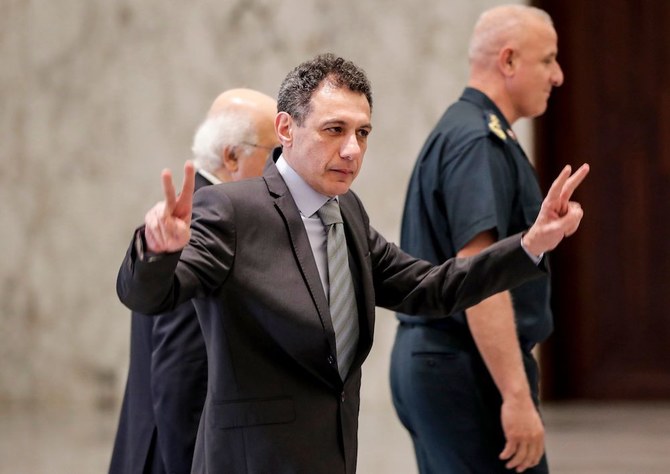
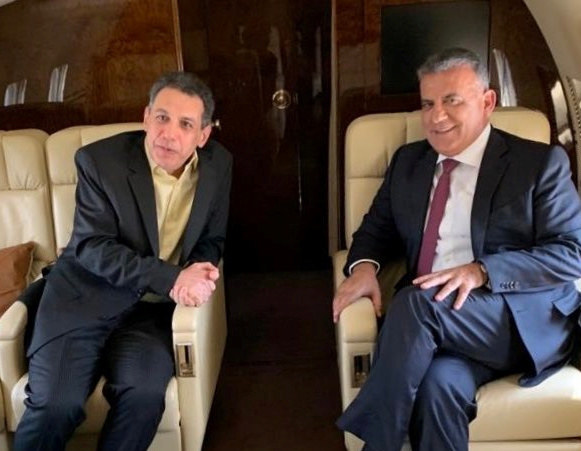
Lebanese businessman Nizar Zakka arrives in Beirut after Iran release
- ‘The relevant court has agreed to Nizar Zakka’s conditional release and he will be handed over to Lebanese authorities’
- Zakka was arrested in September 2015 during a visit to Iran, where he was convicted the following July

Latest updates


© 2026 SAUDI RESEARCH & PUBLISHING COMPANY, All Rights Reserved And subject to Terms of Use Agreement.