

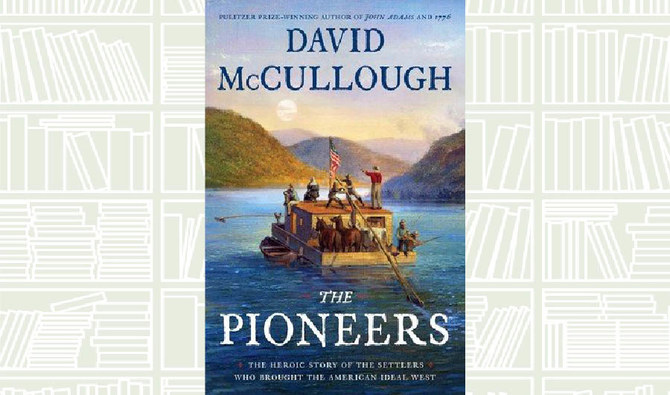
What We Are Reading Today: The Pioneers by David McCullough

Updated 10 June 2019
Follow

What We Are Reading Today: The Pioneers by David McCullough

  • The settling of the Northwest Territory by dauntless pioneers who overcame incredible hardships to build a community based on ideals

The Pioneers is a history of the settlement of the Northwest Territory in the years after the American Revolution.

In The Pioneers, Pulitzer Prize–winning historian David McCullough “rediscovers an important and dramatic chapter in the American story — the settling of the Northwest Territory by dauntless pioneers who overcame incredible hardships to build a community based on ideals that would come to define the US,” said a review in goodreads.com.

McCullough’s other acclaimed books include The Johnstown Flood, The Great Bridge, Brave Companions, 1776, The Greater Journey, and The Wright Brothers. 

“Like those 19th-century historians, The Pioneers presents American history as a grand civics lesson, in which the accomplishments of our principled forebears serve as inspirations. Rather than wrestle with the moral complexities of western settlement, McCullough simplifies that civics lesson into a tale of inexorable triumph,” critic Andrew C. Isenberg said in a review for The Washington Post.


Review: ‘Relay’

Updated 21 December 2025
Follow

Review: ‘Relay’

RIYADH: “Relay” is a thriller that knows what its role is in an era of overly explained plots and predictable pacing, making it feel at once refreshing and strangely nostalgic. 

I went into the 2025 film with genuine curiosity after listening to Academy Award-winning British actor Riz Ahmed talk about it on Podcrushed, a podcast by “You” star Penn Badgley. Within the first half hour I was already texting my friends to add it to their watchlists.

There is something confident and restrained about “Relay” that pulls you in, and much of that assurance comes from the film’s lead actors. Ahmed gives a measured, deeply controlled performance as Ash, a man who operates in the shadows with precision and discipline. He excels at disappearing, slipping between identities, and staying one step ahead, yet the story is careful not to mythologize him as untouchable. 

Every pause, glance, and decision carries weight, making Ash feel intelligent and capable. It is one of those roles where presence does most of the work.

Lily James brings a vital counterbalance as Sarah, a woman caught at a moral and emotional crossroads, who is both vulnerable and resilient. The slow-burn connection between her and Ash is shaped by shared isolation and his growing desire to protect her.

The premise is deceptively simple. Ash acts as a middleman for people entangled in corporate crimes, using a relay system to communicate and extract them safely. 

The film’s most inventive choice is its use of the Telecommunications Relay Service — used by people who are deaf and hard of hearing to communicate over the phone — as a central plot device, thoughtfully integrating a vital accessibility tool into the heart of the story. 

As conversations between Ash and Sarah unfold through the relay system, the film builds a unique sense of intimacy and suspense, using its structure to shape tension in a way that feels cleverly crafted.

“Relay” plays like a retro crime thriller, echoing classic spy films in its mood and pacing while grounding itself in contemporary anxieties. 

Beneath the mechanics and thrills of the plot, it is about loneliness, the longing to be seen, and the murky ethics of survival in systems designed to crush individuals. 

If you are a life-long fan of thrillers, “Relay” might still manage to surprise you.