

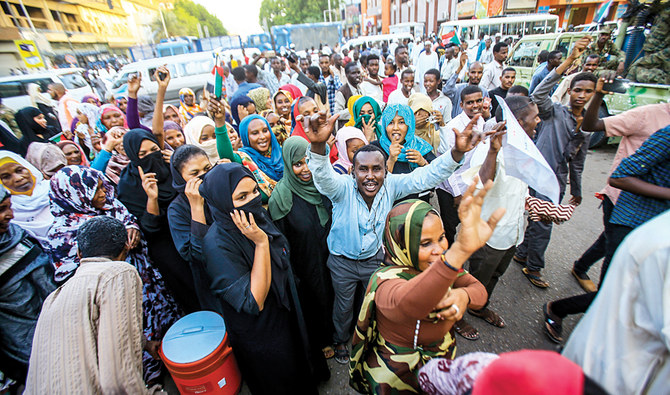

KHARTOUM: Sudan’s ruling military blamed the country’s protest movement for an escalation as the second day of the opposition’s general strike kicked in on Monday.
For the second day, shops and businesses were closed in the capital, Khartoum, though there was visibly more traffic in the streets than on Sunday, when the strike began.
The military said actions by the protest movement as doing major harm to Sudan and its security.
It has been two months since the military ousted Sudan’s former ruler, Omar Al-Bashir, on April 11, following months of protests against his government. The generals put Bashir behind bars and took over the country, promising free elections following a transitional period.
The protesters, however, remained in the streets demanding the generals relinquish power right away. The standoff lasted until troops moved in last Monday and broke up opposition sit-ins, including the main encampment outside the military headquarters in Khartoum.
Over 100 people have been killed in the violence since then. The Health Ministry disputes the death toll, saying the official total tally of those killed in the violence stands at 61, including three members of the security forces.
On Sunday, the military council said it was willing to return to the talks with what looked like a concession on a plan offered by the Ethiopian Prime Minister Abiy Ahmed who visited Khartoum last week trying to revive negotiations between the generals and the protest leaders.
The opposition said it accepts Aby as mediator but put forth several conditions.
The protest leaders urged people to close up roads again, rebuild dismantled barricades across the country, and avoid clashes with the paramilitary Rapid Support Forces. In a video posted late Sunday, Mohammed Al-Asam, a protest leader, urged the Sudanese to continue the campaign.
Security forces on Sunday removed barricades from main roads and reopened the sit-in area outside the military’s headquarters.
“The solution is to get life paralyzed,” the protest leaders said.
Lt. Gen. Jamaleddine Omar, from the ruling military council, said late Sunday that by closing roads and setting up barricades, the protesters committed a crime.
“The technique of closing the roads and building barricades ... is a full-fledged crime as it deprives people from being able to go about their normal life,” he said.
Omar said the Forces for Declaration of Freedom and Change, which represented the protesters in negotiations with the military council that went on for weeks till the generals suspended the talks earlier this month, are to blame for “all the regrettable events” of the past days.




