Six things to do with leftover dates once Ramadan is over

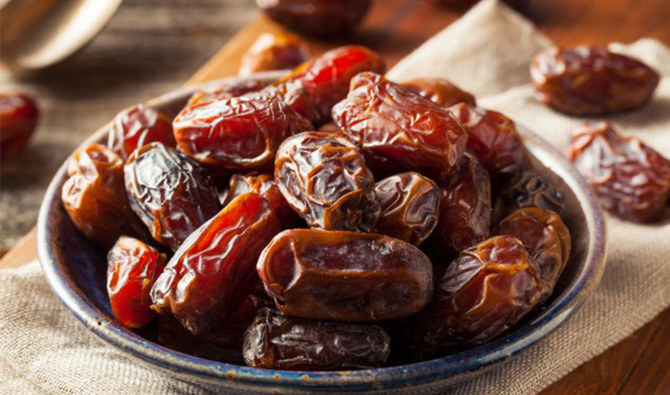
Dates traditionally are used to break fasts and have been grown and cultivated in the middle east for thousands of years. The significance of dates in Ramadan began because it is believed that the Holy Prophet (PBUH) always opened his fasts with dates - (Photo Courtesy: OrganicFacts.net)
Updated 10 June 2019
Follow

Six things to do with leftover dates once Ramadan is over

  • Eating dates in the holy month of Ramadan is a tradition

ISLAMABAD: If there is one food synonymous with Ramadan the world over regardless of culture, language or region, it is the date. The significance of dates is tied to the belief that Prophet Muhammad (PBUH) broke his fasts with the fruits and thus eating dates in the holy month of Ramadan is a tradition that Muslims have followed for centuries.
But now that Ramadan has come and gone this year, what do we do with all the leftover dates? Here are six ideas: 

Stuffed dates



Stuffed dates (image via Lazy Cat Kitchen)

If your dates are seeded, pit the seed right out and stuff them with pistachios and peanuts, dried fruits, citrus peels, tahini, marzipan, soft cheeses, coconut flakes and chocolate. There’s no way you can go wrong with these dainty hors d’oeuvres.

The dipped date
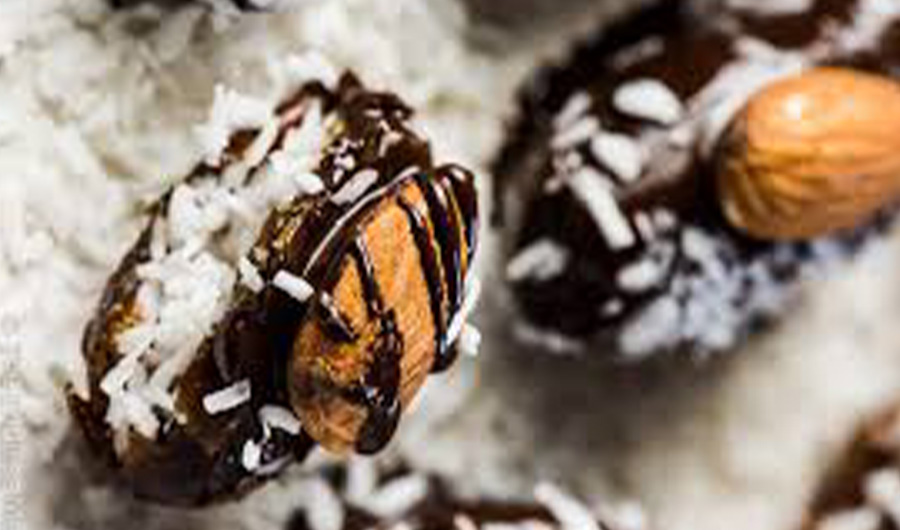


Dipped dates (image via The Endless Meal)

If you don’t want to stuff your dates, dip them instead — in molten chocolate, milk, dark or white, and then sprinkle generously with crushed candies or nuts. If you want to go the extra mile, stuff the date with nuts or soft cheese first and then dip it in chocolate. There’s isn’t a more flamboyant snack out there than that.
Date breads



Date and walnut loaf (image via Torey Avey)

Date and walnut loaves, date cake, and Britain’s sticky toffee pudding are just three of the ways bread and dates come together with magical results. The sticky toffee pudding is a signature dish from Great Britain where dates are chopped up small and stirred into the bread. And there are few ways to go wrong with the date and walnut loaf, which if well-wrapped will go a week and can be frozen. 
Using dates as a sweetener



A date smoothie (image via Food52)

Dates are not only naturally high in sugar and fiber, their sweetness, a distinct caramel-like flavour, makes them a popular choice as a replacement for sugar. Date sugar is made from dehydrated dates that are ground into a granulated, sugar-like consistency. You can also just use raw date, blending them into cookies and protein bars, or turning them into caramel. Finally, you can make syrup out of dates, boiling them and reducing the liquid until it has the consistency of honey.
Energy bars
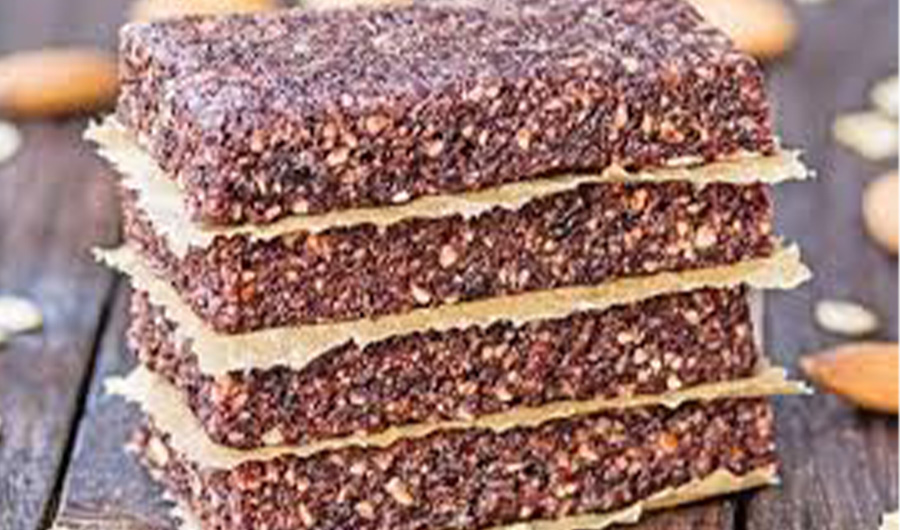


Date energy bars (image via Kitch)

Many foodies, especially health conscious ones, are now also using dates as a base and taste maker for energy bars. Most energy and protein bars available in the market are filled with chemicals, preservatives and heaps of sugar but many brands are now turning to dates to make them healthier. Mixed with nuts and power foods like chia and flax, at home energy bars are cost efficient, yummy and put dates to good use.
In tagine
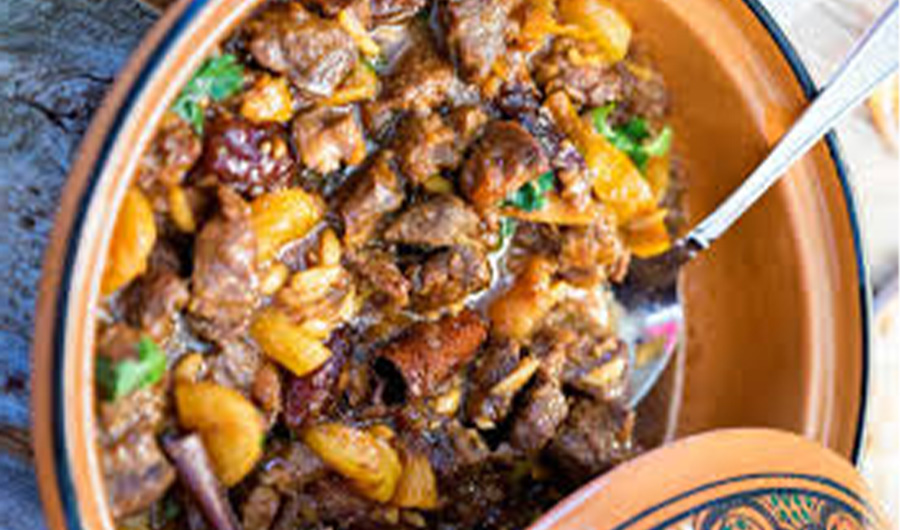


Lamb tagine with dates (image via Kevin is Cooking)

Dates can be given a savoury twist too, by being used as a central ingredient in tagine, a slow cooked dish of meat or chicken topped with chopped dates and cooked in a clay pot in northern African countries. 


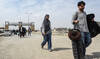
Pakistani students recount perilous journey home from Iran as Middle East conflict escalates

Updated 13 sec ago
Follow

Pakistani students recount perilous journey home from Iran as Middle East conflict escalates

  • 792 Pakistanis repatriated via land and air corridors, officials say
  • Many evacuees are students enrolled in Iranian universities

ISLAMABAD: Hundreds of Pakistani students are fleeing Iran this week as escalating hostilities in the Middle East spill across key population centers, forcing them to abandon studies and undertake perilous overland journeys back home.

Iran has been rocked since last week by joint US and Israeli strikes that killed Supreme Leader Ayatollah Ali Khamenei, followed by retaliatory missile attacks targeting American military bases across the Gulf region. The escalation has disrupted air travel, heightened military activity along Iran’s southern coastline and turned strategic locations such as Bandar Abbas, near the Strait of Hormuz through which roughly 20 percent of global oil supplies pass, into flashpoints.

Among those returning is Misbah Hussain, a 22-year-old medical student from Pakistan’s coastal district of Badin in Sindh province. Her education in Iran’s Hormozgan province, which borders the Strait of Hormuz, was abruptly cut short by missile strikes near her university hostel.

“I cannot put those scenes into words,” said Hussain, describing the attacks near her hostel at the Hormozgan University of Medical Sciences in the Iranian coastal city of Bandar Abbas.

She said she had traveled by road from Bandar Abbas to the Pakistan-Iran border, changing three to four different cabs along the way as the security situation deteriorated. After crossing into Pakistan, she continued her journey to Karachi via the coastal highway in a vehicle arranged by the local administration, before heading onward to her hometown of Badin, where, she said, her family would witness her “second life.”

“Missiles landed a short distance from where we were staying,” she said, “and continued during our journey back. We could see missiles hitting along the way. There were moments when we felt we might not survive.”

Bandar Abbas, Iran’s main southern port, has seen intensified military activity in recent days as regional airspace remains largely restricted. Students described sirens, outgoing missile launches and the constant fear of further escalation.

“I had gone there 13 days ago, and the conditions worsened,” Hussain added, noting that examinations were abruptly canceled as students fled the city.

The students’ journey home has proved arduous. From Bandar Abbas, they traveled east through Iran’s Sistan-Baluchestan province toward the Gabd-Rimdan border crossing into Pakistan’s southwestern province of Balochistan. The route, normally a commercial corridor, has become a critical evacuation pathway for the roughly 35,000 Pakistanis currently residing in Iran, according to officials.

Nazir Hussain, another student at the university, described a chaotic departure marked by transport shortages and inflated fares.

“We left Iran under extreme fear,” Nazir told Arab News over the phone as he neared his home city of Hyderabad. “Transport was unreliable, drivers exploited the situation by charging excessive fares. At every stage, we felt uncertain and unsafe.”

The overland journey to the Gabd border spans nearly 800 kilometers (about 497 miles) from Bandar Abbas. Students said they could not wait for formal evacuation arrangements.

“We couldn’t wait for the government help to arrive. We just left a warzone, and this is what we could do, but the journey was extremely painful,” Nazir said.

After crossing into Pakistan, many students were assisted by local authorities in Gwadar before undertaking another nearly 700-kilometer (435-mile) journey to major cities such as Karachi and Hyderabad.

Speaking at a press conference, Pakistan’s Deputy Prime Minister and Foreign Minister Ishaq Dar said on Tuesday a 24-hour crisis management unit has been activated to assist Pakistani nationals across the Gulf, where an estimated 4.5 million Pakistanis live and work.

According to government figures, 792 Pakistanis have been repatriated from Iran so far, including 650 who crossed through the Gabd-Rimdan and Taftan border crossings in the past 48 hours. A significant number of those returning are students enrolled in Iranian universities.

“The safety of Pakistanis abroad and the sovereignty of Pakistan remain our foremost priorities,” Dar told reporters in Islamabad, adding that Azerbaijan has been designated as an additional evacuation base for Pakistanis in northern Iran.

Despite official assurances that authorities are working “round the clock,” some students say support on the ground has been limited.

“Assistance with transport and communication could make an enormous difference for students stranded in dangerous situations,” Nazir said. “But, unfortunately, in our case it didn’t exist.”

Officials estimate that around 3,000 Pakistani students remain in Iran. With airspace disruptions and ongoing hostilities, many face the difficult decision of staying in a volatile environment or risking long overland travel to reach safety.

“We had only heard about death before,” student Misbah Hussain said. “This time we saw it with our own eyes.”