

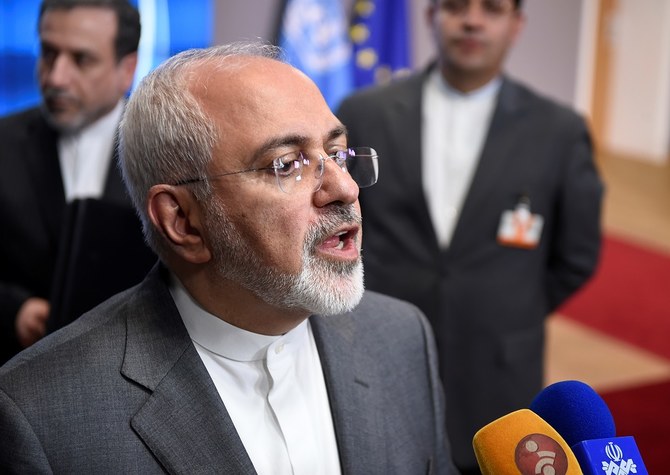
Iran to cooperate with EU signatories of 2015 nuclear deal, warns US on sanctions

Updated 10 June 2019
Follow

Iran to cooperate with EU signatories of 2015 nuclear deal, warns US on sanctions

  • The US pulled out of it last year and reimposed sanctions on Iran
  • Iran criticized European signatories for failing to salvage the pact after Trump's pullout

SINGAPORE/TEHRAN: Iran's Foreign Minister Zarif said on Monday Tehran will cooperate with European signatories of 2015 nuclear deal to save it.

“We had frank and serious talks with (visiting German Foreign Minister Heiko) Maas ... Tehran will cooperate with EU signatories of the deal to save it,” Zarif told a joint news conference in Tehran.

Zarif also said Iran will never start a war, but will destroy any party who invades it.

“Whoever starts a war with us will not be the one who finishes it,” he said.

The US “cannot expect to stay safe” after launching its economic war, Zarif said.

"One cannot expect an economic war to continue against the Iranian people and that those waging this war and those supporting it remain safe," he said at a Tehran news conference with his visiting German counterpart Heiko Maas.

He directly blamed President Donald Trump for the ongoing tensions between Washington and Tehran.

“Mr. Trump himself has announced that the US has launched an economic war against Iran. The only solution for reducing tensions in this region is stopping that economic war,” Zarif said, adding that Germany and the EU had an "important role" in such efforts.

Earlier today, Iran criticized the European signatories of its 2015 nuclear deal for failing to salvage the pact after President Donald Trump pulled the United States out of it last year and reimposed sanctions, state television reported.

“So far, we have not seen practical and tangible steps from the Europeans to guarantee Iran’s interests ... Tehran will not discuss any issue beyond the nuclear deal,” said foreign ministry spokesman Abbas Mousavi. 

US President Donald Trump imposed sweeping sanctions on Iran after walking away from a 2015 nuclear between Tehran and world powers that eased sanctions in exchange for curbs on its atomic programme.

The German minister said his country would do its utmost to ensure tensions do not escalate.

"There is war in Syria and in Yemen, fortunately not here," Maas said. "We want to do everything we can to keep it that way (for Iran.)

"Tensions here in the region are worrying, and we fear that isolated events could trigger developments that end in violence, and we want to prevent this at all costs," he added.


In major policy shift on Syria, UN Security Council lifts sanctions on Hayat Tahrir Al-Sham

Updated 4 sec ago
Follow

In major policy shift on Syria, UN Security Council lifts sanctions on Hayat Tahrir Al-Sham

  • Move reflects evolving Syrian political landscape in the post-Assad era, ending a global freeze on assets, travel ban and arms embargo

NEW YORK CITY: The UN Security Council on Friday removed Al-Nusra Front, the militant group that evolved into Hayat Tahrir Al-Sham, from its so-called Daesh and Al-Qaeda Sanctions List.

The move signals a major shift in international policy toward Syria’s evolving political landscape in the post-Assad era, and ends a global freeze on assets, travel ban and arms embargo that have been imposed on the group since 2014.

Al-Nusra Front and Hayat Tahrir Al-Sham were led by Ahmad Al-Sharaa, formerly Abu Mohammed Al-Julani, who is now Syria’s president and was a leading figure in the offensive that toppled the Assad regime.

The consensus decision by the Security Council’s sanctions committee was announced by the UK, which holds the presidency of the Security Council this month and was acting in the absence of the chair of the committee. It followed a request by the new Syrian authorities to delist “Al-Nusrah Front for the People of the Levant.”

The decision means measures that were applied to Hayat Tahrir Al-Sham under Security Council Resolution 2734, adopted in 2024, no longer apply. As a result, UN member states are notrequired to freeze the group’s funds, restrict the movement of its representatives, or block the supply or transfer of arms and related materiel.

Al-Nusra Front was added to the sanctions list for its ties to Al-Qaeda and involvement in the financing and execution of militant activities during the war in Syria. The UN initially continued to treat the group’s successor organization, Hayat Tahrir Al-Sham, as a listed alias.

Al-Sharaa has said the group severed all prior transnational jihadist links and is now solely focused on local Syrian matters.