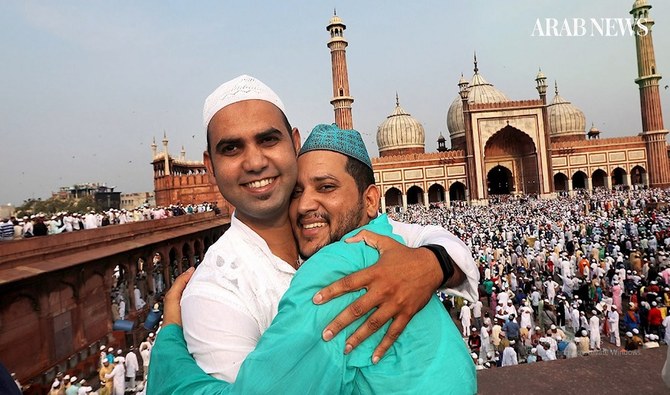
ISLAMABAD: Eid Al-Fitr is celebrated across the Muslim world with similar religious aspects and rituals but the cultural traditions and festivities vary between Muslim nations.
In Pakistan, the spirit of Eid following Ramadan is celebrated beginning with congressional prayers and most Pakistanis prefer to offer Eid prayers at the largest mosque in their respective city. This is the only similarity as what comes next is indigenous to Pakistan’s tradition for celebrating one of the most auspicious holidays in Islam.
Arab News shows the basic step by step routine in this video of Eid most Pakistanis have followed for decades.

Eid al-Fitr tradition in Pakistan
- Three-days-long Eid holidays follow marking the end of Ramadan.
- People dress in vibrant traditional outfits while women sport henna and wear colorful bangles on wrists.
Pakistan launches $136 million Ramadan relief package for 12.1 million families
- Rs13,000 per family to be transferred via bank accounts, mobile wallets under cashless system
- Pakistan’s national space agency says the Muslim fasting month is likely to begin from Feb. 19
ISLAMABAD: Prime Minister Shehbaz Sharif on Saturday launched a Rs38 billion ($136 million) Ramadan relief package, pledging direct digital cash transfers of Rs13,000 ($47) each to 12.1 million low-income families across Pakistan.
Pakistan’s national space agency announced a day earlier the Ramadan crescent would likely be visible on Feb. 18, with the first fast expected to fall on Feb. 19, subject to official confirmation.
The government will distribute the relief package through bank accounts and regulated mobile wallet platforms, fully replacing the previous utility store-based subsidy model with a digital payment mechanism overseen by the State Bank of Pakistan.
“This year, Rs38 billion have been allocated ... that will not only be distributed to the rightful people in all four provinces, but also to Gilgit-Baltistan and Azad Kashmir through these wallets and digital bank accounts,” the prime minister said during a ceremony in the federal capital, adding that 12.1 million families would benefit.
The allocation marks a sharp increase from last year’s Rs 20 billion ($72 million) Ramadan program, as the government expands coverage and deepens its shift toward cash-based targeted subsidies.
Officials said Rs28 billion ($101 million) has been earmarked for families not currently receiving support under any federal income assistance program, while an additional Rs10 billion ($36 million) will go to those already registered under existing social protection schemes.
Syed Imran Shah, federal minister for poverty alleviation and social security, said the digital framework would allow transfers to be made in a “safe, effective and easy way,” reducing leakages and preserving beneficiaries’ dignity by eliminating long queues and physical distribution centers.
Amir Ali Ahmed, secretary of the Benazir Income Support Program (BISP), said the 2026 rollout builds on last year’s digital transition, when around two million beneficiaries received payments electronically.
A third-party validation report issued in December 2025 confirmed the transparency and operational effectiveness of the system, he added.
The prime minister said he would personally oversee periodic reviews of the program to ensure timely disbursement.
The government had scrapped the Utility Store-based Ramadan subsidy system last year, arguing that it led to quality concerns, long queues and administrative inefficiencies.
The digital transfer model aims to move toward a targeted subsidy regime aligned with broader efforts to expand financial inclusion and reduce cash-based leakages.