The trial in Morocco of two dozen men over the murders of two Scandinavian hikers resumed after previous hearings were swiftly adjourned
A Dane and a Norwegian had their throats slit while camping in an isolated area of the High Atlas mountains in December
The main suspects, who allegedly pledged allegiance to Daesh, are all from the Marrakesh region, near the site of the killings which shocked the North African country.
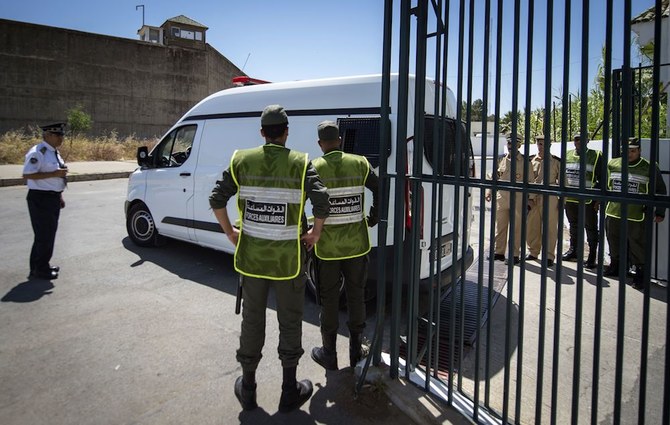
The 24 defendants arrived on Thursday morning at the court in Sale, near Rabat, under heavy security.
They face charges including promoting terrorism, forming a terrorist cell and premeditated murder.
In theory, the killers could face the death penalty, but Morocco has had a de facto freeze on executions since 1993.
At a previous hearing, the court accepted a request by the Jespersen family’s lawyer for the government to be held “morally responsible” for the killings so they could receive compensation.
Three men are suspected of direct involvement in the killings. One of them, street vendor Abdessamad Ejjoud, had been jailed for trying to join Daesh in Syria.
The trial opened on May 2 but was adjourned to May 16 and then paused again after a brief hearing.
Nature lovers Jespersen and Ueland shared an apartment and went to Norway’s Bo University, where they were studying to be guides.
They had traveled together to Morocco for their Christmas holidays.
Their lives were ended in the foothills of Toubkal, the highest summit in North Africa, some 80 kilometers (50 miles) from the city of Marrakesh, a tourist magnet.
According to the charge sheet, the assailants traveled to the High Atlas mountains on December 12 on a mission to kill tourists.
Several potential targets were passed over because the foreigners were accompanied by guides or local residents.
It was four days before the killers selected their targets, according to the prosecution. It said two of them carried out the killings while the third filmed them on a phone.
After the bodies were discovered, the Moroccan authorities were initially cautious, referring to a “criminal act” and wounds to the victims’ necks.
But that changed when the video surfaced showing a victim being beheaded.
In it, one of the killers refers to “enemies of Allah” and says the murders are to avenge the killings of militants in Syria.
A separate video published in the initial aftermath of the murders showed the alleged killers pledging allegiance to Daesh leader Abu Bakr Al-Baghdadi.
The only foreigner among the defendants is Spanish-Swiss 25-year-old Kevin Zoller Guervos, who moved to Morocco after converting to Islam.
The others come from modest backgrounds, scraping by on odd jobs and living in neglected areas of Marrakesh, the North African kingdom’s main tourist city.
Investigators said the “cell” was inspired by Daesh ideology, but Morocco’s anti-terror chief insisted the accused had no contact with the militant group in conflict zones.
Daesh has never claimed responsibility for the murders.


![]()

Alleged ringleader admits Scandinavian hiker killings at Morocco trial
Alleged ringleader admits Scandinavian hiker killings at Morocco trial
- The trial in Morocco of two dozen men over the murders of two Scandinavian hikers resumed after previous hearings were swiftly adjourned
- The two tourists had their throats slit while camping in an isolated area of the High Atlas mountains in December


Latest updates


© 2026 SAUDI RESEARCH & PUBLISHING COMPANY, All Rights Reserved And subject to Terms of Use Agreement.