ISLAMABAD: Pakistan’s capital city of Islamabad is home to a large number of Arab diplomats and expats but there are only a few eateries to help them quench their nostalgia for foods from their home countries, particularly during the holy month of Ramadan.
Syrian born Chef Abdul Rauf, 33, was educated in the culinary arts in Lebanon and emigrated to Pakistan in 2014 with his wife and three small children after a brief earlier visit that had him sold on the beauty and hospitality of the South Asian nation.
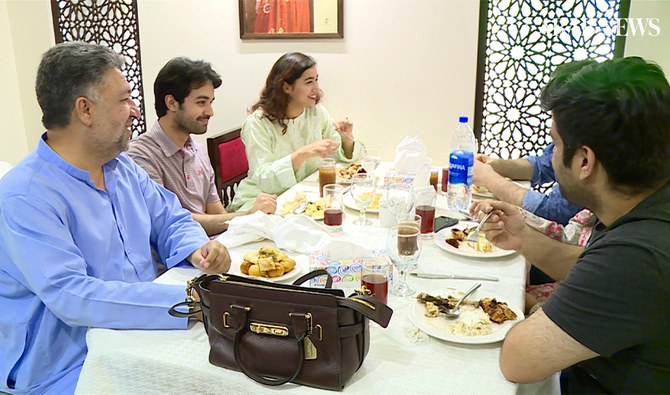
A few years ago, Rauf partnered with a local Pashtun and started a restaurant called Arz Lebanon, a medium-sized joint in the upscale Jinnah Super Market that offers a blend of Lebanese and Syrian cuisine. Whether you’re craving something as simple as pickles, hummus or bread or want an elaborate spread of kebabs or grilled seafood, Arz Lebanon is the place to go. The outdoor seating is definitely a plus, especially in Islamabad’s temperate weather.
In this video, Arab News gives you a mouthful of Chef Rauf’s delectable foods at a restaurant that has rightly earned the sobriquet ‘little Arabia.’

In Ramadan, Arabs get a taste of home in the Pakistani capital
https://arab.news/bwway
In Ramadan, Arabs get a taste of home in the Pakistani capital
- For fans of Lebanese and Syrian food, Arz Lebanon is the perfect stopover
- Chef Rauf's 'Little Arabia' is a favourite of Arab diplomats, expats, and travelers from the Middle East
Pakistan, Iran leaders highlight mutual support after both engaged in short wars this year
- Prime Minister Sharif met Iranian President Pezeshkian in Ashgabat on the sidelines of an international forum
- Pakistani PM also had an informal interaction with President Putin, discussed regional issue with President Erdogan
ISLAMABAD: Prime Minister Shehbaz Sharif and Iranian President Masoud Pezeshkian on Friday praised the support their countries offered one another during episodes of external aggression this year, according to the state media, as they met on the sidelines of an international peace forum in Turkmenistan.
Pakistan fought a four-day war with India in May, when New Delhi fired missiles at its cities and Islamabad responded with retaliatory strikes. Nearly a month after the conflict, Iran waged its own war with Israel after Tel Aviv carried out attacks inside Iranian territory, prompting Tehran to launch a series of missile and drone barrages in response.
The meeting in Turkmenistan came as Pakistan and Iran seek to steady ties after a period of strained security relations, while also attempting to expand economic cooperation and strengthen border management. The two leaders reviewed regional developments, including Pakistan’s concerns over militant attacks it says originate from Afghanistan, and ongoing diplomatic efforts related to Gaza.
“Both leaders appreciated the strong support that their countries had provided to each other when they had faced external aggression earlier this year,” the state-owned Associated Press of Pakistan (APP) said.
Sharif highlighted the outcome of the 22nd Pakistan–Iran Joint Economic Commission held this year and urged closer coordination to increase bilateral trade, operationalize border markets, reinforce border security and revive transport links, including the Islamabad-Tehran-Istanbul rail network.
Pezeshkian, according to the report, said Iran wished to further strengthen ties and thanked Sharif for a “useful and timely exchange of views.”
Sharif also pressed for “meaningful action” from the Afghan Taliban administration to address Pakistan’s security concerns, APP added.
Separately, the Pakistani prime minister met other global leaders attending the forum marking the International Year of Peace and Trust 2025 and Turkmenistan’s Neutrality Day.
He held informal interactions with Russian President Vladimir Putin and discussed regional issues with Turkish President Tayyip Erdogan, Tajik President Emomali Rahmon and Kyrgyz President Sadyr Zhaparov.


