

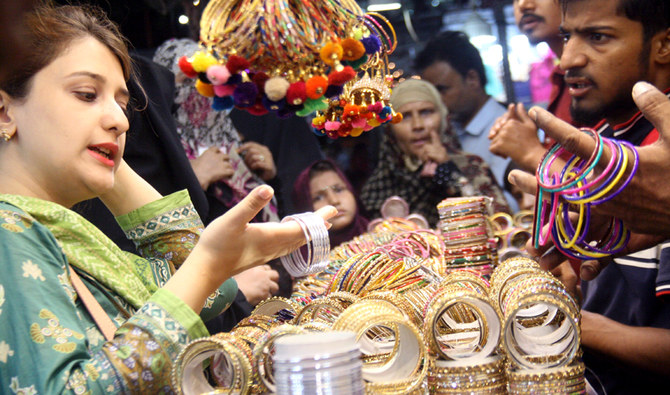
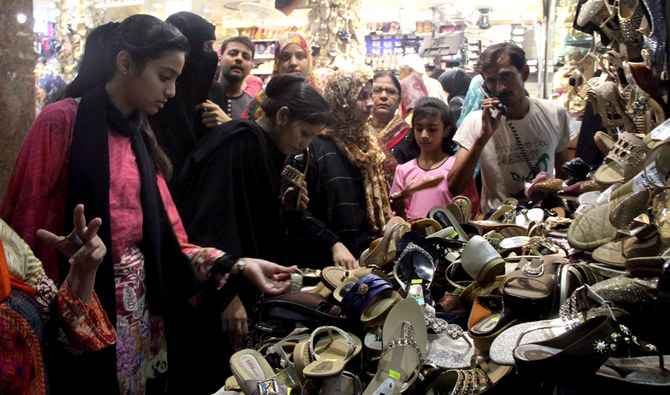
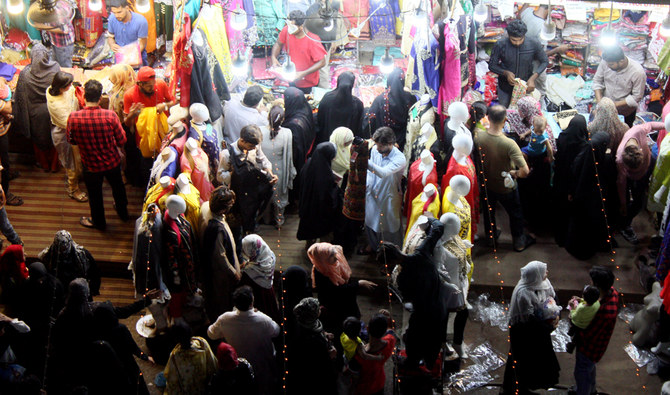
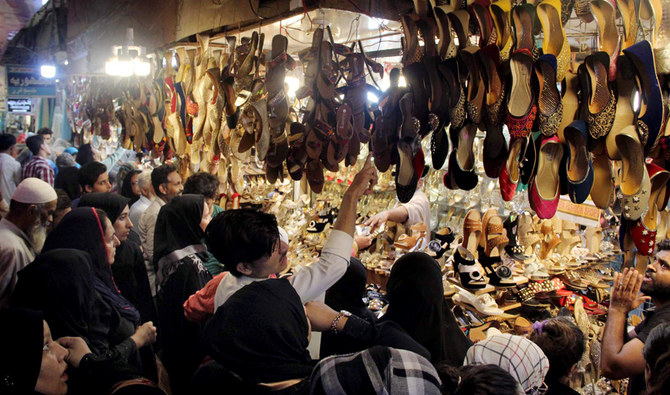
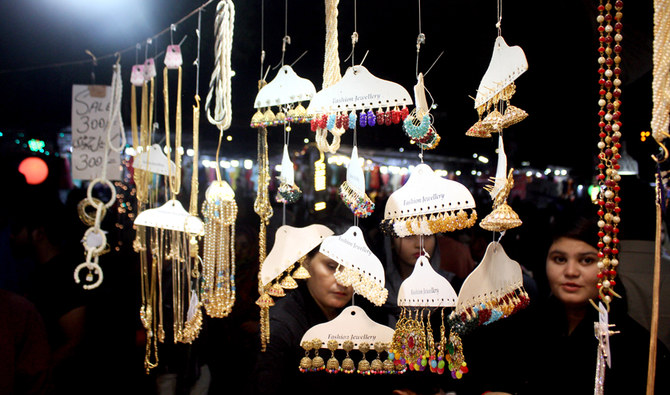

KARACHI: Shopkeepers and customers in the port city of Karachi said this week that demand for local products had increased, as rising prices and the continuing devaluation of the Pakistani rupee have tightened the purse-strings of many Pakistanis ahead of the celebration ending the holy month of Ramadan.
The annual Eid-ul-Fitr festival is traditionally a time for ordinary Pakistanis to splurge on new clothes and accessories. But this year’s Eid holidays, which begin on June 5, are expected to be more austere than in preceding years.
In the days since the May 12 agreement in principle with the International Monetary Fund for a $6 billion loan, Pakistan’s rupee currency has dropped 5 percent against the dollar. Inflation is at its highest in five years and the central bank, warning of growing inflationary pressures that are already squeezing household budgets hard, has hiked its key interest rate by 150 basis points to 12.25 percent even though the economy is slowing and millions of people are struggling to find work.
According to the Bureau of Statistics, imports have declined by 7.88 percent during the first 10 months of the current fiscal year. The rupee has also lost a third of its value in the past year.
“Imported stuff has become expensive due to the hike in the dollar rate but Pakistani manufacturers have come up with local substitutes for Eid, especially for ladies and children’s clothes,” Atiq Mir, the chairman of All Karachi Tajir Ittehad, an umbrella organization representing nearly 100 business centers in Karachi, told Arab News. “The prices of products made by small-scale industries are still comparatively appropriate.”
Men’s traditional shalwar kameez suits, popularly worn on Eid, have always been locally made, Mir said, so their prices had remained consistent.
But despite the slowing economy and rising prices, many people were still seen out every evening this week in Karachi’s markets, hunting for bargains.
Pakistan traditionally sees a frenzy of Eid shopping in the week of Ramadan, and this year too, shops selling clothes, jewellery, shoes, perfumes and cosmetics have remained open late into the night and small makeshift shops and stalls have sprung up along the streets, selling things at a discount.
Mir said the business association estimated around Rs40 billion in Eid sales at the city’s over 20 major centers this year. But while many shopkeepers reported promising sales, some also expressed disappointment.
“This year the shopping is comparatively better than last year,” Shani Khan said. “Local items are a major attraction since imported items are more expensive this year.”
But Muhammad Abdullah, another shopkeeper, said business was slower than last year as inflation had eroded people’s purchasing power.
“Now only focused shopping is going on, people are not going all out,” he said.
Many hope the pace will pick up as Eid rolls closer.
“So far, the customers are only window shopping but we expect that the momentum will gather pace after the first of June when a lot of people get paid,” shopkeeper Muhammad Ali said. “At present, customers are reluctant to buy.”
Inflation at its highest in more than five years has shocked many Pakistanis who voted for Prime Minister Imran Khan and his promise to eradicate poverty, create jobs and build an Islamic welfare state.
“Inflation is so high it is becoming impossible for poor people to shop for Eid. Since Imran Khan has assumed the office of PM, prices of everything have gone up,” furniture dealer Gulzar Ahmed said.
But even with expenditures growing rapidly, many said they had to manage their spending this Eid by avoiding big shops and branded items and settling for cheaper things. Even so, for some, fulfilling their children’s wishes was still the highest priority.
“I am forced to buy things even at higher prices for the joy of my children,” said Muhammad Farman, a government officer. “Because Eid is theirs.”


