Do you remember what you did with your first paycheck?
For 22-year-old Afghan refugee Malika Qahar, it means that she will finally be able to buy new clothes for her parents on Eid.
From her tiny apartment located at the outskirts of Sohrab Goth – a neighborhood in Karachi mostly inhabited by Afghan refugees – Qahar said she’s waited for this day for months, ever since she began working as a jewelry maker for a local Pakistani brand.
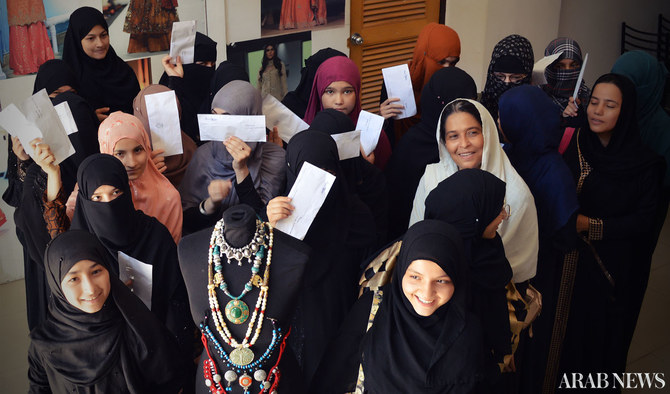
On Monday, FnKAsia helped her and 24 other refugee women inch closer to realizing their dream of becoming financially independent by giving them their first paychecks.
“Today, I got my first earning. I am going to purchase clothes for my mom and father. I will also purchase gifts for my brothers and sisters,” Qahar said.
It’s a big deal for Qahar who had to drop out of college when the family fell on hard times. Things took a turn for the worse when they were displaced by the Afghan war and eventually ended up as refugees in a camp in Sindh.
According to the United Nations High Commissioner for Refugees, Pakistan continues to host 1.39 million refugees from Afghanistan, with nearly 63,000 residing in the Sindh province alone, mostly in Karachi.
With employment opportunities few and far between, several struggles to make ends meet, with most resorting to menial jobs, such as picking thrash, to take a dollar or two home.
So, when FnkAsia decided to take the 25 refugees under its wings in November last year – to train them in tasks which would make them self-reliant and economically independent – Qahar says she jumped at the opportunity.
Besides financial independence, she said the job has also helped her forge a stronger bond with her family members.
“Now, I just inform my mom if I have to leave home. For my father, other family members it will be a surprise,” Qahar said, adding that her father who washes dishes at a local hotel in Al-Asif square, has encouraged her from day one to find her own niche.
The program, which was for a duration of three months, saw Huma Adnan, Founder of Craft Stories and FnkAsia, designate three women – namely Shareefa, Sakina and Sitara Syed – as trainers for the purpose.
Eventually, the three would go on to teach six women each at a center located in the Afghan refugee camp in Karachi.
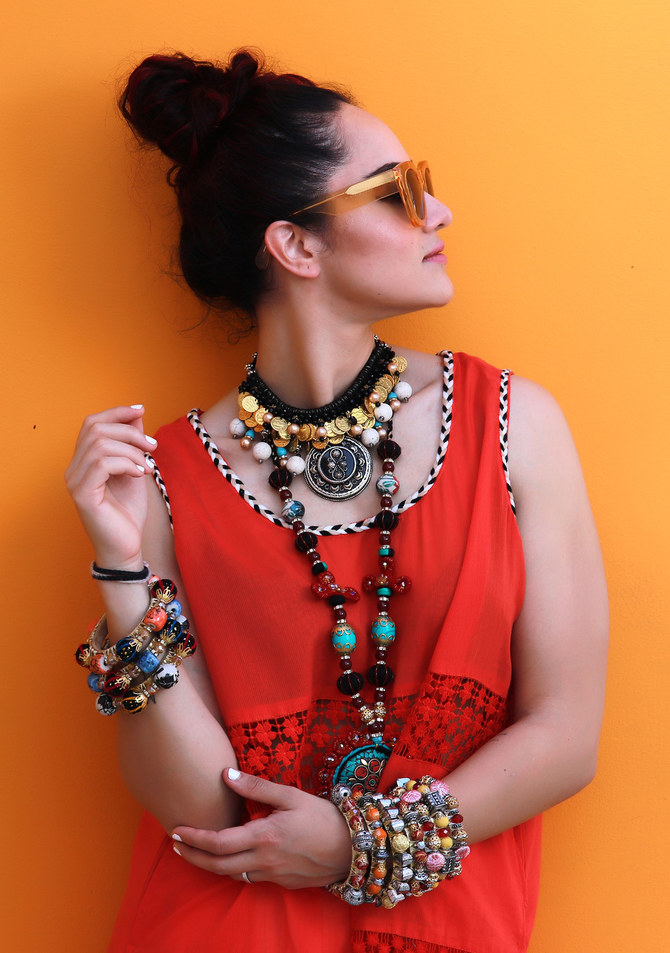
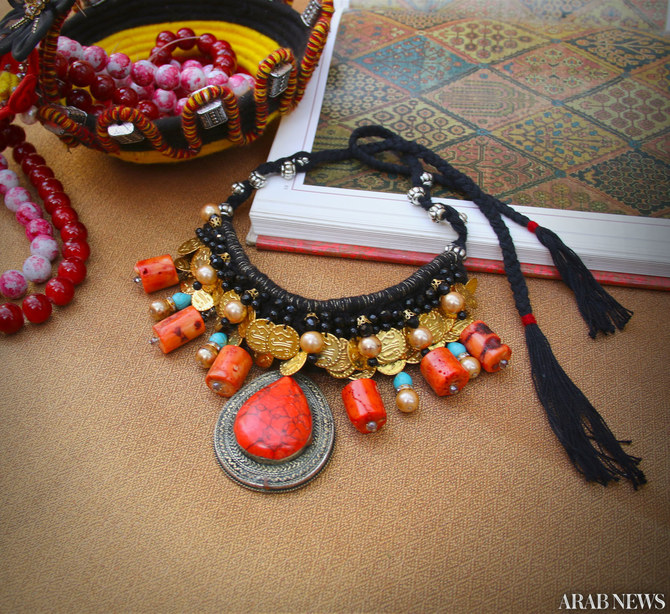
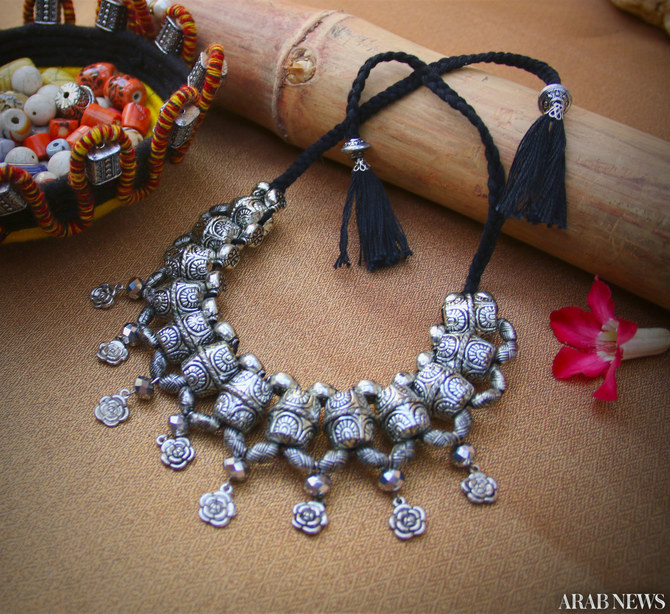
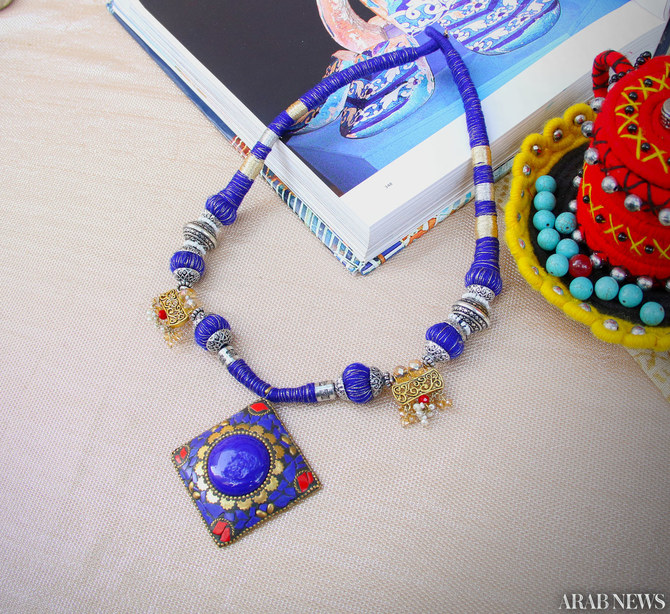
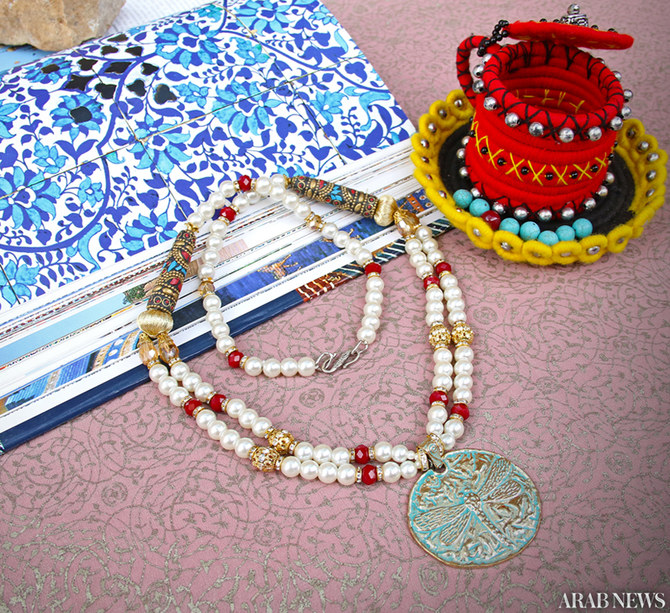
Made with expensive material, which includes metallic silk threads, gold wires, glass micro cut beads, pearls, metal accessories, stones, and lamb suede backing, the earnings from each set of jewelry is more than 40 percent, with the rest being paid toward the cost of material and marketing.
Together, the women create three pieces of jewelry a day, which FnkAsia sells at a retail price of Rs 2,500 per piece. The initiative gained traction when Pakistan’s top models and TV actresses displayed the stunning jewelry during a fashion show in Karachi, in March this year.
“This is a huge success story. We not only teach [them how to make] handicrafts but train them to be leaders and entrepreneurs. They are quick learners, meet deadlines and have precision,” Adnan said, adding that plans are in place to hire more teachers to train 50 more women in the craft.
While locally the demand for the products is low, Adnan says the “international market can get a better price and better share for the products.”
The refugee women, for their part, are not complaining.
Sitara Syed, who is raising her four children as a single mother – after her husband went missing in Kandahar over a decade ago – says that her only regret is that her children couldn’t pursue their education.
“I have been washing dishes at people’s homes for the last five to six years after I came to Pakistan. Now when I have started earning, I want my children, at least the two daughters, to re-join school which they had left in seventh and three classes,” she said.
Qahar says while the earnings may be meager at the moment, it’s not her definitive goal right anymore. “I want to start my own business, train women of my family and sell their work with help of FnkAsia,” she said.
“I’d never dreamt of being where I am today, but now I have started dreaming more. I am sure my dream of setting up my own business will materialize soon,” Qahar said.


![]()
![]()
![]()
![]()
![]()
![]()
![]()
![]()
![]()
![]()

Top fashion brand pays it forward by rewarding 25 Afghan women




Top fashion brand pays it forward by rewarding 25 Afghan women
- Refugees receive first salaries for making jewelry as part of Pakistan project
- FnkAsia to train 50 more individuals in the program aimed at self-reliance
Latest updates





© 2026 SAUDI RESEARCH & PUBLISHING COMPANY, All Rights Reserved And subject to Terms of Use Agreement.