ISLAMABAD: Pakistan and the United Arab Emirates have always enjoyed fraternal relations, encouraging the top UAE diplomat in Islamabad to strengthen them further by helping the underprivileged people in this country who find it hard to make ends meet.
Faced with significant economic challenges, many people in Pakistan are beginning to feel the pinch as the country’s national currency loses its value against the US dollar and inflation hits dangerously high levels.
While the UAE gave Pakistan $3 billion to help stave off its balance-of-payments crisis, its embassy in Pakistan also rescued financially vulnerable citizens of this country by launching a major humanitarian campaign during the Muslim fasting month of Ramadan.
“As [UAE] ambassador to Pakistan, I have been focusing on improving education and health sectors besides offering humanitarian assistance,” said Hamad Obaid Ibrahim Alzaabi, the UAE envoy, while talking to Arab News.
The UAE embassy has also been assisted by various charity foundations in its philanthropic ventures. It has provided shelters and homes to many Pakistanis and established schools as part of its vision to alleviate poverty and give people a hope for a better future.
As its officials celebrate the spirit of Ramadan, they have amplified the scale of humanitarian work, hoping to support charitable causes and developmental work as representatives of one of the leading donor states in the world.
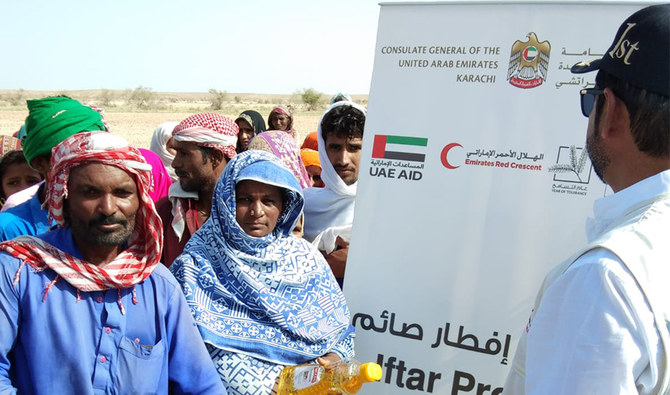
Among many of its ventures, the embassy is engaged in its annual Ramadan iftar food distribution drive for the needy, a cause supported by Sheikh Khalifa Bin Zayed Humanitarian Foundation.
The UAE diplomats also supervised a flour distribution program in Gilgit-Baltistan after carrying out a similar project in the province of Khyber Pakhtunkhwa where 5000 people benefited from the scheme.
Through the support of Mohammed Bin Rashid Humanitarian and Charity Establishment, the embassy distributed 1000 complete food packages among the needy families last week.
It also opened new schools and built a hospital in Azad Kashmir with the help of Mohammed bin Rashid Al Maktoum Foundation, a UAE media officer told Arab News on Monday. The UAE Red Crescent Society “is also doing many humanitarian projects in Pakistan,” he said, such as “establishing mosques, schools, and hospitals.”
The UAE-Pakistan Assistance Program (UAE-PAP) is one of the most important initiatives launched in 2011 to help the Islamic republic by building road networks, establishing education and health care facilities, and providing access to clean drinking water to its people.
One of the objectives of the program is to eradicate polio. From 2014 to 2018, UAE-PAP has provided more than 371.1 million units of polio vaccines, saving some 57 million children in Pakistan from the paralyzing disease.
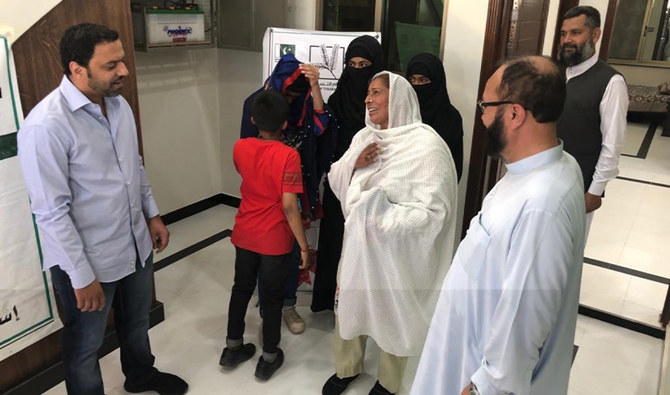
Apart from all these activities, the UAE ambassador gifted a fully furnished house to a widowed fruit seller in Islamabad in the beginning of this month. He also presented a double-story, four-bedroom house to a paralyzed man from Kashmir who lost his abode in a devastating earthquake in October 2005.
In its latest act of giving, the embassy has started supporting a poor woman in Pakistan’s federal capital who sells footballs near the largest park in the city.
“She sews footballs with her hands and sells them to families in the park. We have decided to help her,” said an embassy staffer.
He declined to identify her, though he added that she did not have a breadwinner and was supporting her children entirely on her own.


![]()
![]()
![]()

Ramadan spirit: UAE diplomats provide humanitarian assistance to Pakistanis

Ramadan spirit: UAE diplomats provide humanitarian assistance to Pakistanis
- Four UAE government foundations are supporting the underprivileged in Pakistan
- Embassy is working to establish schools, healthcare facilities and mosques
Latest updates


© 2026 SAUDI RESEARCH & PUBLISHING COMPANY, All Rights Reserved And subject to Terms of Use Agreement.