

‘Young Ahmed’: Cannes prize winner offers a harsh look at radicalization

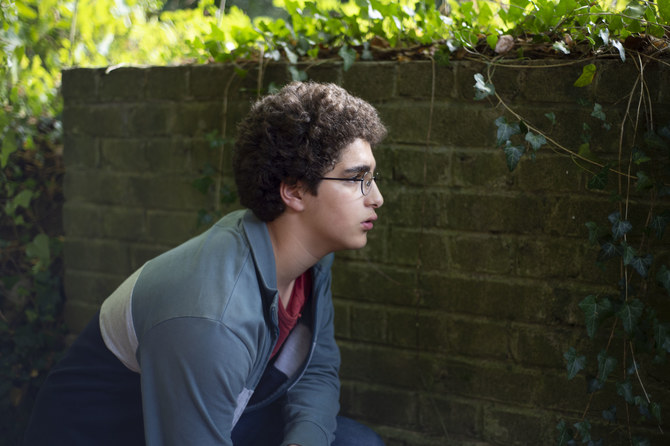
Unlike earlier works of the directors, this movie portrays a dark image of the radicalized boy. (Supplied)
Updated 27 May 2019
Follow

‘Young Ahmed’: Cannes prize winner offers a harsh look at radicalization

  • The boy gets radicalized by a militant Imam who gets close to him
  • Ahmad starts mistreating his mum cause of her alcohol use

DUBAI: Belgian brothers’ Jean-Pierre and Luc Dardenne's “Young Ahmed,” which won the best director trophy at Cannes on Saturday night, is characteristically dark. Winner of two earlier Palm d’Ors for their 1999 “Rosetta” about a 17-year-old girl’s travails dealing with unemployment and an alcoholic mother, as well as for “The Child” in 2005 in which a young husband sells his baby, the directors this time step into religious radicalism. “Young Ahmed” is a painful look at how the young and the vulnerable are brainwashed into a violent ideology. While the Dardenne’s earlier films like “The Son,” “The Kid with a Bike” and even “The Child” have a streak of optimism running through them, “Young Ahmed” has no such comfort.


(Supplied)

Ahmed (played with disarming natural ease by Idir Ben Addi) gets dangerously close to a militant imam (Othmane Moumen), who indoctrinates the boy with his own radicalized ideology — while absolving himself of blame. Ahmed begins to hate behavior he used to find normal. At school, he refuses to shake hands with his teacher, Ines (Myriem Akheddiou), because she is a woman. And at home, he abuses his mother for drinking alcohol. He is so obsessed with his own religious purity that when a girl wants to be friends with him, he asks her to convert.
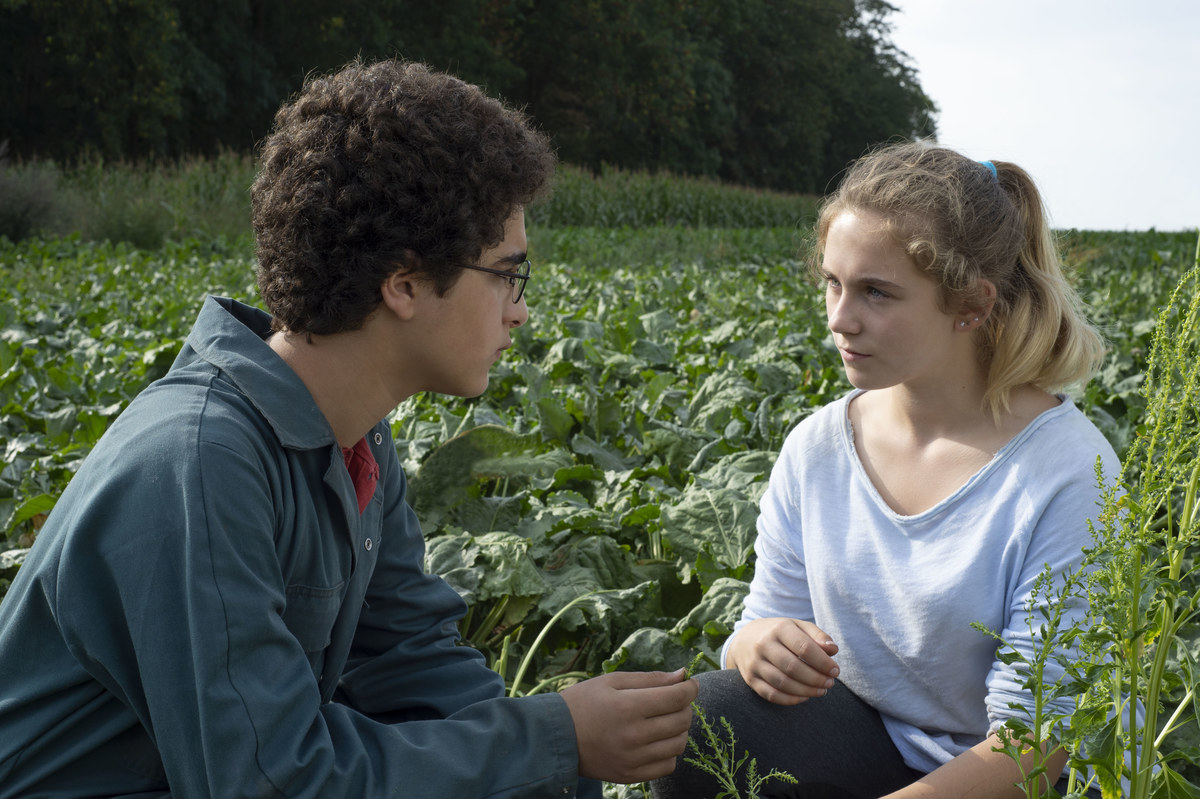


(Supplied)

Some may see the movie as harsh, even far-fetched. Certainly, it is very different from the brothers’ earlier works, which shed some light at the end of a dark tunnel. But “Young Ahmed” confronts us with dangerous dilemmas — the boy is already in the deathly grip of the imam, despite his teacher’s desperate efforts, and ends up being caught in a painful tug-of-war.


‘One in a Million’: Syrian refugee tale wows Sundance

Updated 24 January 2026
Follow

‘One in a Million’: Syrian refugee tale wows Sundance

PARK CITY: As a million Syrians fled their country's devastating civil war in 2015, directors Itab Azzam and Jack MacInnes headed to Turkey where they would meet a young girl who encapsulated the contradictions of this enormous migration.

In Ismir, they met Isra'a, a then-11-year-old girl whose family had left Aleppo as bombs rained down on the city, and who would become the subject of their documentary "One In A Million," which premiered at the Sundance Film Festival on Friday.

For the next ten years, they followed her and her family's travels through Europe, towards Germany and a new life, where the opportunities and the challenges would almost tear her family apart.

The film is by directors Itab Azzam and Jack MacInnes. (Supplied)

There was "something about Isra'a that sort of felt to us like it encapsulated everything about what was happening there," MacInnes told an audience at the Sundance Film Festival in Park City, Utah on Friday.

"The obvious vulnerability of her situation, especially as being a child going through this, but that at the same time, she was an agent.

"She wasn't sitting back, waiting for other people to save her. She was trying to fight, make her own way there."

The documentary mixes fly-on-the-wall footage with sit-down interviews that reveal Isra'a's changing relationship with Germany, with her religion, and with her father.

It is this evolution between father and daughter that provides the emotional backbone to the film, and through which tensions play out over their new-found freedoms in Europe -- something her father struggles to adjust to.

Isra'a, who by the end of the film is a married mother living in Germany, said watching her life on film in the Park City theatre was "beautiful."

And having documentarists follow her every step of the way as she grew had its upsides.

"I felt like this was something very special," she told the audience after the screening. "My friends thought I was famous; it made making friends easier and faster."