



LAHORE – Paused at a traffic junction near one of Lahore’s most upscale neighborhoods, weary car drivers on their way home for Iftar this Ramadan in the eastern city looked out their windows and couldn’t stop staring.
A middle-aged woman in a chaddar sat in the driving seat of a stylish pink auto-rickshaw, a common three wheeled motorized vehicle in urban Pakistan, which is driven almost exclusively by men.
The 45 year old widow, Kausar Parveen, is continuing the rickshaw driving legacy of a husband she loved, and one who provided well for their family of six children until he died suddenly in 2013, leaving her with a pile of household fees and school bills she could not afford to pay.
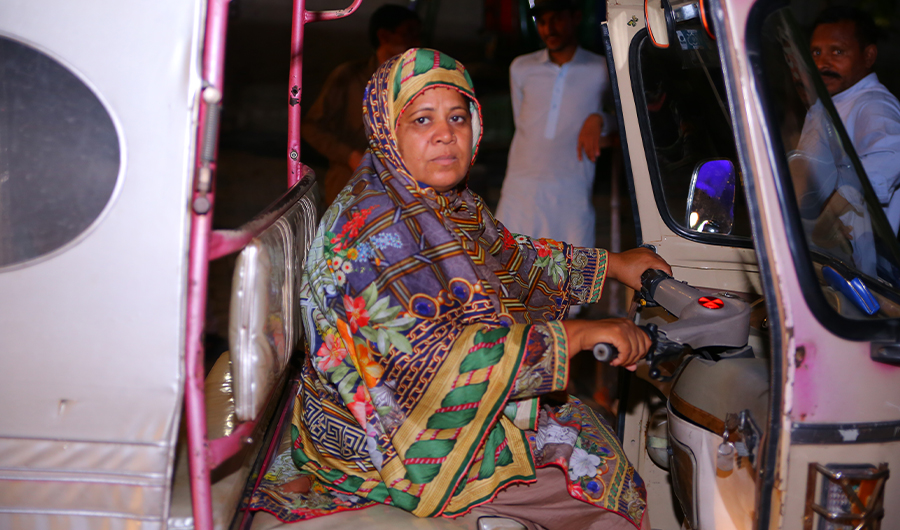
Kausar Parveen in the driving seat of her rickshaw in Lahore. May 25, 2019 (AN Photo by Ali Raza Rehmani)
“It was the most depressing moment of my life when I withdrew my three older children from school and sent them to work,” Parveen told Arab News on Saturday evening. With an hour to go before the breaking of the fast, Parveen got a bucket of soapy water and began cleaning her rickshaw.
At first, she said she began to do part-time odd-jobs in rich households, but by the end of the month she was bringing home less than $60, which barely covered daily expenses and school fees.
“Those were my most difficult moments,” she said. “All I ever dreamed of in life was a good education for my children.”
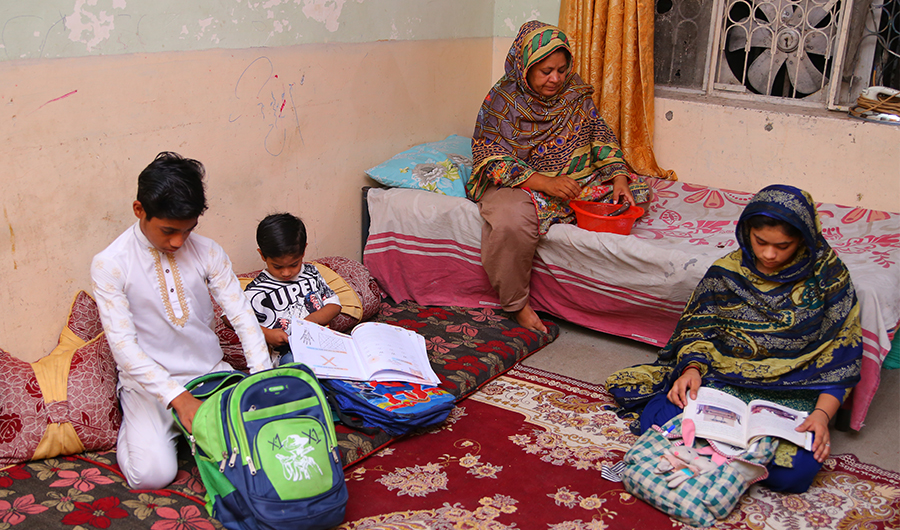
Kausar Parveen and her three children in the single room where they live. Parveen says she dreams of a quality education for her children. May 25, 2019 (AN Photo by Ali Raza Rehmani)
It was then, thinking about how her late husband had made ends seamlessly meet, that Parveen had the simple idea that would change her life: she would drive a rickshaw just like he used to.
“I thought of my husband who used to drive a rickshaw and how smooth our life was. My kids were going to school, the kitchen was running comfortably and we even had some savings,” she said, with the hint of a smile as she remembered the good days.
When she reached out to her father-in-law for help, he was supportive of her plan, and in 2015 they contacted a local NGO that helped her buy a rickshaw on easy instalments.
“In the beginning, male passengers avoided me,” Parveen laughed. “They were not accepting me in the driving seat. But the women always looked at me with love.”
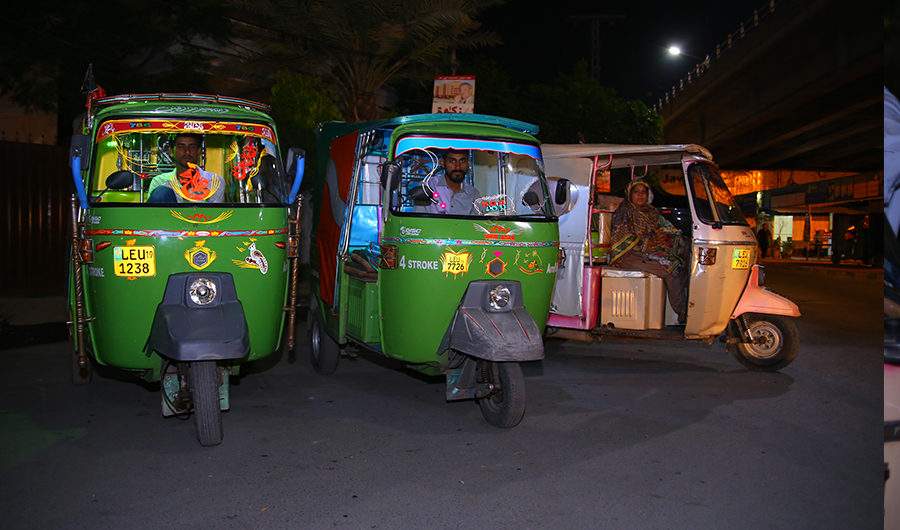
Rickshaw driving is a predominantly male profession in socially conservative Pakistan. In this photo, Kausar Parveen waits for passengers in her rickshaw by the side of a road alongside her male counterparts. May 25, 2019 (AN Photo by Ali Raza Rehmani)
In Parveen’s neighborhood of Basti Allah Hoo, which translates to Town of God, the homes are small and cramped together. Less than a mile away, the vast boulevards of Gulberg district are scattered with upmarket restaurants, palatial homes and boutique shops. With more luxury cars than rickshaws in this part of town, every morning Parveen takes her rickshaw, drops her children to school and then whizzes expertly around areas where students and people on foot are looking for a ride, especially in the summer heat.
Despite the advent of car and ride-sharing companies in Pakistan like Uber and Careem, rickshaws remain a popular mode of transport for getting around cheaply and quickly in congested cities.
“I’m earning good money,” Parveen said proudly. “I married off my three older children. Now I’m educating the younger three, and running my house.”
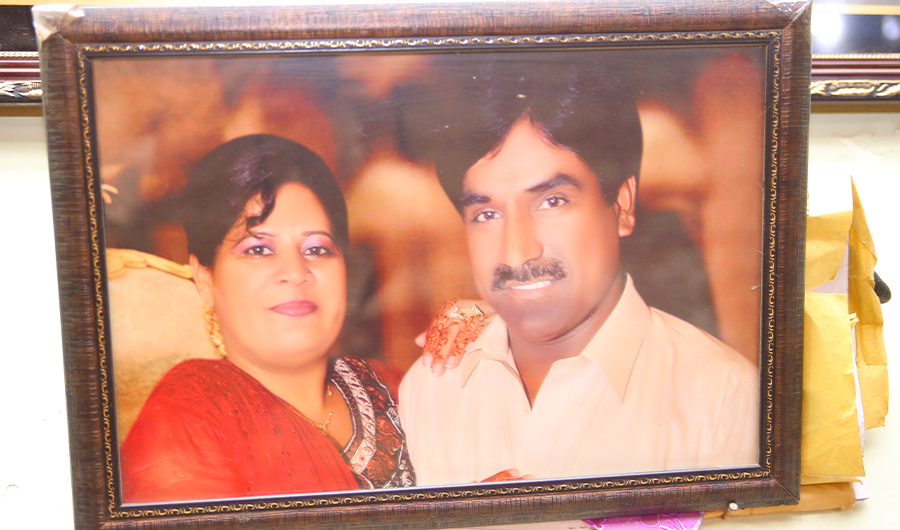
An old photograph of Kausar Parveen and her husband, a rickshaw driver, who died suddenly in 2013. May 25, 2019 (AN Photo by Ali Raza Rehmani)
With a daily income of about $10, she spends roughly a third of it on petrol for her rickshaw and gets to pocket the rest. Most of it is spent on her children’s books, daily after-school tuitions and fees. But Parveen says she has no regrets, as long as her dream for her children’s education comes true.
“Sometimes traffic wardens create unnecessary problems for me, and people harass me,” she said, as the family settled down to break their fast. Then she looked at her hands and smiled: “But still, I am determined to keep the wheel moving.”


