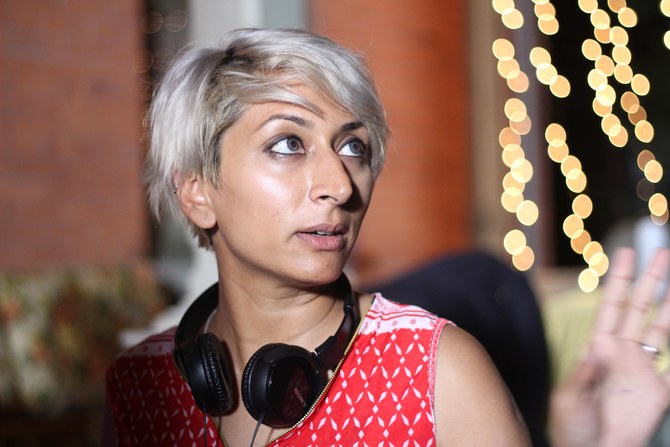
ISLAMABAD: Pakistani filmmaker Iram Parveen Bilal, who made history last week as the first director of a feature film from the South Asia nation to be invited to the glamorous Cannes Film Festival, said she wished to “keep the hope alive” for other Pakistanis wanting to make their mark at international cinema events.
Last year, Pakistan’s best known film actress Mahira Khan made her debut at Cannes. Before her, the only other Pakistani artist to attend the festival was Adnan Siddiqui who took the film ‘A Mighty Heart’ to the event in 2008 with Hollywood bigwigs Brad Pitt and Angelina Jolie.
Now Bilal has made it to the festival as part of the prestigious Cinefondation L’Atelier program that picks 15 directors with “particularly promising projects” for a seven-day intensive fast track finance program. The program has a 93 percent financing and distribution success rate.
“It is surreal, it is the world’s biggest stage for cinema,” Bilal told Arab News in an interview, answering a question about what it felt like to attend Cannes. “I’m humbled and really honored to be included in a prestigious official selection of the festival. To be honest, I’m still a bit numb and processing it.”
But then she added: “If you’re honest and rooted as an artist, the magic will come. That’s the magic we all strive to create.”
Bilal’s project ‘Wakhri,’ the Urdu word for ‘different,’ is about an accidental social media star “who learns the harsh cost of wearing masks in the real world.”
“The film deals with themes like hypocrisy, trolling and the ultimate empowerment of self,” Bilal said.
Bilal has been directing films for over 10 years. Her first feature film ‘Josh’ was the very first Pakistani film to land on streaming giant Netflix and is also part of the permanent selection in the US Library of Congress.
Born to academic parents, and an environmental sciences engineer herself, she is the first in her family to deviate from the scientific path into the “wild west of the entertainment industry.”
The Cinefondation L’Atelier program, of which Bilal’s Wakhri is a part, has a 93 percent financing and distribution success rate, the filmmaker said.
“The general manager of the program watched my work at the Locarno Film Festival’s film library and had been tracking me,” Bilal said. The GM then met Abid Merchant, Wakhri’s producer, and the pair were invited to apply to the program.
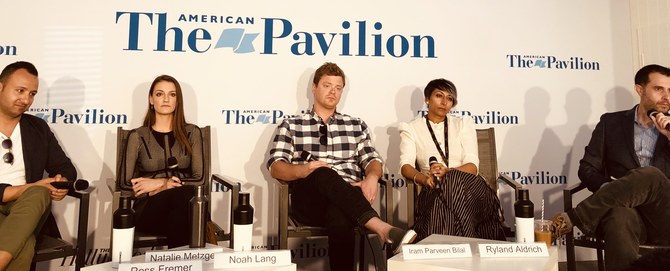
In addition to being a part of the Cinefondation L’Atelier group, Bilal also spoke at Cannes on a ‘Storytellers and the Creative Process’ panel where she got to engage with early career filmmakers and students and spoke about her approach to filmmaking.
Cannes has recently come under fire for its under-representation of women filmmakers and directors, but Bilal said she tried to ignore the “depressing” statistics.
“I just focus on possibilities and on realizing that I have been fortunate enough to be a trail blazer and perhaps, even in this case, we can somehow go against the odds and achieve something very unexpected,” the Pakistani director said.
“It is humbling and I hope my participation will open doors for many more to come from our country.”
Bilal said Pakistan had so much filmmaking talent but little to no access.
“It has taken me years of building my work and a network to get to this point. I hope this leverages for people coming up the ranks right behind me,” the filmmaker said. “I take representing Pakistan very seriously. If we are as professional and committed as we can be, we keep the hope alive for others coming behind us as well.”


![]()
![]()
![]()

‘The magic will come’: First Pakistani filmmaker at Cannes hopes to light the way for others

‘The magic will come’: First Pakistani filmmaker at Cannes hopes to light the way for others
- Iram Parveen Bilal is part of the Cinefondation’s Atelier program which picks 15 directors with “particularly promising” projects
- ‘Wakhri’ is about the accidental social media star “who learns the harsh cost of wearing masks in the real world,” Bilal says
Latest updates


© 2026 SAUDI RESEARCH & PUBLISHING COMPANY, All Rights Reserved And subject to Terms of Use Agreement.