RIYADH: Saudi Arabia and the UAE on Wednesday signed agreements to combat disease and malnutrition in Yemen, the Saudi Press Agency reported.
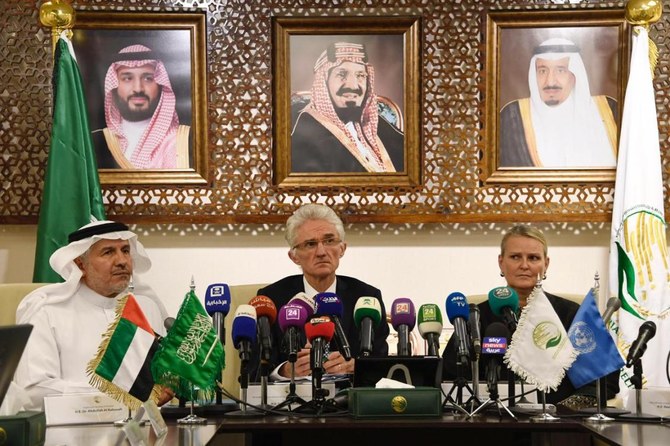
The agreements were signed with UNICEF and the World Health Organization (WHO) during a high-level meeting in Riyadh that was attended by the General Supervisor of the King Salman Humanitarian Aid and Relief Center and adviser to the Royal Court Abdullah bin Abdulaziz Al-Rabeeah, Saudi Arabia’s Permanent Representative to the UN Ambassador Abdullah bin Yahya Al-Maalami, and the UAE Minister of State for International cooperation Reem Al-Hashimy as well as the UN’s relief chief Mark Lowcock.
The first agreement is about controlling a cholera outbreak in Yemen in cooperation with the WHO as part of an initiative to support relief and humanitarian projects with $20 million, directly benefiting more than a million people and indirectly aiding more than 18 million.
As of May 10 more than 306,000 suspected cases had been reported across the country, according to UNICEF, two years after the country was gripped by the world’s largest cholera outbreak.
An estimated 16 million people in Yemen, more than half of them children, lack adequate access to water, sanitation and hygiene services, UNICEF added.
The second agreement will address acute malnutrition in high-risk areas in cooperation with UNICEF. The project has a total value of $40 million and will benefit 1.4 million people.
The agreement also aims to treat 50,000 Yemeni children under the age of five who are suffering from acute malnutrition, promote infant and young child feeding practices and monitor their growth, provide health counseling to the local community, health facilities and 400,000 mothers, provide micronutrient supplements to 800,000 children under the age of five, and detect malnutrition in a million children.
Yemen is the largest humanitarian crisis in the world. More than 24 million people are in need of humanitarian assistance, including more than 12 million children.
Around 360,000 children under five were suffering from severe acute malnutrition and require treatment, UNICEF said in March.
The Riyadh meeting discussed the humanitarian situation in Yemen and reviewed matters related to the Saudi and Emirati grant for 2018.
In a press conference after the meeting, the Lowcock thanked Saudi Arabia and the UAE for their humanitarian support and relief work in Yemen.
Lowcock, who is the UN’s under-secretary-general for humanitarian affairs and emergency relief coordinator, said the two countries offered around $1 billion at a UN pledging conference in Geneva in February.
“Heavier trucks, including those carrying food aid, now take more than 60 hours to travel between Sana’a and Aden — that is about four times as long as used to be the case. In February and March, more than 900,000 people were affected by delays or interruptions in assistance,” he told the Council.


![]()

Saudi Arabia and UAE agree to fight disease, malnutrition in Yemen at high-level WHO meeting in Riyadh
Saudi Arabia and UAE agree to fight disease, malnutrition in Yemen at high-level WHO meeting in Riyadh
- Yemen wracked by cholera outbreak
- Country is the world’s largest humanitarian crisis


Latest updates


© 2026 SAUDI RESEARCH & PUBLISHING COMPANY, All Rights Reserved And subject to Terms of Use Agreement.