ANKARA/ISTANBUL: The Turkish lira weakened on Tuesday after the central bank lowered the swap market lira interest rate and held a repo auction for the first time in nearly two weeks, reversing a policy tightening step it had taken to support the currency.
A currency crisis last year wiped nearly 30% off the lira’s value against the dollar and it has fallen further in 2019.
The lira weakened as far as 6.0860 against the US currency after the central bank moves, compared with a close of 6.0315 on Monday. At 1012 GMT, it stood at 6.0500.
The central bank injected 17 billion lira ($2.8 billion) in the repo, the first since it suspended them on May 9. It lowered the lira interest rate in swap transactions to 24% from 25.5%. Bankers said this would gradually lower the average cost of funding by the same amount, to the bank’s policy rate of 24%.
The steps came as investors weighed up Turkey’s banking watchdog decision to impose a one-day settlement delay for FX purchases of more than $100,000 by individuals. Bankers said that move could raise concerns about capital controls.
“The administration seems to be increasingly desperate to keep the lira stable at all costs ahead of the re-run of the crucial vote in Istanbul,” said Rabobank emerging markets forex strategist Piotr Matys, commenting on the forex purchases move.
“Instead of providing investors with a much needed assurance, such measures will have the opposite effect, as the market will interpret it as rising interference in the banking sector.”
The decision by election authorities to re-run the Istanbul mayoral vote has fueled concerns about an erosion of democracy and unnerved financial markets, helping push the lira down another 13% this year. The ruling AK Party’s narrow defeat in the initial election in March was the first time in 25 years that President Tayyip Erdogan’s party or its Islamist predecessors had lost control of Turkey’s biggest city.
Matys said the repo move was a contradictory measure at a time when Turkey needs to restore confidence in the lira.
“Such conflicting policies make Turkey increasingly unpredictable and keep the upside bias in USD/TRY intact,” he added, saying initial resistance was around 6.2282, with a break higher exposing the 6.46-6.50 area as the next potential target.
HIGH-FREQUENCY TRADERS TARGETED
A BDDK watchdog letter sent to banks on Monday said the settlement date for those purchases of more than $100,000 — or equivalent in other currencies — will be the following day.
“This one-day delay on FX transaction for retail investors is curious, especially when they take away the increase in rates in the morning,” said Charles Robertson, global chief economist at Renaissance Capital. “It’s a hint of capital controls, and the threat of more is implicit.”
Beste Naz Sullu, of Gedik Investment, said the BDDK was trying to curb foreign exchange speculation, but added that the market “does not like measures such as this much.”
The BDDK said on Tuesday the forex purchases move, effective from Tuesday, aimed to prevent “unnecessary and unjust harm” to the market, particularly by high-frequency traders.
Authorities have recently taken unorthodox steps to protect the currency, including state banks selling dollars. Ankara also raised a tax on some foreign exchange sales to 0.1% from zero last week to discourage Turks converting savings to foreign currencies.
Turks have flocked to foreign currencies in the months since last year’s crisis hit its peak in August, when the lira fell as much as 42% against the dollar.
The lira woes helped tip the economy into recession last year and Turkish Statistical Institute data on Tuesday showed consumer confidence tumbled to 55.3 points in May, the lowest level since the data was first published in 2004.
The main share index fell 1.26 percent.


![]()

Turkish lira weakens after cenbank repos resume, FX purchase move
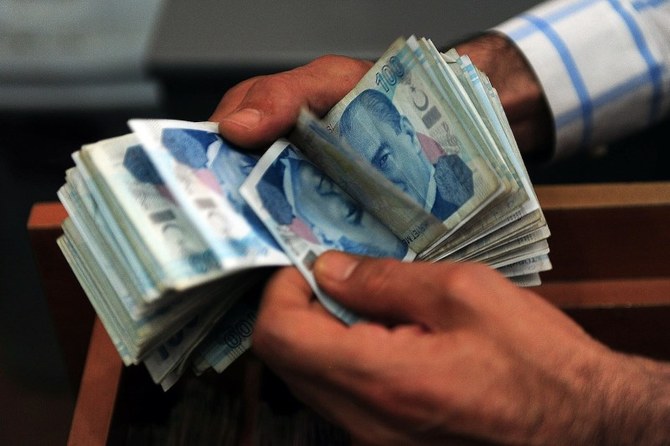
Turkish lira weakens after cenbank repos resume, FX purchase move


Latest updates


Recommended


© 2026 SAUDI RESEARCH & PUBLISHING COMPANY, All Rights Reserved And subject to Terms of Use Agreement.