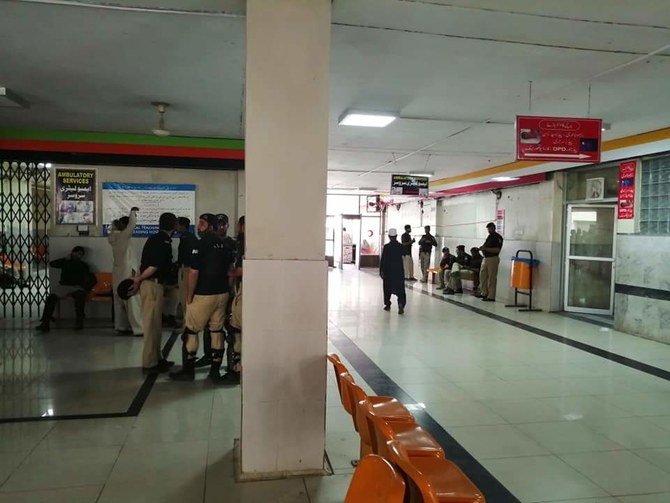
PESHAWAR: The provincial cabinet of Khyber Pakhtunkhwa would meet in the next few days to discuss the ongoing strike by doctors that has paralyzed the public health sector in the province for five consecutive days, said KP government’s spokesperson, Ajmal Wazir, while talking to Arab News on Monday.
Medical practitioners associated with government hospitals in the province earlier protested the proposed privatization of their health facilities and criticized the idea of forming regional and district health authorities. However, they called off their week-long strike in the beginning of this month when the provincial administration promised to address their grievances.
More recently, doctors went on a strike once again after an assistant professor of Khyber Teaching Hospital was allegedly thrashed by the province’s health minister and his security guards.
“I hope we will be able to tackle the issue in the next few days. We will do everything to prevent this protest from flaring up further,” Wazir said, adding that Prime Minister Imran Khan had also instructed the relevant authorities to address the concerns of the doctors on priority during his visit to Peshawar on Saturday.
The cabinet’s meeting was earlier scheduled to take place on Monday, he continued, but it was postponed since the KP administration first wanted to convince the doctors to end their strike.
Meanwhile, members of the underprivileged communities, who mostly rely on public health facilities, find themselves in a bind as the showdown between the government and the doctors continue. Many of them are forced to go to private clinics, though they cannot afford extensive medical treatment at these infirmaries.
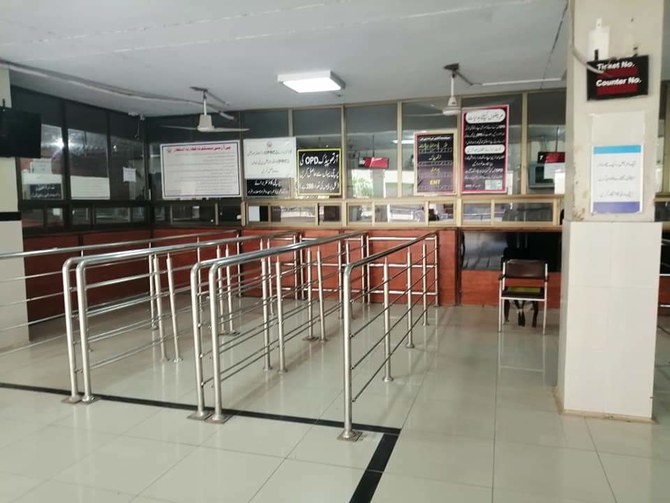
Hakim Khan, a shopkeeper from the province’s southern district of Tank, told Arab News he had to take his nine-year-old daughter with a fractured arm to a private clinic even as it cost him Rs15,000 ($102) since the OPD at the district hospital was closed.
According to Dr. Muhammad Izhar, media coordinator of the Young Doctors Association (YDA), his colleagues would begin to work at the Lady Reading Hospital in Peshawar “on humanitarian grounds,” though services in the rest of the hospitals would remain suspended indefinitely.
“We have decided to treat OPD patients there,” he said. “But we will only extend our services to truly deserving patients. We will also chalk out a new strategy to intensify our strike, if the government fails to resolve our problems by the coming week.”
While the doctors’ council in the province has already ruled out the possibility of accepting the government’s privatization plan for their hospitals, KP health minister’s public relations officer, Syed Bilal Kazmi, told Arab News that the government had invited its members for a meeting in the next two days.
“The government will decide to take action if the two sides fail to reach an agreement,” Kazmi added.
YDA president Dr. Rizwan Kundi told Arab News the council would end its strike if their grievances regarding the establishment of district and regional health authorities, transfer to home districts and violation of merit in promotions and appointments at medical teaching institutions were resolved.
“We are opposing the privatization of hospitals and the formation of regional and district health authorities,” he said, adding that a judicial commission should be formed to determine who was responsible for the current turmoil and mayhem in the health sector.
Dr. Kundi said his colleagues were also working on a strategy to bring the government under maximum pressure.
“We are pondering different options, including taking our protest to other provinces, if the KP government does not accept our demands,” he warned.


![]()
![]()

KP government to address grievances of protesting doctors, says spokesman
KP government to address grievances of protesting doctors, says spokesman
- Doctors opposing privatization of hospitals have gone on a strike in the province
- The ongoing crisis has affected thousands of people
Latest updates


© 2026 SAUDI RESEARCH & PUBLISHING COMPANY, All Rights Reserved And subject to Terms of Use Agreement.