LONDON: Britain’s tumultuous divorce from the European Union was again in disarray on Friday as the opposition Labour Party declared last-ditch cross-party talks dead as Prime Minister Theresa May’s premiership crumbled.
Nearly three years after the United Kingdom voted 52 percent to 48 percent in a referendum to leave the EU, it is still unclear how, when or if it will ever leave the European club it joined in 1973. The current deadline to leave is October 31.
Brexit talks between May’s Conservative Party and Labour collapsed hours after May agreed on Thursday to set out a timetable for her departure in early June.
Labour leader Jeremy Corbyn wrote to May on Friday informing her that the Brexit talks, which began on April 3, had “gone as far as they can” due to the instability of her government.
“We have been unable to bridge important policy gaps between us,” Corbyn, a socialist who voted against joining the predecessor of the EU in 1975, wrote to May.
“Even more crucially, the increasing weakness and instability of your government means there cannot be confidence in securing whatever might be agreed between us,” Corbyn said.
He said Labour would oppose May’s deal when it returns to parliament early next month.
The divorce deal, which May agreed last year with the EU, has already been rejected three times by a deeply divided parliament.
May’s hands have been tied, knowing that to make concessions to Labour would lead to fury in her divided party. Labour has feared any compromises on issues such as workers’ rights would be torn up by May’s successor.
Britain’s labyrinthine crisis over Brexit has stunned allies and foes alike, and with deadlock in London, the world’s fifth largest economy faces an array of options including an exit with a deal to smooth the transition, a no-deal exit, an election or a second referendum.
The Brexit impasse is unlikely to be broken swiftly.
May will put her ‘European Union (Withdrawal Agreement) Bill’ to a vote in parliament in early June even though rebels in her party have pledged to defeat it. Then she must agree a timetable for the election of a successor.
Boris Johnson, the face of the campaign for Britain to leave the EU, said he would be standing as a candidate to replace May as Conservative leader.
“Tories must go with Boris Johnson if they want to survive or they’ll end up as dead as a dodo,” Sun newspaper columnist Trevor Kavanagh said. “Even sopping wet Remainers can see the writing on the wall and want Theresa May out as fast as possible.”
The winner of a leadership contest will automatically become prime minister and will take control of the Brexit process, which has plunged Britain into its worst political crisis since World War Two.
Johnson has been one of May’s most outspoken critics over Brexit and supports leaving the EU without a deal. Parliament has repeatedly said it does not want a no-deal Brexit.
The Brexit crisis has left the United Kingdom divided and smaller parties — such as Nigel Farage’s Brexit Party and the pro-EU Liberal Democrats — are poaching support from both the Conservative and Labour parties at the fastest rate for decades.
“Britain is divided down the middle over Brexit: it was in 2016 and it is in 2019 — and that is one of the reasons why this issue is so difficult to resolve,” John Curtice, Britain’s top polling expert, said.
“We are also polarized: Most Leavers would prefer to leave without a deal and most Remainers want a second referendum in the hope we shall change our minds, and there isn’t an awful lot of support for any of the compromise options between those extremes.”


![]()

Labour declares Brexit talks dead as May’s premiership crumbles
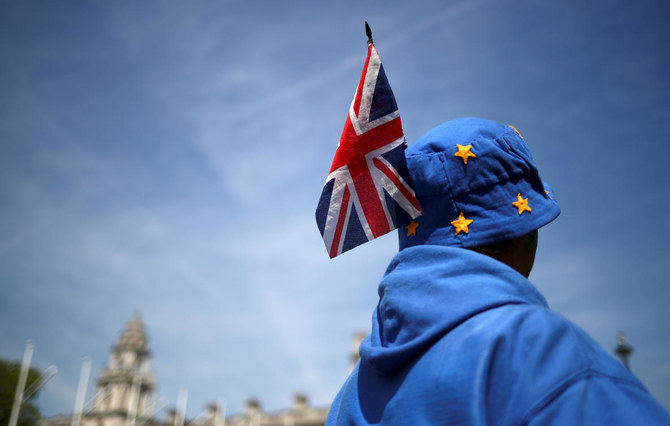
Labour declares Brexit talks dead as May’s premiership crumbles
- It is still unclear how, when or if the United Kingdom will ever leave the European club it joined in 1973
- The current deadline to leave is October 31


Latest updates


Recommended


© 2026 SAUDI RESEARCH & PUBLISHING COMPANY, All Rights Reserved And subject to Terms of Use Agreement.