RABAT, Morocco: Morocco’s border security chief says the North African kingdom is using new tactics to cut into the surge of migrants seeking to reach Europe, stopping about 25,000 attempts to reach Spain so far this year.
Khalid Zerouali says this amounts to about 30 percent more failed bids to cross to Spain, mainly via the Strait of Gibraltar, compared with the same period last year.
Speaking to The Associated Press on Thursday, Zerouali attributed the decrease in crossings to new surveillance technology and reinforced manpower, as well as action against human traffickers.
The number of migrants arriving in Spain last year was about 60,000, eclipsing the figures for Italy and Greece. Almost all arrived by sea.
Despite EU aid and cooperation, Zerouali mainly credited his own country with making a dent in migrant crossings.

Morocco says it’s cutting illegal migrant crossings to Spain
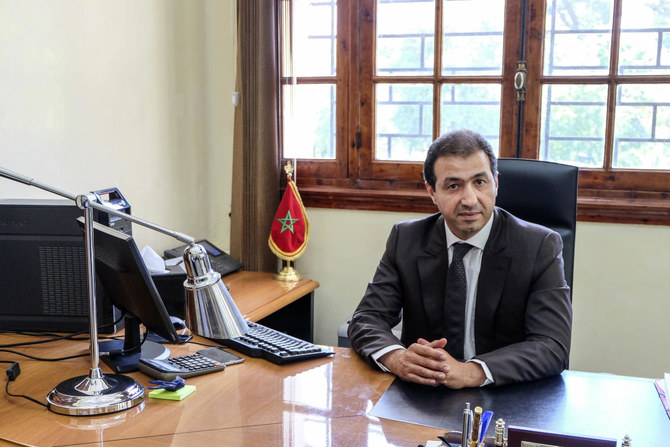
- Zerouali attributed the decrease in crossings to new surveillance technology and reinforced manpower
- The number of migrants arriving in Spain last year was about 60,000
Amman ranks among world’s top cities after first Quality of Life Index
- Jordanian capital second Arab city to be ranked in UN-backed index after Saudi Arabia’s Madinah
AMMAN: Jordan’s capital Amman has completed its first Quality of Life Index, ranking among the world’s leading cities to be assessed under the globally recognized framework, it was reported on Monday.
As a result, the city has become only the second in the Arab world — after Saudi Arabia’s Madinah — to be ranked in the program.
The Greater Amman Municipality said the city placed 10th globally out of 100 participating cities, with its index set to be officially listed on the international Quality of Life platform, the Jordan News Agency reported.
The assessment was developed in collaboration with the Quality of Life Initiative of the UN Human Settlements Programme — known as UN-Habitat — to advance urban well-being and human-centered development.
The Quality of Life Index combines objective data with residents’ perceptions, using global well-being indicators alongside local measures, offering a comprehensive picture of daily life.
The index measures performance across nine key areas: basic services, mobility, culture and recreation, education, environment, economy, governance, health and well-being, and housing and social cohesion.
Yousef Shawarbeh, the mayor of Amman, said the initiative aimed to support the city’s long-term vision of becoming a prosperous, inclusive and sustainable urban center, Petra reported.
He added that the index provided deeper insight into residents’ lived experiences and would help guide policymaking to improve quality of life.
Akram Khraisat, director of the Amman Urban Observatory, said the city’s participation marked a major step toward data-driven urban planning.
He added that the index would enable the municipality to better prioritize services, promote inclusive development, and assess the impact of policies on residents’ well-being, in line with the UN Sustainable Development Goals.
Officials said the initiative complemented a range of ongoing development projects in the capital, including public transport improvements, participatory greening and urban agriculture schemes, climate action planning, digital transformation initiatives and the Greater Amman Municipality Strategic Plan 2022–2026.


