You think healthy Ramadan eating isn’t possible in Islamabad? Think again

1 / 2
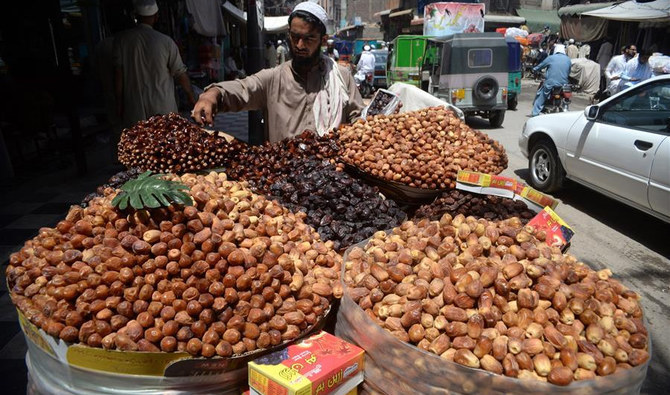
A vendor sells dates at a roadside stall ahead of the holy month of Ramadan in northwestern Pakistan's Peshawar city on May 26, 2017. (Credit: Xinhua/Umar Qayyum)
2 / 2
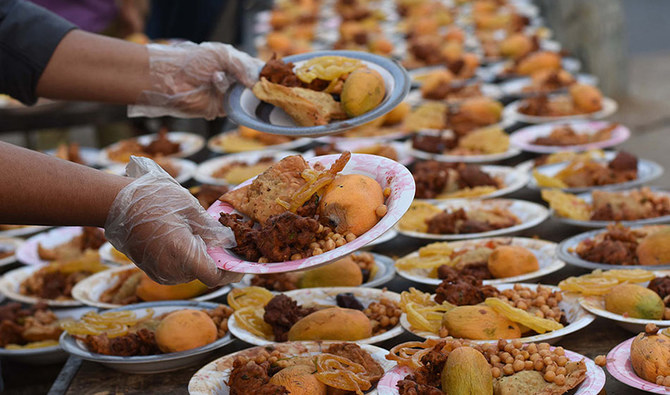
Pakistanis set the table for Iftar, the meal taken after sunset prayers to break the fast during the Muslim holy month of Ramadan, in Karachi, Pakistan, on 23 June, 2015. (Credit: EPA/SHAHZAIB AKBER)
Updated 18 May 2019
Follow

You think healthy Ramadan eating isn’t possible in Islamabad? Think again

  • For sehri meals, nutritionists recommend eggs, meat, lentils, green vegetables; for iftar, cereals, fruits, vegetables and meat are the way to go
  • Planning what you eat and resisting fried food and sugary drinks hold the key to staying healthy in Ramadan

ISLAMABAD: Dough-wrapped samosas filled with meat and vegetables. Pakora fritters made from potatoes. Mutton stews. Sweet vermicelli milk pudding, and lots and lots of dates. The holy month of Ramadan may be about fasting for devout Muslims, but it is also as much a gastronomical festival.
As Ramadan arrives in Pakistan each year, it brings with it questions of what to eat to remain energized, full and healthy at both the daily Sehri pre-dawn meal and the iftar dinner with which the devout break their fast. Especially when fasting from dawn till dusk needs to be practiced in the heat of summer months, maintaining a diet that helps keep the hunger and fatigue at bay and the spirits up is even more essential.
Good news first: dates, a Ramadan staple around the world, are a healthy option!
“Eating dates with water at iftar or Sehri helps to maintain electrolyte balance,” said nutritionist Tehreem Usman who works at Islamabad-based fitness studio The Space. “It provides important minerals like potassium, copper, and manganese.”
The lack of healthy nutrients in the body throughout the fasting day causes hunger pangs and headaches, Usman said, which people try to overcome at the iftar meal by overeating and opting for instantly gratifying fried snacks and high-sugar drinks.
So what are the right foods to eat?
For Sehri: “Protein-rich foods like egg, meat, lentils, green vegetables, whole grain cereals or complex carbs and low-fat dairy help you keep full for hours to come as they digest slowly and help stabilize blood sugar levels,” Usman said.
But preparing healthy meals for yourself is hard when the rest of the family is ready to throw back handfuls of greasy, crispy delights.
One option in Islamabad is to use healthy food delivery services like Treat, the brainchild of Ali Paracha who started the service because he had gone through the experience of not being able to eat clean, especially in Ramadan, as he went through a personal journey of weight loss. Planning what you eat was key to staying healthy in Ramadan, Paracha said.
“You have to make sure you don’t attack all the samosas and fried food and that you’re planning what you’re eating and that you’re making sure that it’s healthy and not overly sugary and salty,” he said.
Eating high doses of sugar and salt lead to a shock to the system and finding a balance, nutritionist Usman said, was essential.
“For Sehri, eat foods that will keep you full for the day and not abandon you before you reach iftar, like eggs with multigrain bran bread or loaded oatmeal,” she said. “A lot of people eat parathas (fried bread) for Sehri which is a terrible idea! That much fat at that time is not good for your body, because it’s storing the fat and using the carbs.”
Instead, the answer was complex, slow release carbs.
“I would recommend Treat’s five seed granola which is packed full of superfoods and oats roasted with honey, some nuts, and dried fruit,” Paracha said. “You can have that with fresh fruit and yogurt and it ends up being a well-balanced meal.”
And for the iftar meal, by which time one has gone over 15 hours without eating, one should be “eating to replenish,” said Usman.
“One should eat foods from all major food groups: cereals, fruits and vegetables, meat and meat alternatives including low-fat dairy,” she said.
“Think salads, or at the very least, side salads,” Paracha said, adding: “And fruit chaat (salad) prepared without the juices and sugar we are likely to dump on them.”


Pakistani PM seeks faster reform implementation in talks with World Bank chief 

Updated 8 sec ago
Follow

Pakistani PM seeks faster reform implementation in talks with World Bank chief 

  • 10-year World Bank framework announced last year will focus $20 billion in lending to Pakistan over the coming decade on development issues 
  • Ajay Banga is on his first official visit to Pakistan as head of World Bank Group and as Islamabad works to advance multi-year reform agenda 

ISLAMABAD: Pakistani Prime Minister Shehbaz Sharif and World Bank Group President Ajay Banga agreed on Monday on the need to accelerate implementation and strengthen oversight of development priorities, as Islamabad seeks to deliver reforms “at speed and scale” under the World Bank’s Country Partnership Framework (CPF), Sharif’s office said.

Banga is on his first official visit to Pakistan as head of the World Bank Group and as the country works to advance a multi-year reform agenda supported by international financial institutions, including the World Bank and the International Monetary Fund.

According to a statement issued by the Prime Minister’s Office, Sharif welcomed Banga and acknowledged the World Bank Group’s long-standing partnership with Pakistan, particularly its support through the 10-year CPF announced last year. The one-of-a-kind plan will focus $20 billion in lending to the cash-strapped nation over the coming decade on development issues like the impact of climate change as well as boosting private-sector growth.

The prime minister said Pakistan was pursuing a comprehensive, domestically driven reform program aimed at achieving sustainable economic stability, the statement said, adding that the government was working across multiple sectors, including energy, agribusiness, digital development, fiscal reforms and job creation.

“Prime Minister and Mr.Banga reiterated the need to fast-track implementation and ensure strong oversight to deliver impact at speed and scale on CPF-aligned priorities,” a statement from Sharif’s office said.

“These measures would duly assist Prime Minister’s initiative to address and resolve Implementation bottlenecks in development projects.”

Sharif also reaffirmed the government’s commitment to structural reforms aimed at unlocking job-rich growth and strengthening investor confidence, according to the statement.

According to the statement, Banga welcomed Pakistan’s ongoing reform efforts and reaffirmed the World Bank Group’s commitment to deepening cooperation through what he described as a “One World Bank Group” approach, the statement said. 

“Greater leverage of private resources, in addition to strong coordination with development partners, is necessary to meet the ambition of the government’s reform agenda,” the statement quoted Banga as saying.

Pakistan has relied heavily on multilateral financing and development support in recent years as it navigates balance-of-payments pressures, high inflation and the need for deep-seated structural reforms to boost growth and resilience.

The South Asian nation is currently under a $7 billion International Monetary Fund bailout program, which requires the country to boost government revenues and shore up external sources of financing, much of which comes from loans from China and Gulf nations.

Announcing the CPF last January, Sharif said in a post on social media platform X that the new plan would focus the global institution’s pledge of $20 billion in areas including clean energy and climate resilience in the ten years from 2026.

The World Bank said in a statement at the time that policy and institutional reforms to boost private sector growth and expand fiscal space for government investment in crucial areas would also be key to the CPF.

“We are focused on prioritising investment and advisory interventions that will help crowd-in much needed private investment in sectors critical for Pakistan’s sustainable growth and job creation, including energy and water, agriculture, access to finance, manufacturing and digital infrastructure,” said Zeeshan Sheikh, the World Bank’s International Finance Corporation Country Manager for Pakistan and Afghanistan in a statement.

The World Bank has currently committed about $17 billion to Pakistan for 106 projects.