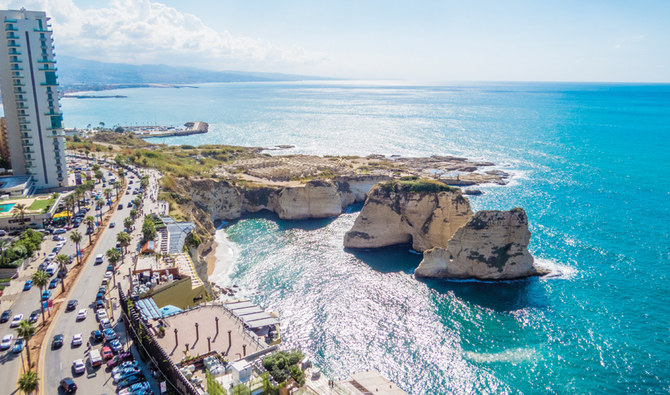
Lebanon gears up for Gulf tourist boom

Aerial view of the Pigeons’ Rocks on Raouche. (Shutterstock)
Updated 17 May 2019
Follow

Lebanon gears up for Gulf tourist boom

  • Saudi Arabia released $1 billion in funding to boost Lebanon’s economy

BEIRUT: Lebanon is gearing up for an influx of tourists from the Gulf, especially from Saudi Arabia, since it lifted a warning against its citizens traveling to the country.

The easing of restrictions since February, together with the formation of a new government in Beirut and greater political stability, has led to around 20,000 Saudis visiting Lebanon in the past few months.

Rima, from Riyadh, said she used to visit Lebanon before the start of Ramadan for tourism and shopping. She told Arab News that the end of the travel warning would encourage other Saudis to visit Lebanon and that the country meant a lot to her fellow citizens.

Her mother said that Ramadan would be spent in Riyadh, but that they would return after the Eid Al-Fitr holidays in June.

Thousands of Saudis have already booked their flights to Lebanon during Ramadan and these numbers were rising, Saudi travel agencies told Arab News.

“With the ban on Saudi travel to Lebanon, out of 100 passengers you could barely find three Saudi nationals maximum on flights heading from Riyadh to Beirut. However, that number has risen steadily since the ban was lifted,” sources told Arab News.

Pierre Al-Achkar, head of the Syndicate of Hotel Owners in Lebanon, said Gulf tourist numbers had improved compared to previous years. “Hotel bookings for Eid Al-Fitr are not quite clear, as Gulf tourists plan their vacation just 10 days ahead unlike Europeans who plan months before their vacation,” he told Arab News. “Before Ramadan, Lebanon hosted a tourist delegation of Saudi businesswomen, some of whom work in the marketing and media sectors. They were amazed, comparing Lebanon to Europe.”

Nora, a Saudi young woman on her third visit to the Middle Eastern country, explained why she liked Lebanon. “It is an Arab country and a melting pot for Arabic and European civilizations, which sets it apart from other modern places such as Dubai and New York,” she told Arab News.

She also said she preferred Riyadh’s “broad and straight” roads to Beirut’s “narrow and winding streets,” when asked about driving on holiday.



Cafe in central Beirut. (Shutterstock)

More people have visited Lebanon since Saudi Arabia lifted its travel warning in February, Reuters quoted Prime Minister Saad Hariri as saying last month, as he pointed to a “promising summer” ahead.

Saudi Arabia had been advising its citizens since 2011 to avoid Lebanon, citing Hezbollah’s influence and instability from the war in neighboring Syria, the agency added.

“Without doubt the Saudi leadership’s decision ... had the most impact in increasing the number of visitors to Lebanon recently, which gives the best proof of a promising summer,” Hariri said at an April conference in Beirut that was also attended by the head of the King Salman Humanitarian Humanitarian Aid and Relief Center.

Riyadh earlier this year released $1 billion in funding, pledging to boost Lebanon’s struggling economy. Another sign of warming ties was an anniversary event marking the 2005 assassination of Hariri’s father that featured Saudi Royal Court adviser Nizar Al-Aloula as a keynote speaker.

Umm Yusuf was visiting Lebanon after previous tourism stops in London and Istanbul. She said her family had not traveled to Lebanon since 2006, when there was a war between Israel and Hezbollah.

Her husband said Ramadan would be spent in Saudi Arabia “to feel the meaning of fasting” and that they would return to Lebanon after Eid-Al Fitr.

Jean Abboud, president of the Association of Travel And Tourist Agents in Lebanon, said that 2010 was the strongest year for tourism and that there had been around 190,000 visitors from the Gulf.

Lebanese authorities were expecting to get close to that number and maybe even exceed it after Eid Al-Fitr and during the long summer vacation, he said, adding that Gulf holidaymakers were no longer traveling overland because of the Syrian war.

“We are now relying on the tourist traveling by air, although this type of travel costs higher,” he told Arab News. “Iraqi, Jordanian and Egyptian tourists replaced Gulf tourists. But, in terms of spending, they are not to be compared. The Gulf tourist spends between $3,000 and $4,000 daily, while others spend $400 at best.”

Abboud described the numbers of Gulf tourists in Lebanon during Ramadan as “timid” but that high season started from June 7 and ran until late September.

“Lebanese internal political debate does not affect tourism to Lebanon, but regional lineups are the most influential.”

There have been steady increases in passenger numbers at Beirut-Rafic Hariri International Airport since the start of the year.

Airport authorities are improving passenger flow by repositioning security counters in the departure terminal, to be completed by the end of May, after Gulf travelers complained about delays and queues.
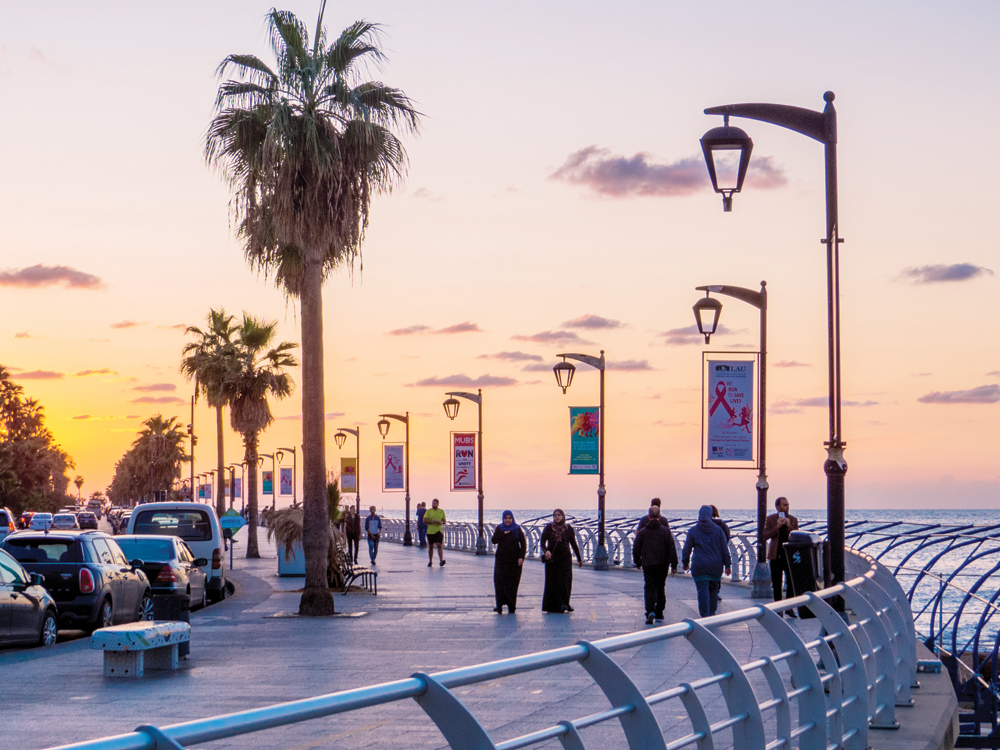


Sunset on La Corniche, a seaside promenade in Beirut Central District. (Shutterstock)


The Iran war has upended flights across the Middle East. Here’s what travelers should know

Updated 4 sec ago
Follow

The Iran war has upended flights across the Middle East. Here’s what travelers should know

NEW YORK: The US and Israel’s joint war in Iran has already upended travel across the Middle East, stranding tens of thousands of people. And the future is anything but certain.
Experts stress that flights scheduled in the coming days and weeks could continue to see disruptions — causing ripple effects globally, especially as the war widens with retaliatory strikes in the Gulf states. Beyond the Middle East, airports in the Gulf serve as critical hubs connecting travelers going to Europe, Africa and Asia.
Amid airspace closures across the region, many carriers have been forced to either cancel flights or shift to longer routes. That’s straining operating costs and ticket prices, both of which could become more expensive if airlines have to pay more for fuel the longer the war drags on. In the near future, experts recommend postponing unnecessary travel if possible, checking refund or insurance policies and, most importantly, monitoring safety adviseries.
“This is not a normal delay story. This is a conflict zone airspace story,” said Hassan Shahidi, president and CEO of the Flight Safety Foundation — stressing that halted traffic and guidance from carriers, airports and governments may shift each day, if not by the hour. “Travelers should absolutely expect uncertainty.”
Here’s what travelers should know about upcoming trips.
Monitor adviseries and other safety information
Since the US and Israel launched attacks over the weekend, retaliatory strikes and other developments have unfolded rapidly. Iran says hundreds of people have been killed in the country. For travelers across the region, experts stress the importance of following safety guidance and updates from government officials.
A handful of governments have also issued travel adviseries and emergency evacuation orders. The US State Department on Monday urged all US citizens to immediately leave Iran and Israel, as well as Qatar, Bahrain, Egypt, Iraq, Jordan, Kuwait, Lebanon, Oman, the Palestinian territories, Saudi Arabia, Syria, the United Arab Emirates and Yemen using any available commercial transportation — and Secretary of State Marco Rubio pleaded for the media to publicize ways to help Americans evacuate. Meanwhile, countries like China, Italy, France and Germany moved to organize evacuation efforts for their citizens.
Experts like Shahidi say travelers should monitor these travel adviseries from governments and embassies to make sure they have the latest information. And because so many people are still stranded amid swaths of cancelations and airspace closures, he added that it’s wise to reconsider or rebook upcoming trips, if possible.
“If travel is optional, consider postponing it,” Shahidi said. “But if it’s necessary, then make sure that you get refundable or changeable fares.”
Travelers should also monitor updates from airports and airlines. Long-haul carriers Etihad Airways and Emirates, based in Abu Dhabi and Dubai, along with Doha-based Qatar Airways all temporarily suspended certain routes — citing airspace closures and safety requirements.
Read the fine print of refunds and insurance
Many airlines are taking refund requests or offering free rebooking — but such options are often limited to specific dates or routes, so it’s important for travelers to check carriers’ individual websites for more information. For future trips, buying refundable tickets now may provide more flexibility.
Beyond what individual airlines can offer, some may also be seeking travel insurance. But it’s important to read the fine print, particularly the exclusions listed under specific policies.
“Acts of war and civil unrest are typically excluded because they’re unpredictable,” said Suzanne Morrow, CEO of travel insurance agency InsureMyTrip. Consumers could still buy coverage for delays, she added, but travel insurance is “designed to make you whole,” and if an airline does everything to rebook you or offers a refund, you may not have an added claim.
Christina Tunnah, of World Nomads Travel Insurance, reiterates that the majority of her firm’s policies excludes coverage for losses resulting from acts of war, although someone might be able to get compensation in certain scenarios — such as if they purchase a “cancel for any reason” plan. Still, the traveler would have to cancel within a certain time frame.
Tunnah adds that once an event is known, it’s unlikely to be covered. So if a consumer has not already purchased traveler insurance, many insurers may have added restrictions to impacted destinations.
Brace for longer flights and higher ticket prices
Beyond cancelations, many carriers are now taking longer routes to avoid closed airspace. Shahidi noted that includes not only closures stemming from this current war but also previous conflicts worldwide.
Navigating these different conflict zones has become increasingly difficult for airlines, because longer routes can be more expensive. It’s industry standard for carriers to pay “overflight fees” when flying through other countries’ airspace — which there could be more of now. And, of course, longer flights need more fuel.
“Those costs will be passed on to the passengers,” explained Bryan Terry, managing director at Alton Aviation Consultancy. If the conflict continues, he said, travelers should “anticipate that some carriers will likely impose fuel surcharges” or increase existing fees.
Passengers have already reported seeing sky-high ticket prices. Experts say those immediate hikes more likely reflect supply and demand as thousands of flights were canceled in recent days. But the costs of those longer routes — paired with oil prices that have already spiked since the US and Israel launched their attacks — could trickle down to consumers further ahead.
The price of crude oil is a key component for jet fuel, which accounted for about 30 percent of airlines’ operating costs as of 2024, according to research from the International Air Transport Association.
Many routes within the next week are completely sold out or have exorbitant prices for last remaining seats. The market currently shows those costs, while still elevated, are lower for trips booked further out, Terry notes — but, again, if the war drags on or worsens, “those conditions could change at a moment’s notice.”