ISLAMABAD: There is little evidence that China’s Belt and Road Initiative is ensnaring nations, including Pakistan, in foreign aid “debt traps,” a Pakistani think tank said in a report this week, in defense of a key policy platform of President Xi Jinping.
Xi has made the Belt and Road Initiative (BRI), as it is formally called, one of the cornerstones of his administration. But it has run into opposition in some countries over fears that opaque financing arrangements lead to unsustainable debt and that it is more about promoting Chinese influence than bringing development.
China has at times reacted angrily to such doubts, tending to characterize critics as harboring anti-Chinese prejudice and wishing to contain the country’s rise, while overlooking what Beijing says are genuine good intentions.
The Belt and Road scheme seeks to build a modern version of the Silk Road to link China with Asia, Europe and beyond through large-scale infrastructure projects.
A new report by Pakistani think tank Tabadlab titled ‘Belt & Road Initiative (BRI): Belted on a road to debt?’ identified eight countries at high risk of the potential impact of BRI pipeline projects and associated debt levels. These are Pakistan, Djibouti, The Maldives, Lao PDR, Montenegro, Mongolia, Tajikistan and Kyrgyz Republic. The report said these nations would face rising debt-to-GDP ratios in excess of 50 percent, which merits concern.
“While the sustainability of infrastructure financing is critical for regional economic stability, there is little evidence that China is forcing countries into such [debt] crises,” the Tabadlad report said.
“The financing agreements have largely been structured as bilateral transactions without the involvement of multilateral institutions and their corresponding economic assessment and monitoring frameworks,” the report said. “In short, a lot of the BRI project financing does not come with the conditionalities that World Bank, Asian Development Bank, African Development Bank, Inter-American Development Bank, and other multilateral financing sources come with.”
In the case of Pakistan the report said: “In addition to sovereign loans, financial instruments used for development of economic corridors [by China] also include concessional loans, commercial loans and equity investments. As an example, the China Pakistan Economic Corridor (CPEC), a flagship BRI investment, has USD 19 billion in investments to date of which over 60% is commercial lending and equity investments with no sovereign anchors.”
Last month, at the vast Belt and Road Forum in Beijing, China was keen to show that the initiative was even winning acceptance in Western nations, especially after Italy became the first G7 country to sign on last month. Britain’s finance minister, France’s foreign minister and Germany’s economy minister all made the trek to Beijing for the event, but reminded China of the need for high standards and transparency.
“The IMF has repeatedly and explicitly questioned opaque lending and demanded more transparency from countries and Beijing to bridge information asymmetry around Chinese debt,” the report said. “In the most recent case of Pakistan, details of debt arrangements with China were a major negotiation bottleneck. Making details of BRI projects more public would certainly help counter the debt-trap narrative.”
Citing China’s takeover of the Sri Lankan port of Hambantota as part of a debt servicing swap, the primary example of fears of asset seizure and control that can be potentially exercised by China over strategic infrastructure across continents, the report called it a rare and often misunderstood example.
“Despite being a creditor enjoying quite a strong position, negotiations have largely benefited borrowing countries with various treatments afforded to countries for restructuring or settling debt,” the report said. “Negotiations have often resulted in the extension of loans, the restructuring of terms and even wholesale re-financing. Interestingly, write-offs, both partial and full, have been the most common solution to debt problems in these negotiations.”
Using the Rhodium Group’s data and analysis, the Tabadlab report said 36% of debt servicing negotiations with China had resulted in write-offs worth approximately $6.5 billion and 7% of the debt arrangements having a value of $23.5 billion were refinanced, constituting 52% of total debt in 40 sample cases.


![]()
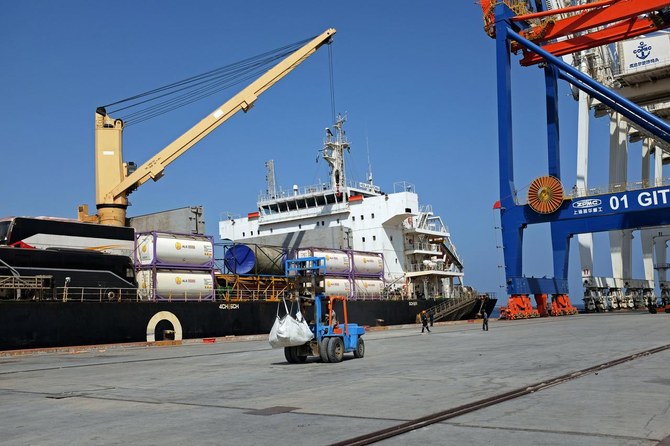
Little evidence China forcing countries, including Pakistan, into debt — report

Little evidence China forcing countries, including Pakistan, into debt — report
- Belt and Road Initiative to rebuild Silk Road met with widespread criticism it will saddle countries in unsustainable debt traps
- China sees critics as harboring anti-Chinese prejudice, wishing to contain the country’s rise
Latest updates


© 2026 SAUDI RESEARCH & PUBLISHING COMPANY, All Rights Reserved And subject to Terms of Use Agreement.