PARIS: The world’s oil supply fell last month, the International Energy Agency said Wednesday, amid rising global tensions as US sanctions on Iran tightened and OPEC+ members produced less crude in line with their pact.
In its latest monthly report on the global oil market, the Paris-based IEA said that while geopolitics and industry disruptions were clouding the outlook it believes that the market balance is set to flip from surplus into deficit, a development that would favor efforts by oil producing nations to keep prices high.
Tensions have been mounting in recent days after the mysterious sabotage of several tankers in the Gulf and drone attacks claimed by Iran-aligned Yemen rebels shut down one of Saudi Arabia’s major oil pipelines.
Saudi Energy Minister Khalid Al-Falih called the pipeline attacks, which did not halt exports despite the temporary shutdown of the pipeline, an “act of terrorism... that not only targets the kingdom but also the security of oil supplies to the world and the global economy.”
Meanwhile, the UAE has said four ships were damaged Sunday in “sabotage attacks” off the emirate of Fujairah, on the mouth of the Hormuz, a key transit point for oil tankers.
The incidents follow the expiration at the beginning of May of waivers the US granted eight major importers of Iranian oil.
The IEA said Iranian crude oil output fell in April to 2.6 million barrels per day (mbd), the lowest level in over five years, and could tumble in May to levels not seen since the 1980s war with Iraq.
In a table with data from energy sector intelligence firm Kpler, Iranian exports are seen as plunging to roughly 0.5 mbd in May from around 1.4 mbd in April.
The supply disruptions, including those from crisis-hit Venezuela, come as OPEC and its allies including Russia, often called OPEC+, are pushing forward with their latest pact to restrain production.
After a production glut lead to prices dropping last year they agreed in December to trim production once again.
The IEA said the OPEC+ nations produced 0.44 mbd less than their target in April.
Nevertheless, it said: “there have been clear and, in the IEA’s view, very welcome signals from other producers that they will step in to replace Iran’s barrels, albeit gradually in response to requests from customers.”
It noted that despite the supply uncertainty and a brief run up to $75 per barrel, prices for the global benchmark Brent crude are little changed from one month ago.
With fresh economic data and forecasts now available, the IEA trimmed its forecast for growth in global oil demand this year to an increase of 1.3 mbd, primarily due to a slow start of the year.
However, it said: “slower demand growth is likely to be short-lived, as we believe that the pace will pick up during the rest of the year.”
The lower demand in the first quarter of the year means that the oil market likely remained in surplus despite efforts by OPEC+ to eliminate the glut, the IEA said, adding that it is “highly likely” it will flip into deficit this quarter.
But the IEA’s outlook is based on the general assumption that global economic activity picks up from the soft patch experienced at the end of 2018 and beginning of 2019.
“Rising trade tensions, however, represent the main threat to the currently fragile rebound,” it warned as the dispute between the United States and China deepened.
The United States last week raised tariffs on $200 billion worth of Chinese imports, with China responding with increased duties on $60 billion of US goods.
The administration of US President Donald Trump is considering whether to put tariffs on another $300 billion in Chinese goods, which would mean nearly all imports from China would face tariffs.
Citing estimates that a full blown trade war would dent global economic and trade growth, the IEA said it would have “negative implications” for oil demand.


![]()

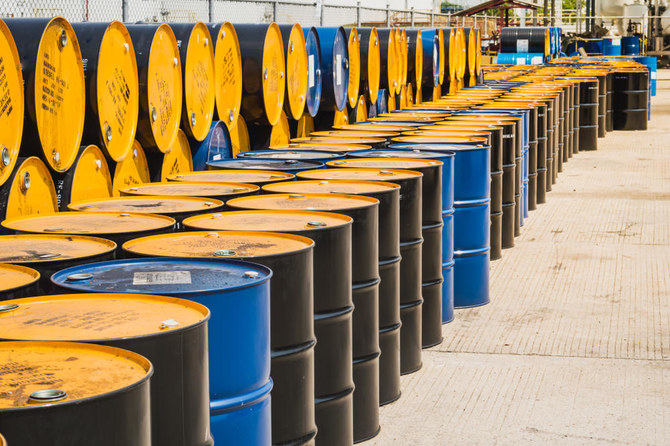
Oil supply drops as Iran sanctions bite: IEA
Oil supply drops as Iran sanctions bite: IEA
- The agency said the market balance might flip from surplus to deficit
- Saudi Energy Minister said the attack on the Saudi pipelines targeted global oil supplies


Latest updates



Recommended


© 2026 SAUDI RESEARCH & PUBLISHING COMPANY, All Rights Reserved And subject to Terms of Use Agreement.