

Farah Nabulsi: Palestinian investment banker turned activist filmmaker shines light on Nakba

1 / 3
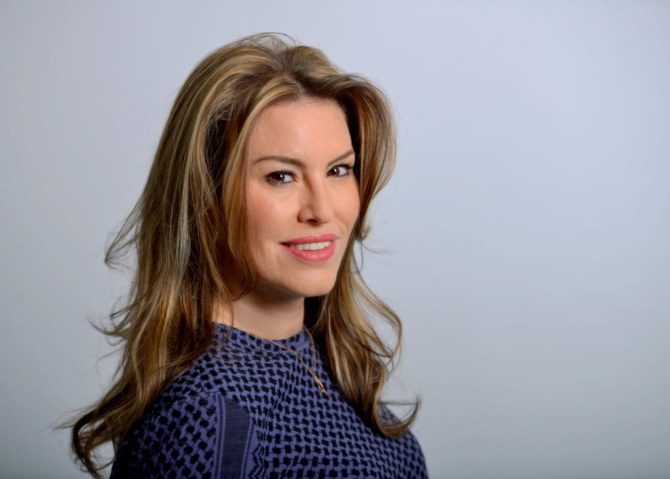
Born and raised in the UK to Palestinian parents, Farah Nabulsi studied business in London and became an institutional equity stock broker at JP Morgan Chase before turning to film. (Supplied)
2 / 3
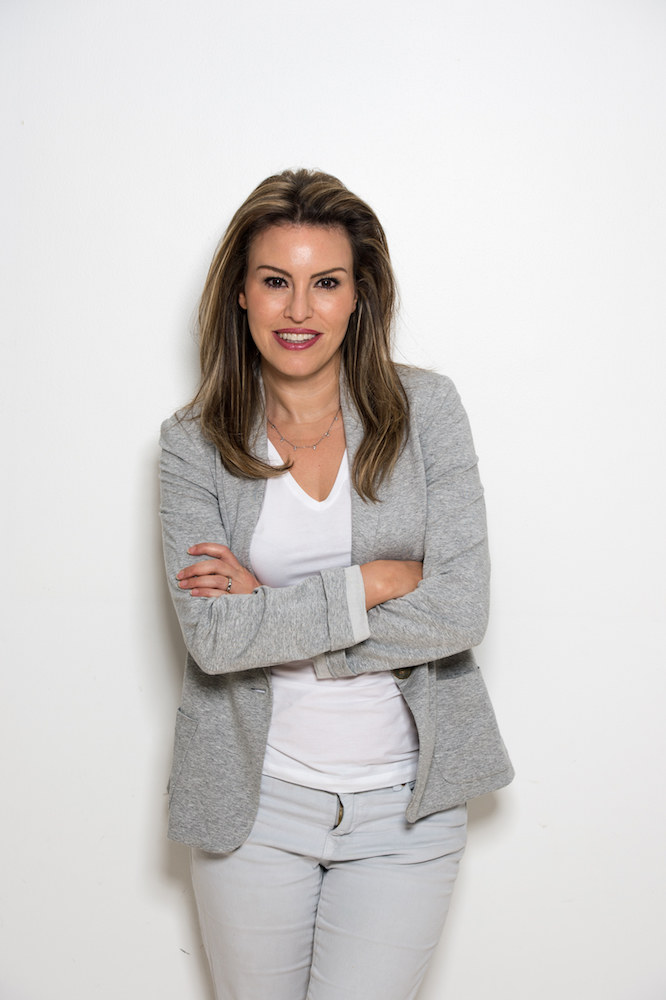
Born and raised in the UK to Palestinian parents, Farah Nabulsi studied business in London and became an institutional equity stock broker at JP Morgan Chase before turning to film. (Supplied)
3 / 3
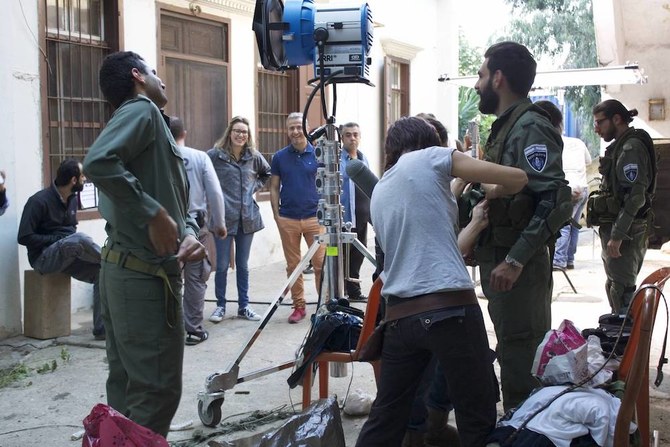
Born and raised in the UK to Palestinian parents, Farah Nabulsi studied business in London and became an institutional equity stock broker at JP Morgan Chase before turning to film. (Supplied)
Updated 15 May 2019
Follow

Farah Nabulsi: Palestinian investment banker turned activist filmmaker shines light on Nakba

  • British-Palestinian filmmaker has not looked back since swapping her business suits and briefcases for cameras and film scripts

DUBAI: Farah Nabulsi had started out on a clear career path. Born and raised in the UK to Palestinian parents, she studied business in London and became an institutional equity stock broker at JP Morgan Chase.
But life changed totally, she said, after she visited Palestine and witnessed the everyday indignities that Palestinians endure.
“It hit me like a ton of bricks how colossal this injustice is, and how 1948 is happening right now in the present day,” Nabulsi told Arab News, referring to the exodus of several hundred thousand Palestinians when Israel was established on their homeland.
“That experience and first-hand knowledge changed me. I knew that charity and sympathy were certainly not enough.”

Nabulsi swapped her business suits and briefcases for cameras and film scripts. She took it upon herself to shed light on the injustices meted out to Palestinians since their mass displacement in 1948, known to Palestinians as the Nakba (Arabic for catastrophe).
“With one foot in the West — having been born, raised and educated in London — and the other — my heritage, the blood running through my veins — in Palestine, I recognized the unique and rather powerful position I was in, so I changed the trajectory of my life,” she said.
The change was a big one, but the British-Palestinian filmmaker has not looked back ever since, saying the shift has been “absolutely liberating.”

So far, Nabulsi has made three short films on Palestine. One of them, “Today They Took My Son,” follows a mother as she copes with the trauma of her young son being taken away by the Israeli military.
It was named an Official Selection at the Edinburgh Short Film Festival in 2016, and was a finalist at the International Short Film Competition at the USA Film Festival in 2017.
The other films, “Oceans of Injustice” and “Nightmare of Gaza,” have similar themes of Israeli prejudices against, and abuses of, Palestinians.


“What I do is painful, raw and exhausting. But the satisfaction that I’m doing something with meaning — giving voice to the silenced, playing my part in informing and educating with the aim of ending injustice, and being able to use my creativity and my emotional IQ while doing that — has been a blessing I’m truly grateful for,” Nabulsi said.
“I have children of my own, and the very idea of a child being taken — usually in the middle of the night by armed soldiers, with no parent or adult with them, processed through a military system and subjected to all sorts of abuses — is just insane,” she added. “That (‘Today They Took My Son’) was a film I didn’t choose to make. I had to make it.”

Nabulsi is working on her fourth short film, “The Present,” which features Israeli-Palestinian actor Saleh Bakri.
“It’s a beautiful story of a Palestinian father and his young daughter dealing with the indignities of checkpoints,” she said. “I’m looking forward to completing it and sharing it with the world.”


How science is reshaping early years education 

Updated 27 December 2025
Follow

How science is reshaping early years education 

DUBAI: As early years education comes under renewed scrutiny worldwide, one UAE-based provider is making the case that nurseries must align more closely with science.

Blossom Nursery & Preschool, which operates 32 locations across the UAE, is championing a science-backed model designed to close what it sees as a long-standing gap between research and classroom practice.

“For decades, early years education has been undervalued globally — even though science shows the first five years are the most critical for brain development,” said Lama Bechara-Jakins, CEO for the Middle East at Babilou Family and a founding figure behind Blossom’s regional growth, in an interview with Arab News.

Lama Bechara-Jakins is the CEO for the Middle East at Babilou Family and a founding figure behind Blossom’s regional growth. (Supplied)

She explained that the Sustainable Education Approach was created to address “a fundamental gap between what we know from science and what actually happens in nurseries.”

Developed by Babilou Family, the approach draws on independent analysis of research in neuroscience, epigenetics, and cognitive and social sciences, alongside established educational philosophies and feedback from educators and families across 10 countries. The result is a framework built around six pillars; emotional and physical security, natural curiosity, nature-based learning, inclusion, child rhythms, and partnering with parents.

Two research insights, Bechara-Jakins says, were particularly transformative. “Neuroscience shows that young children cannot learn until they feel safe,” she said, adding that stress and inconsistent caregiving can “literally alter the architecture of the developing brain.” 

Equally significant was evidence around child rhythms, which confirmed that “pushing children academically too early is not just unhelpful — it can be counterproductive.”

Feedback from families and educators reinforced these findings. Across regions, common concerns emerged around pressure on young children, limited outdoor time and weak emotional connections in classrooms. What surprised her most was that “parents all sensed that something was missing, even if they couldn’t articulate the science behind it.”

At classroom level, the strongest body of evidence centres on secure relationships. Research shows that “secure attachments drive healthy brain development” and that children learn through trusted adults. At Blossom, this translates into practices such as assigning each child “one primary educator,” prioritising calm environments, and viewing behaviour through “a neuroscience lens — as stress signals, not misbehaviour.”

Bechara-Jakins believes curiosity and nature remain overlooked in many early years settings, despite strong evidence that both accelerate learning and reduce stress. In urban centres such as Dubai, she argues, nature-based learning is “not a luxury. It is a developmental need.” 

For Blossom, this means daily outdoor time, natural materials, gardening, and sensory play — intentional choices aimed at giving children what science says they need to thrive.