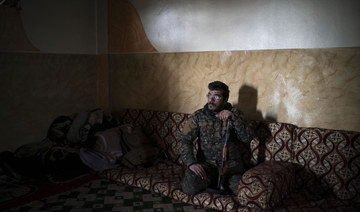

QAMISHLI: When Eyub Mohamad was a boy, security forces beat his father into paralysis. His offense was typing leaflets in Kurdish, banned under Syria’s ruling Baath party.
Mohamad, with his family, fed and bathed his father for years. Wary of the typewriter that landed his father in interrogation rooms, he avoided learning to read his own language.
“I never saw my dad walking,” he said. “Till his last day, he believed he would get up for this cause.”
Mohamad’s father died in 2011, the year Syria’s conflict began. He did not see Kurdish fighters carve out autonomous rule across north and east Syria. He did not see his son, now 34, become a teacher at a Kurdish school in the city of Qamishli on the border with Turkey. Kurdish leaders now hold about a quarter of Syria, the biggest chunk outside state hands. But their grip on power — in a region rich in oil, farmland and water — remains vulnerable: The Bashar Assad regime wants all of Syria, Turkey threatens to crush them and US support is wavering.
The changes reshaping swathes of Syria have alarmed neighboring states that fear separatism within their own Kurdish communities. In Qamishli, these changes were once unimaginable.
A law student who was tortured for carrying a Kurdish book now owns a bookstore. A woman who once secretly huddled with friends at night to learn Kurdish is now a de facto education minister.
Kurdish activists who could not protest without risking arrest now have printing presses, festivals and television channels.
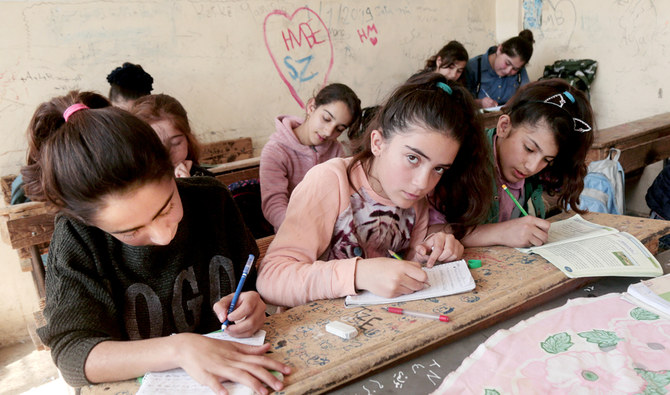
The shift is glaring in school hallways where, for eight years, a generation has grown up not only learning Kurdish but also learning to believe that Kurds deserve the rights they were denied for decades and must hold on to them.
“We never imagined this. This was a dream,” said Semira Hajj Ali, who co-chairs the education board in the northeast. “Of course, we will not go back to before 2011. We will not turn back.”
Syrian Kurdish leaders say they do not seek independence but want to cement autonomy that has evolved to include security forces and what amounts to a government.
Yet the sandbags and trenches around some schools or the armed men guarding printing presses show their fate still hangs in the balance.
On one side, there is the Turkish army, which has swept across the border twice to roll back the Kurdish YPG militia in northern Syria.
On another, there is Assad, now holding most of Syria with Russia and Iran’s help. Damascus has pledged to reclaim YPG territory though the two have kept channels open.
Their main ally, the US, helped Kurdish-led forces seize vast territory from Daesh. But it opposes their autonomy plans and has promised nothing.
President Donald Trump’s plan last year to withdraw all US troops from Syria threw Kurdish officials into crisis.
Washington later changed course, and intends to leave some troops, along with forces from European allies, preserving for now the security umbrella that helped Kurdish leaders deepen their autonomy.
In the early days of Syria’s conflict, when Hajj Ali and other activists tried introducing a Kurdish class, the government shut down the schools.