

WEEKLY ENERGY RECAP: Assessing the impact of sanctions waivers for buyers of Iran's oil

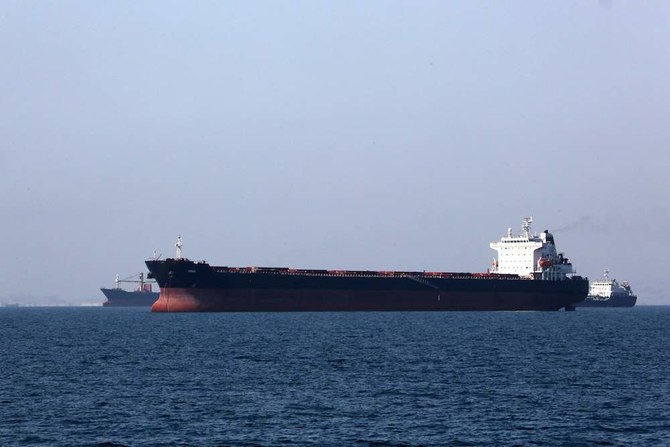
An oil tanker is pictured off the Iranian port city of Bandar Abbas. (AFP)
Updated 04 May 2019
Follow

WEEKLY ENERGY RECAP: Assessing the impact of sanctions waivers for buyers of Iran's oil

  • Asian refiners, the largest buyers of Iranian crude, have already begun asking other producers for higher volumes for June and July

Volatility heightened last week, which closed with prices at their lowest in almost a month, after hitting a six-month high a week ago.

Prices slumped after a buildup in US crude inventories by 10 million barrels, amid record high US oil production to 12.3 million bpd.

That took the edge off earlier bullish market sentiment after expectations that the upcoming Iranian oil supply shortage would be filled by other OPEC producers.

Brent crude fell to $70.86 per barrel, while WTI fell to $61.94.

Asian refiners, the largest buyers of Iranian crude, have already begun asking other producers for higher volumes for June and July loadings.

This comes in light of the expected fall in Iranian crude as the waivers of previous US sanctions expire, as reported by S&P Global Platts.

Asian refiners are seeking car- goes for June and July to substi- tute Iranian barrels — though it is unclear if Chinese refiners are among them or if the world’s larg- est oil importer will continue with commercial swap arrangements as in 2012 — not a preferred option for Tehran.

The US 2019 gasoline price aver- age is within the range of $2.70 to $2.80 per gallon, which is just 50 cents higher than at the start of the Trump presidency.

The oil market suggests there is an incompatibility between US energy policy goals for lower prices and OPEC goals for a steady supply and demand balance.

The unexpected introduction of US sanctions waivers pushed the market into a surplus last year which led to the softening of the oil price.

That was only resolved by the 1.2 million bpd production cuts agreed by the so called OPEC+ group that took effect in January, which helped tighten the market and bring it back into balance.

Still, producers remain cautious. The market does not expect OPEC to react to the expiry of waivers by increasing supplies in the same way it did last year.

OPEC producers have until June 25, when they meet next, to read the situation and assess the likely impact of ending US sanctions waivers on Iranian crude exports.

*Faisal Mrza is an energy and oil marketing adviser. He was formerly with OPEC and Saudi Aramco. Twitter: @faisalmrza


Saudi minister at Davos urges collaboration on minerals

Global collaboration on minerals essential to ease geopolitical tensions and secure supply, WEF hears. (Supplied)
Updated 51 min 44 sec ago
Follow

Saudi minister at Davos urges collaboration on minerals

  • The reason of the tension of geopolitics is actually the criticality of the minerals

LONDON: Countries need to collaborate on mining and resources to help avoid geopolitical tensions, Saudi Arabia’s minister of industry and mineral resources told the World Economic Forum on Tuesday.

“The reason of the tension of geopolitics is actually the criticality of the minerals, the concentration in different areas of the world,” Bandar Alkhorayef told a panel discussion on the geopolitics of materials.

“The rational thing to do is to collaborate, and that’s what we are doing,” he added. “We are creating a platform of collaboration in Saudi Arabia.”

Bandar Alkhorayef, Saudi Minister of Industry and Mineral Resources 

The Kingdom last week hosted the Future Minerals Forum in Riyadh. Alkhorayef said the platform was launched by the government in 2022 as a contribution to the global community. “It’s very important to have a global movement, and that’s why we launched the Future Minerals Forum,” he said. “It is the most important platform of global mining leaders.”

The Kingdom has made mining one of the key pillars of its economy, rapidly expanding the sector under the Vision 2030 reform program with an eye on diversification. Saudi Arabia has an estimated $2.5 trillion in mineral wealth and the ramping up of extraction comes at a time of intense global competition for resources to drive technological development in areas like AI and renewables.

“We realized that unlocking the value that we have in our natural resources, of the different minerals that we have, will definitely help our economy to grow to diversify,” Alkhorayef said. The Kingdom has worked to reduce the timelines required to set up mines while also protecting local communities, he added. Obtaining mining permits in Saudi Arabia has been reduced to just 30 to 90 days compared to the many years required in other countries, Alkhorayef said.

“We learned very, very early that permitting is a bottleneck in the system,” he added. “We all know, and we have to be very, very frank about this, that mining doesn’t have a good reputation globally.

“We are trying to change this and cutting down the licensing process doesn’t only solve it. You need also to show the communities the impact of the mining on their lives.”

Saudi Arabia’s new mining investment laws have placed great emphasis on the development of society and local communities, along with protecting the environment and incorporating new technologies, Alkhorayef said. “We want to build the future mines; we don’t want to build old mines.”