GAZA: Three Palestinians were killed by Israeli fire in the Gaza Strip Friday, authorities in the territory said, after Israel said two of its soldiers were wounded in a shooting on the border.
One of the Palestinians was shot dead along the frontier while the two others were killed in an air strike, the health ministry in Gaza said.
The Israeli army said the air strike was in retaliation for the shooting incident on the border that left its soldiers wounded.
The Gaza ministry named the men killed in the air strike as Abdullah Abu Mallouh, 33 and Alaa al-Bubli, 29, while the man killed in the clashes was 19-year-old Raid Abu Teer.
The Israeli military said it had hit a base belonging to Gaza's rulers Hamas after sh ots were fired at its forces along the border.
The army said "one soldier was moderately injured, and another soldier was lightly injured" when they came under fire during renewed protests.
An army spokeswoman said around 5,200 Palestinians had taken part in the demonstrations throughout the day.
Hamas did not immediately comment on the affiliation of the Palestinians killed but pledged to respond to what it called an "Israeli aggression."
Palestinians have been taking part in often violent demonstrations along the border for more than a year, calling on Israel to ease its crippling blockade of the strip.
At least 268 Palestinians have been killed by Israeli fire since the protests began in March 2018, the majority along the border.
Two Israeli soldiers have been killed in that period.
Israel accuses Hamas of using the protests as cover to carry out attacks.

Three Palestinians killed by Israeli military in Gaza
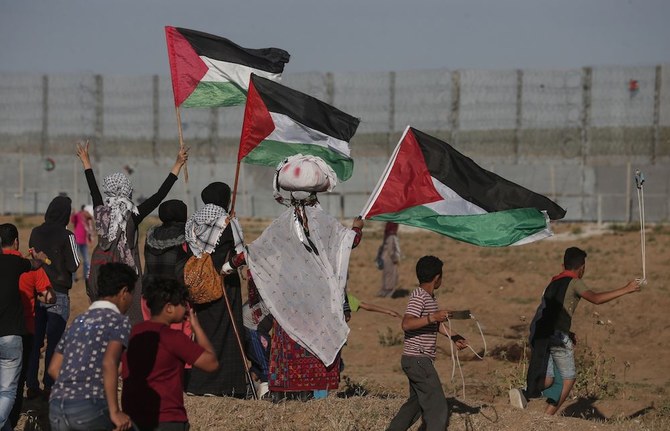
- One of the Palestinians was shot dead along the frontier while the two others were killed in an air strike
- Israel says the air strike was in retaliation for the shooting incident on the border that left its soldiers wounded
EU designates Iran's Iran’s Revolutionary Guard as ‘terrorist organization’
BRUSSELS: The European Union agreed Thursday to designate Iran’s Revolutionary Guard a “terrorist organization” over a deadly crackdown on mass protests, sending a powerful message of condemnation to Tehran.
“This was long overdue,” EU chief Ursula von der Leyen posted online after foreign ministers from the bloc took the decision.
“’Terrorist’ is indeed how you call a regime that crushes its own people’s protests in blood.”
Though largely symbolic, the EU move has already drawn a warning from Tehran it would have “destructive consequences.”
The 27-nation bloc meanwhile also adopted visa bans and asset freezes on 21 state entities and Iranian officials — including the interior minister, prosecutor general and regional IRGC commanders — over the repression.
Iranian authorities acknowledge that thousands were killed during the protests, giving a toll of over 3,000 people, but say the majority were members of the security forces or bystanders killed by “rioters.”
Rights groups say the toll is far higher, potentially in the tens of thousands, and note that protesters were killed by security forces including the Revolutionary Guards (IRGC) directly firing on them.
France, Italy shift
The IRGC is the ideological arm of Tehran’s military and was created after the 1979 revolution to protect the clerical leadership. The Guards control or own companies across the Iranian economy, including major strategic sectors.
“The estimate is that still the diplomatic channels will remain open even after the listing of the Revolutionary Guards,” the EU’s top diplomat Kaja Kallas said earlier Thursday.
The EU action against the IRGC comes after France announced Wednesday it backed the move, following a similar shift from Italy.
Hailed by Iran’s arch-foe Israel as a “historic decision,” the step matches similar classification enacted by the United States, Canada and Australia.
Paris had widely been seen as reluctant to act against the IRGC due to fears over the impact on Europeans detained in the country and a wish to keep diplomatic ties open.
“There can be no impunity for the crimes committed,” French Foreign Minister Jean-Noel Barrot told reporters on arrival in Brussels.
“This decision is also an appeal by France to the Iranian authorities to release the prisoners thrown by thousands into the regime’s prisons, to end the executions that are perpetuating the most violent repression in Iran’s modern history,” he said.
Barrot urged Tehran to end an Internet blackout and “give back to the Iranian people the capacity to choose their own future.”
The EU has already sanctioned several hundred Iranian officials and entities over crackdowns on previous protest movements and over Tehran’s support for Russia’s war on Ukraine.
The IRGC as a whole and senior commanders are already under EU sanctions, meaning that adding them to the terror blacklist is expected to have little practical impact on the organization.
“This was long overdue,” EU chief Ursula von der Leyen posted online after foreign ministers from the bloc took the decision.
“’Terrorist’ is indeed how you call a regime that crushes its own people’s protests in blood.”
Though largely symbolic, the EU move has already drawn a warning from Tehran it would have “destructive consequences.”
The 27-nation bloc meanwhile also adopted visa bans and asset freezes on 21 state entities and Iranian officials — including the interior minister, prosecutor general and regional IRGC commanders — over the repression.
Iranian authorities acknowledge that thousands were killed during the protests, giving a toll of over 3,000 people, but say the majority were members of the security forces or bystanders killed by “rioters.”
Rights groups say the toll is far higher, potentially in the tens of thousands, and note that protesters were killed by security forces including the Revolutionary Guards (IRGC) directly firing on them.
France, Italy shift
The IRGC is the ideological arm of Tehran’s military and was created after the 1979 revolution to protect the clerical leadership. The Guards control or own companies across the Iranian economy, including major strategic sectors.
“The estimate is that still the diplomatic channels will remain open even after the listing of the Revolutionary Guards,” the EU’s top diplomat Kaja Kallas said earlier Thursday.
The EU action against the IRGC comes after France announced Wednesday it backed the move, following a similar shift from Italy.
Hailed by Iran’s arch-foe Israel as a “historic decision,” the step matches similar classification enacted by the United States, Canada and Australia.
Paris had widely been seen as reluctant to act against the IRGC due to fears over the impact on Europeans detained in the country and a wish to keep diplomatic ties open.
“There can be no impunity for the crimes committed,” French Foreign Minister Jean-Noel Barrot told reporters on arrival in Brussels.
“This decision is also an appeal by France to the Iranian authorities to release the prisoners thrown by thousands into the regime’s prisons, to end the executions that are perpetuating the most violent repression in Iran’s modern history,” he said.
Barrot urged Tehran to end an Internet blackout and “give back to the Iranian people the capacity to choose their own future.”
The EU has already sanctioned several hundred Iranian officials and entities over crackdowns on previous protest movements and over Tehran’s support for Russia’s war on Ukraine.
The IRGC as a whole and senior commanders are already under EU sanctions, meaning that adding them to the terror blacklist is expected to have little practical impact on the organization.
© 2026 SAUDI RESEARCH & PUBLISHING COMPANY, All Rights Reserved And subject to Terms of Use Agreement.


