DHAKA: The Bangladesh government told mosques to denounce extremism, following deadly attacks in Sri Lanka that killed hundreds of people.
Sri Lanka has been shocked by the Easter Sunday bombings that targeted churches and top hotels, with the attacks carried out by locals although Daesh claimed responsibility.
The mosque directive came from the prime minister’s office, telling clerics to deliver a message in their Friday sermons that opposed terrorism and extremism.
“Extremism has no place in Islam,” Sultan Muhiuddin, an imam of Dhaka’s Rahmatia Jame Mosque, told Arab News.
“As disciples of the Prophet Muhammad (PBUH) we can’t indulge in any radical activities. We preached upon the negative effects of radicalization and reminded people of the dire consequences in the light of the Qur’an,” he said.
Premier Sheikh Hasina said terrorism had become a global phenomenon and that every country was threatened by this menace.
“We are very much alert on this issue and have already taken the necessary steps to avoid any untoward situation,” she told reporters on Friday.
“I had a detailed meeting with all the intelligence agencies’ chiefs and asked them to stay alert. Extremism has no religion, no country … It has become a global issue and now the time has come to find out the patrons of these terrorists.”
But Bangladesh police deny that Daesh exists or has a presence in the country.
“In Bangladesh there is no existence of Daesh (Daesh) or any of its branches,” Mohammad Masudur Rahman, deputy commissioner of Dhaka Metropolitan Police, told Arab News.
“But there are some other extremist groups specially Ansar-Al-Islam and Neo JMB, which have had almost no activity in recent days. Still, we are very vigilant. If any militant group re-emerges with their activities, we are ready to curb them at an early stage.”
But one security analyst said the Sri Lanka attacks may inspire some militant groups to carry out similar acts in Bangladesh.
“We need to remain alert regarding the people who joined Daesh,” retired Air Commodore Ishfaq Ilahi Choudhury told Arab News.
“These people may try to enter into Bangladesh through different land borders to conduct terrorist activities. We need to increase the monitoring in the border areas to check these militants. In recent years, our law enforcement capacity has increased a lot to counter any terrorist activity. Mass awareness has also increased against radicalism. For these two reasons I think Bangladesh can protect itself against any large-scale terrorist attack,” he added.


![]()

Bangladesh mosques urged to denounce radicalism
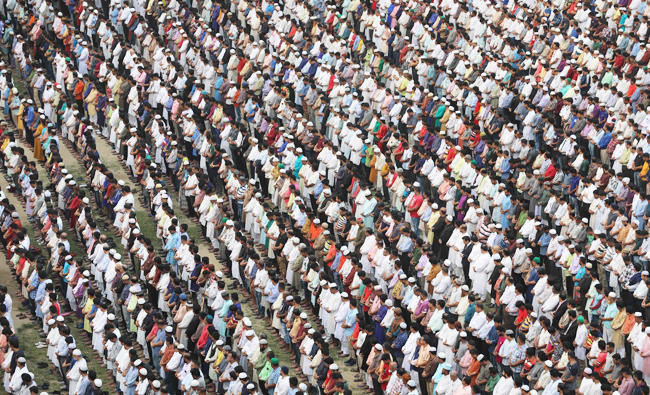
Bangladesh mosques urged to denounce radicalism
- Premier Sheikh Hasina said terrorism had become a global phenomenon and that every country was threatened by this menace


Latest updates


© 2026 SAUDI RESEARCH & PUBLISHING COMPANY, All Rights Reserved And subject to Terms of Use Agreement.