

Take a break in Kuwait

1 / 3
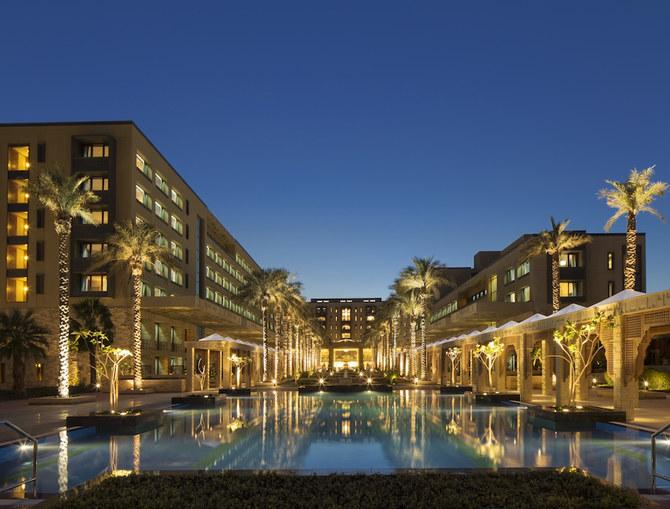
The Jumeirah Messilah Beach Hotel & Spa in Kuwait. (Supplied)
2 / 3
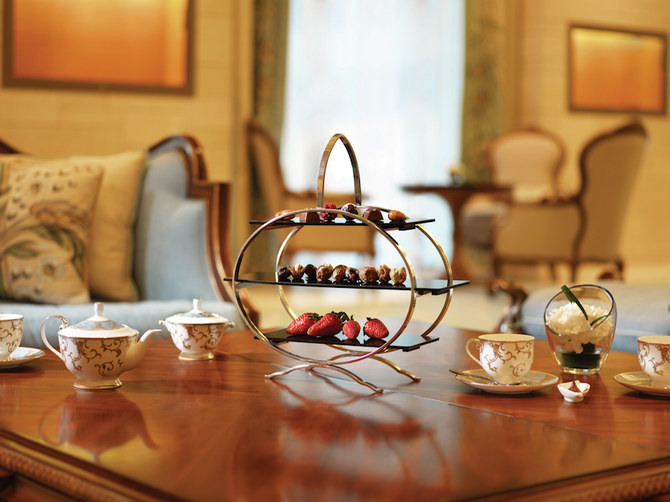
There is plenty of good food on offer at the hotel’s many F&B outlets. (Supplied)
3 / 3
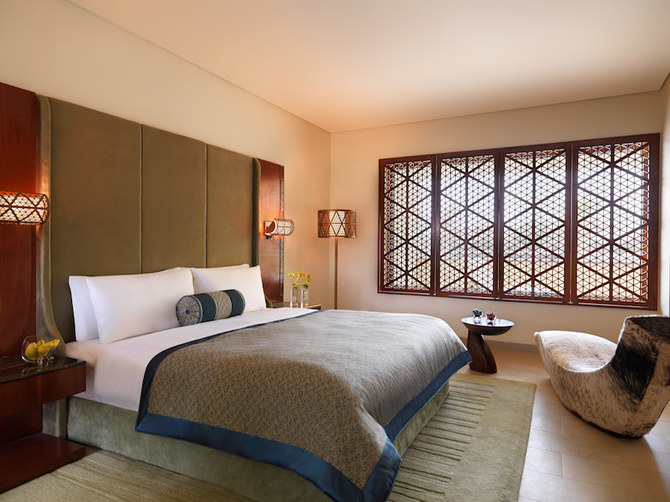
The hotel has 12 private villas in its manicured gardens. (Supplied)
Updated 22 April 2019
Follow

Take a break in Kuwait

  • The Jumeirah Messilah Beach Hotel & Spa racks up top marks for comfort, food and service

DUBAI: Arriving at the Jumeirah Messilah Beach Hotel & Spa in Kuwait, our initial impression is that it fits well into the Dubai-based international luxury hotel brand’s chain of properties.

Stepping into the impressive lobby we stare through the huge windows ahead, looking along the hotel’s central courtyard down to the sea, following a path through manicured gardens. The staff are quick to check us in, unfailingly polite and helpful (as they are throughout our stay), and usher us to our generously sized room — one of 407 in the hotel, including 12 private villas down by the aforementioned manicured gardens. So far, so good.

Settling in, we pull back the curtains to see what our view’s like. It is striking. But not in a good way. We do not have a beach-facing room. There is some water — a stagnant pool gathering in a concrete trench around a sad-looking, mostly concrete, park. This, we later learn, is part of the Messilah Beach Water Village; a ‘family friendly’ attraction reminiscent of a rundown British seaside town. It might be fun to visit (we didn’t go), but it is no kind of aesthetic pleasure.

The incongruous vista is made even less attractive by the two large garbage containers directly below our window. A useful hint: If you’re booking a room here, avoid the south-facing ones.

The room itself, thankfully, is more pleasant to look at: Generic, inoffensive color scheme with a decent attempt at a mural above the sofa, tidy, and, most importantly, clean. The location of the desk is puzzling, and would probably tip a feng-shui expert into an apoplectic rage. The large bathroom with jacuzzi and separate shower, however, is a sumptuous treat.

Less of a treat is the … let’s be charitable and call it idiosyncratic … electrical system. Motion sensors are a nice idea, but not if they turn all the lights on when one of you gets up to use the bathroom in the middle of the night. The labyrinthine method required to avoid this seems wholly unnecessary and easily avoidable — a confusing and pointless reinvention of the wheel.

Opening and closing the curtains isn’t quite as complicated, once we’ve located the switches, which — for some reason — are hidden away behind a small outcrop in the wall and can only be seen once you are sitting on the bed.

Those small (albeit infuriating) niggles are quickly forgotten, though, once we sink into bed. It is, it’s fair to say, a magnificent mattress/duvet/pillow combination. Pure luxury. And a great night’s sleep, helped in no small part by our evening stroll out along the hotel’s breakwater, past the open-air beach pavilions — definitely worth a wander while the nights are still cool.

Our breakfast is taken at the Garden Café, situated on the hotel’s lower level and looking out — you guessed it — over the gardens. The hotel promo material promises a “lavish buffet,” and the reality does not disappoint. The choice is enormous — from continental and Arabic breakfast staples, to a good old fry-up (including live omelet station), via a plethora of fruit, a range of wonderful pastries and breads, fresh juice, and more, all of it excellent. The kitchen is able to cater for diverse dietary requirements, including vegan and gluten-free dishes. You can stock up for the day here, and we do. We sample the Friday bunch at the same venue, too, which is also delicious and ridiculously well-stocked.

We do not try any of the hotel’s other outlets, but there is a range of cuisines on offer, including Italian, Arabic, seafood, and a steakhouse.

There’s not much within walking distance of the hotel — unless you’re tempted by the Water Village, which you won’t be — apart from a garage with a shop for basic groceries, and a small strip of restaurants and cafés. But this isn’t a major issue, since you can happily spend the day relaxing around the hotel’s three pools, or down by the beach. If you fancy something a little more energetic, you can book the tennis court, or make use of the hotel’s well-equipped gym. And for pampering, of course, there’s the Talise Spa, which offers 17 treatment rooms and two private suites. There’s even a majlis-style room where you can book a group Hammam treatment, and a Himalayan Salt Room, which — the hotel claims — is the first in the Middle East.

Overall, the superb levels of service, comfort and cuisine more than make up for our disappointing view and the peculiarities of the electrics. If you’re planning a break in Kuwait, then Jumeirah Messilah Beach is a great option — particularly if you’re looking to escape the clutch of hotels in the city center.


Robert Duvall: understated actor’s actor, dead at 95

Updated 16 February 2026
Follow

Robert Duvall: understated actor’s actor, dead at 95

  • One of his most memeorable characters was the maniacal, surfing-mad Lt. Gen. William Kilgore in Francis Ford Coppola’s 1979 Vietnam War epic ‘Apocalypse Now’
  • One regret was turning down the lead part in ‘Jaws’ (which went to Roy Scheider) because he instead wanted to play the salty fisherman, a role that went to Robert Shaw

LOS ANGELES: Robert Duvall, a prolific, Oscar-winning actor who shunned glitz and won praise as one of his generation’s greatest and most versatile artists, has died at age 95.
Duvall’s death on Sunday was confirmed by his wife Luciana Duvall in a statement posted Monday on Facebook.
Duvall shone in both lead and supporting roles, and eventually became a director over a career spanning six decades. He kept acting in his 90s.
His most memorable characters included the soft-spoken, loyal mob lawyer Tom Hagen in the first two installments of “The Godfather” and the maniacal, surfing-mad Lt. Gen. William Kilgore in Francis Ford Coppola’s 1979 Vietnam War epic “Apocalypse Now.”
The latter earned Duvall an Oscar nomination and made him a bona fide star after years playing lesser roles. In it he utters what is now one of cinema’s most famous lines.
“I love the smell of napalm in the morning,” his war-loving character — bare chested, cocky and sporting a big black cowboy hat — muses as low-flying US warplanes strafe a beachfront tree line with the incendiary gel.
That character was originally created to be even more over the top — his name was at first supposed to be Col. Carnage — but Duvall had it toned down in a show of his nose-to-the-grindstone approach to acting.
“I did my homework,” Duvall told veteran talk show host Larry King in 2015. “I did my research.”
Duvall was a late bloomer in the profession — he was 31 when he delivered his breakout performance as the mysterious recluse Boo Radley in the 1962 film adaptation of Harper Lee’s novel “To Kill a Mockingbird.”
He would go on to play myriad roles — a bullying corporate executive in “Network” (1976), a Marine officer who treats his family like soldiers in “The Great Santini” (1979), and a washed-up country singer in “Tender Mercies” (1983), for which he won the Oscar for best actor. Duvall was nominated for an Oscar six other times as well.
Duvall often said his favorite role, however, was one he played in a 1989 TV mini-series — the grizzled, wise-cracking Texas Ranger-turned-cowboy Augustus McCrae in “Lonesome Dove,” based on the novel by Larry McMurtry.
Film critic Elaine Mancini once described Duvall as “the most technically proficient, the most versatile, and the most convincing actor on the screen in the United States.”
In her statement Luciana Duvall said, “to the world, he was an Academy Award-winning actor, a director, a storyteller. To me, he was simply everything. His passion for his craft was matched only by his deep love for characters, a great meal, and holding court.”

‘A lot of crap’ 

Born in 1931, the son of a Navy officer father and an amateur actress mother, Duvall studied drama before spending two years in the US Army.
He then settled in New York, where he shared an apartment with Dustin Hoffman. The pair were friends with Gene Hackman as all three worked their way up in showbiz. These were lean times for the future stars.
“Hoffman, me, my brother, three or four other actors and singers had a place on 107th and Broadway in Manhattan, uptown,” Duvall told GQ in 2014.
Duvall said he had few regrets in his career.
But one was turning down the lead part in “Jaws” (which went to Roy Scheider) because he instead wanted to play the salty fisherman, a role that went to Robert Shaw.
Director Steven Spielberg told Duvall he was too young for that part.
Duvall also admitted he took some jobs just for the money.
“I did a lot of crap,” he told The Wall Street Journal in 2017. “Television stuff. But I had to make a living.”
Duvall made his home far from the glitz and chatter of Hollywood — in rural Virginia, where his family had roots.
He and his fourth wife, Argentine-born Luciana Pedraza, 40 years his junior, lived in a nearly 300-year-old farmhouse. Duvall never had children.
He said he went to New York and Los Angeles only when necessary.
“I like a good Hollywood party,” he told the Journal. “I have a lot of friends there. But I like living here.”
And of all his storied roles, Duvall says his favorite was indeed that of the soft-hearted cowboy McCrae in “Lonesome Dove.”
“That’s my ‘Hamlet,’” he told The New York Times in 2014.
“The English have Shakespeare; the French, Moliere. In Argentina, they have Borges, but the Western is ours. I like that.”