


DUBAI: Algeria is a land rich in natural resources, and where there is wealth, corruption and greed often follows.
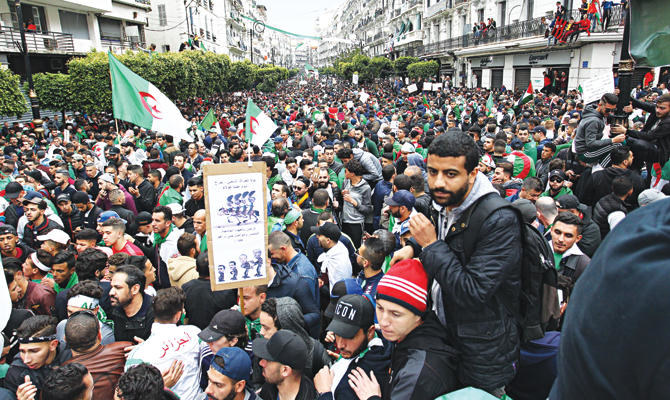
Amid the political uncertainty following the removal of Abdelaziz Bouteflika after 20 years as president, and the continuing protests demanding a change to the political system, analysts believe there is fertile ground for a group that specializes in both — the Muslim Brotherhood.
“Part of the Muslim Brotherhood’s plan is to control vital targets, and they have long eyed energy resources in this region, and attempted to take control,” said Hajjaj Bou Khaddour, a Kuwaiti energy expert.
“Bouteflika is down, but the demonstrations persist. The plan is to cause a complete overhaul of the system and that means they want to change everything, not only in politics, but also in terms of vital departments in the government and its related entities, especially in the oil and gas sector.”
Should that happen, it would destabilize the most profitable sector in the country.
Algeria produces more than a million barrels of oil a day, making it the ninth-largest OPEC producer and the 17th worldwide. It is also a major gas producer, and exports over 50 percent of its crude (90 percent of it to Western Europe) and 60 percent of its gas. Hydrocarbons account for 60 percent of national revenue, 30 percent of gross domestic product (GDP) and 95 percent of export earnings.
What a prize — and all of it under threat. The International Energy Agency gave assurances last month that Algeria’s oil production was not affected by the political tension, but Bou Khaddour believes that could all quickly change. “The current situation in Algeria is vague and unclear. I do believe there may be further escalation,” he said.
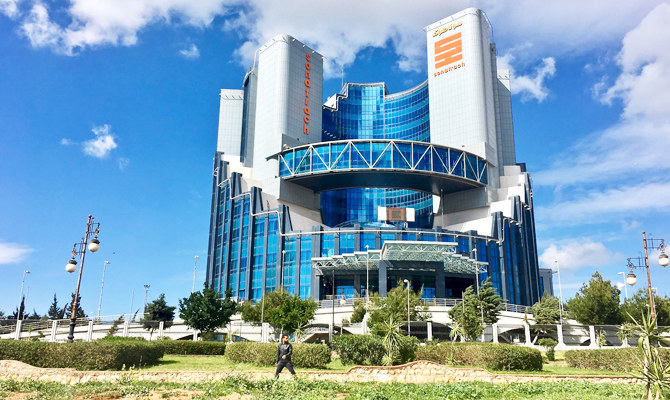
Meanwhile, it appears to be business as usual at the state-run oil and gas company Sonatrach, which last week signed two multimillion-dollar onshore contracts with a rig contractor. There are, however, signs that not all is well. Two major deals involving Sonatrach have recently fallen through, one of them a majority shareholding in Greece’s biggest refiner. The Greek government blamed “recent developments in the international environment” and reasons related to shortlisted parties, one of which was Sonatrach.
The company is rarely far from controversy. It has been mired in a series of corruption scandals and prosecutions since 2010, and several of its former executives are serving prison sentences.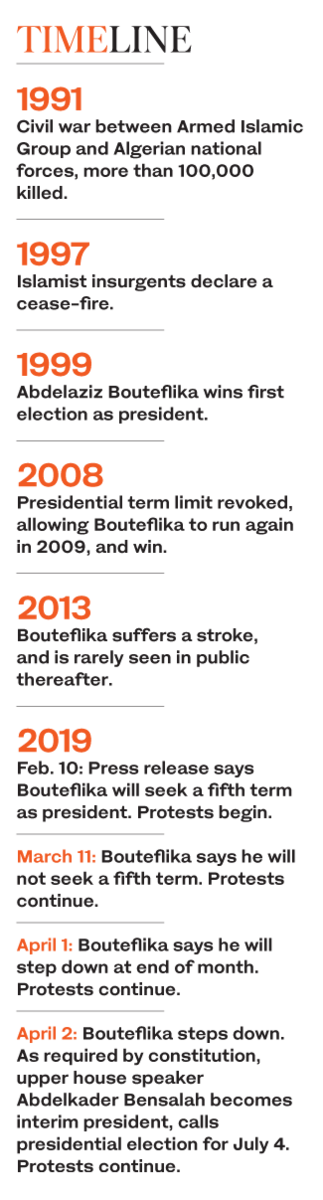
And it is here, expert sources have told Arab News, that the threat from the Muslim Brotherhood may emanate. The group wants to use the current political upheaval to install its own affiliates as new leading figures in the oil and gas sector. Several names have been discussed in private.
They include individuals involved in previous Sonatrach corruption cases, who managed to escape judicial penalty and have been living comfortable lives abroad until they are ready to make a comeback.
One former Sonatrach executive in the crude-oil trading department, who was dismissed in 2018 in a post-corruption clearout, is thought to have ties with Lord Energy, a Swiss company closely linked to the Muslim Brotherhood — and even, through its founder’s family, with Al-Qaeda.
Algeria’s current political leadership understands the gravity of the situation very well, especially when it comes to supporting the stability of the lucrative oil and gas sector to ensure a smoothly run business locally and internationally.
The interim President Abdelkader Bensalah, insisted last week that the government would “ensure the proper functioning of the administration and public services.”
The new government also wants to reassure Algerians that public money is a better way to start than by fighting corruption, following the money trail; and naturally the oil and gas sector would be on the hit list.
The military Chief of Staff Ahmed Gaid Salah has promised that the “judiciary will reopen all corruption cases,” targeting the “entire gang involved in the embezzlement and squandering of public funds.” These past cases, he said, will include Sonatrach.
The accusations being reinvestigated date back to 2010 and reached as high as the energy minister at the time, Chakib Khelil. He was dismissed shortly after the scandal erupted, as were several others, until the case was dropped by the Algerian judiciary in 2016.
Officials were accused of taking bribes from international energy companies, including SNC Lavalin of Canada and ENI of Italy, in return for access to Algeria’s oil and gas sector. A former vice president of Sonatrach, Chawki Rahal, whose son worked for ENI, was among those named in the case.
Sources say other former officials from Sonatrach may well be summoned by the judiciary and interrogated, including former Chief Executive Amine Mazouzi. He was axed in 2017 and replaced by Abdulmomen Ould Kaddour, who then led a clean-up campaign within the company.
Omar Maaliou, the former vice president of Sonatrach in charge of commercialization and trading, could also be summoned for questioning in the case should all files be opened, according to the sources.
Maaliou was let go by Sonatrach in 2018, a year after Mazouzi was fired, and now lives in Canada.
Should all the old files be opened by the judiciary, Algerian sources say this may constitute the largest corruption case in the history of Algeria in terms of the size of losses that Sonatrach had caused the country, estimated at hundreds of millions of dollars.
Leila Hatoum is a Lebanese journalist who has covered geopolitics and macroeconomics across the Middle East and North African regions for the past 18 years.


