BANGKOK: Thai authorities have raided a floating home in the Andaman Sea belonging to an American man and his Thai partner who sought to be pioneers in the “seasteading” movement, which promotes living in international waters to be free of any nation’s laws.
Thailand’s navy said Chad Elwartowski and Supranee Thepdet endangered national sovereignty, an offense punishable by life imprisonment or death.
It filed a complaint against them with police on the southern resort island of Phuket. Thai authorities said they have revoked Elwartowski’s visa.
Elwartowski said in an email Thursday that he believes he and Supranee — also known as Nadia Summergirl — did nothing wrong.
“This is ridiculous,” he said in an earlier statement posted online. “We lived on a floating house boat for a few weeks and now Thailand wants us killed.”
The couple, who have gone into hiding, had been living part-time on a small structure they said was anchored outside Thailand’s territorial waters, just over 12 nautical miles from shore. They were not there when the navy carried out their raid on Saturday.
The Thai deputy naval commander responsible for the area said the project was a challenge to the country’s authorities.
“This affects our national security and cannot be allowed,” Rear Adm. Wintharat Kotchaseni told Thai media on Tuesday. He said the floating house also posed a safety threat to navigation if it broke loose because the area is considered a shipping lane.
Seasteading has had a revival in recent years as libertarian ideas of living free from state interference — such as by using crypto-currency including Bitcoin — have become more popular, including among influential Silicon Valley figures such as entrepreneur Peter Thiel. Elwartowski, an IT specialist, has been involved in Bitcoin since 2010.
Several larger-scale projects are under development, but some in the seasteading community have credited the Andaman Sea house with being the first modern implementation of seasteading.
“The first thing to do is whatever I can to help Chad & Nadia, because living on a weird self-built structure and dreaming of future sovereignty should be considered harmless eccentricities, not major crimes,” Patri Friedman, a former Google engineer who heads The Seasteading Institute, said on his Facebook page.
The floating two-story octagonal house at the center of the controversy had been profiled and promoted online by a group called Ocean Builders, which touted it as a pilot project and sought to sell additional units.
The group describes itself as “a team of engineering focused entrepreneurs who have a passion for seasteading and are willing to put the hard work and effort forward to see that it happens.”
In online statements, both Elwartowski and Ocean Builders said the couple merely promoted and lived on the structure, and did not fund, design, build or set the location for it.
“I was volunteering for the project promoting it with the desire to be able to be the first seasteader and continue promoting it while living on the platform,” Elwartowski told The Associated Press.
“Being a foreigner in a foreign land, seeing the news that they want to give me the death penalty for just living on a floating house had me quite scared,” Elwartowski said. “We are still quite scared for our lives. We seriously did not think we were doing anything wrong and thought this would be a huge benefit for Thailand in so many ways.”
Asked his next step, he was more optimistic.
“I believe my lawyer can come to an amicable agreement with the Thai government,” he said.


![]()


Thailand says US man’s seasteading home violates sovereignty
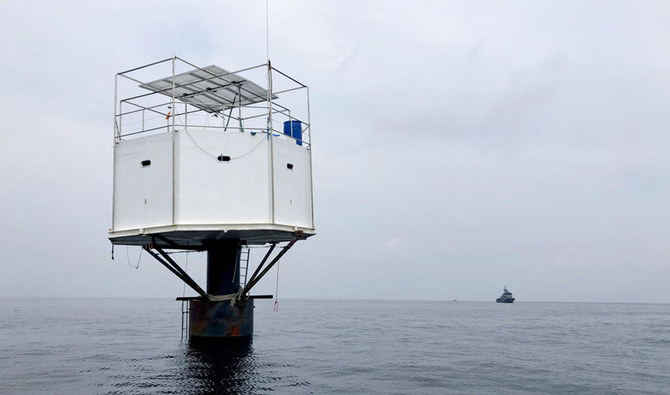
Thailand says US man’s seasteading home violates sovereignty
- Seasteading has had a revival in recent years as libertarian ideas of living free from state interference have become more popular
- Thailand’s navy said Chad Elwartowski and Supranee Thepdet endangered national sovereignty


Pakistan combing for perpetrators after deadly separatist attacks
- Around a dozen sites where the attacks took place — including the provincial capital Quetta — remained sealed off
- The Baloch Liberation Army, the province’s most active militant separatist group, claimed responsibility for the attacks
QUETTA, Pakistan: Pakistan forces were hunting on Sunday for the separatists behind a string of coordinated attacks in restive Balochistan province, with the government vowing to retaliate after more than 120 people were killed.
Around a dozen sites where the attacks took place — including the provincial capital Quetta — remained sealed off, with troops combing the area a day after militants stormed banks, jails and military installations, killing at least 18 civilians and 15 security personnel, according to the military’s count.
At least 92 militants were also killed, the military added, while an official said that a deputy district commissioner had been abducted.
Mobile Internet service across the province has been jammed for more than 24 hours, while road traffic is disrupted and train services suspended.
After being rocked by explosions, typically bustling Quetta lay quiet on Sunday, with major roads and businesses deserted, and people staying indoors out of fear.
Shattered metal fragments and mangled vehicles litter some roads.
“Anyone who leaves home has no certainty of returning safe and sound. There is constant fear over whether they will come back unharmed,” Hamdullah, a 39-year-old shopkeeper who goes by one name, said in Quetta.
The Pakistan military said it was conducting “sanitization operations” in the areas that had been targeted in Saturday’s attacks.
“The instigators, perpetrators, facilitators and abettors of these heinous and cowardly act... will be brought to justice,” it said in a statement Saturday night.
The Baloch Liberation Army (BLA), the province’s most active militant separatist group, claimed responsibility for the attacks in a statement sent to AFP.
The group said it had targeted military installations as well as police and civil administration officials in gun attacks and suicide bombings.
Saturday’s attacks came a day after the military said it killed 41 insurgents in two separate operations in the province.
Pakistan has been battling a Baloch separatist insurgency for decades, with frequent armed attacks on security forces, foreign nationals and non-local Pakistanis in the mineral-rich province bordering Afghanistan and Iran.
Pakistan’s poorest province despite an abundance of untapped natural resources, Balochistan lags behind the rest of the country in almost every index, including education, employment and economic development.
Baloch separatists have intensified attacks on Pakistanis from other provinces working in the region in recent years, as well as foreign energy firms that they believe are exploiting its riches.
The separatists attacked a train with 450 passengers on board last year, sparking a two-day siege during which dozens of people were killed.
Around a dozen sites where the attacks took place — including the provincial capital Quetta — remained sealed off, with troops combing the area a day after militants stormed banks, jails and military installations, killing at least 18 civilians and 15 security personnel, according to the military’s count.
At least 92 militants were also killed, the military added, while an official said that a deputy district commissioner had been abducted.
Mobile Internet service across the province has been jammed for more than 24 hours, while road traffic is disrupted and train services suspended.
After being rocked by explosions, typically bustling Quetta lay quiet on Sunday, with major roads and businesses deserted, and people staying indoors out of fear.
Shattered metal fragments and mangled vehicles litter some roads.
“Anyone who leaves home has no certainty of returning safe and sound. There is constant fear over whether they will come back unharmed,” Hamdullah, a 39-year-old shopkeeper who goes by one name, said in Quetta.
The Pakistan military said it was conducting “sanitization operations” in the areas that had been targeted in Saturday’s attacks.
“The instigators, perpetrators, facilitators and abettors of these heinous and cowardly act... will be brought to justice,” it said in a statement Saturday night.
The Baloch Liberation Army (BLA), the province’s most active militant separatist group, claimed responsibility for the attacks in a statement sent to AFP.
The group said it had targeted military installations as well as police and civil administration officials in gun attacks and suicide bombings.
Saturday’s attacks came a day after the military said it killed 41 insurgents in two separate operations in the province.
Pakistan has been battling a Baloch separatist insurgency for decades, with frequent armed attacks on security forces, foreign nationals and non-local Pakistanis in the mineral-rich province bordering Afghanistan and Iran.
Pakistan’s poorest province despite an abundance of untapped natural resources, Balochistan lags behind the rest of the country in almost every index, including education, employment and economic development.
Baloch separatists have intensified attacks on Pakistanis from other provinces working in the region in recent years, as well as foreign energy firms that they believe are exploiting its riches.
The separatists attacked a train with 450 passengers on board last year, sparking a two-day siege during which dozens of people were killed.
Latest updates


Recommended


© 2026 SAUDI RESEARCH & PUBLISHING COMPANY, All Rights Reserved And subject to Terms of Use Agreement.