GENEVA: Around 2,500 foreign children are stuck in a guarded section of a Syrian camp after fleeing Daesh's last stronghold, a senior United Nations official said on Thursday, urging governments not to abandon them.
The children's plight at the Al-Hol camp in northeast Syria is a dilemma for nations who saw citizens leave and fight for the extremist movement in Syria and Iraq only to find themselves in limbo after the fall of their self-proclaimed "caliphate."
Panos Moumtzis, UN humanitarian coordinator for the Syria crisis, said home nations must take responsibility for repatriating their citizens, prosecuting where necessary.
"Really nobody should be rendered stateless and every effort should be made to find a solution for these people," he told a Geneva news briefing.
The children are among 10,000 non-Syrian and non-Iraqi nationals kept in a "restricted" section of the sprawling, Kurdish-run camp where 75,000 people live in total.
Some 211 children were among at least 260 people who died of malnutrition or disease en route to the camp since December, the latest UN figures show.
Britain revoked the citizenship of a teenager who left at 15 to join Daesh in Syria, while Austria and Switzerland have said they will not help bring home adults who joined the terrorist group.
But Moumtzis said states had a legal responsibility, especially for children, many of whom were born in Daesh camps. "Children should be treated first and foremost as victims" and "irrespective of family affiliation," he said.
The situation is further complicated because most states lack the capacity to offer consular services or access their nationals in the area. "There has to be a concerted effort, this is not about blaming or 'naming and shaming', but it's really about being practical and finding a way forward that would find a solution," the UN official said.


UN urges resolving fate of 2,500 foreign children at Syria camp

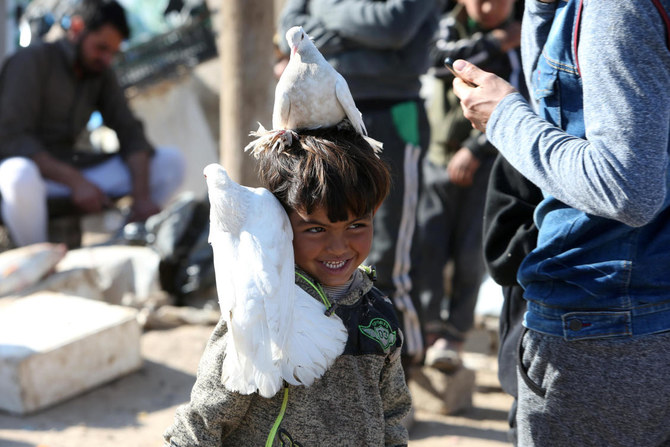
UN urges resolving fate of 2,500 foreign children at Syria camp

- Panos Moumtzis, UN humanitarian coordinator for the Syria crisis, said home nations must take responsibility for repatriating their citizens, prosecuting where necessary
- Britain revoked the citizenship of Shamima Begum who left at 15 to join Daesh in Syria


Tunisian police arrest member of parliament who mocked president
- Ahmed Saidani mocked the president in a Facebook post, describing him as the “supreme commander of sewage and rainwater drainage”
TUNIS: Tunisian police arrested lawmaker Ahmed Saidani on Wednesday, two of his colleagues said, in what appeared to be part of an escalating crackdown on critics of President Kais Saied.
Saidani has recently become known for his fierce criticism of Saied. On Tuesday, he mocked the president in a Facebook post, describing him as the “supreme commander of sewage and rainwater drainage,” blasting what he said was the absence of any achievements by Saied.
Saidani was elected as a lawmaker at the end of 2022 in a parliamentary election with very low voter turnout, following Saied’s dissolution of the previous parliament and dismissal of the government in 2021.
Saied has since ruled by decree, moves the opposition has described as a coup.
Most opposition leaders, some journalists and critics of Saied, have been imprisoned since he seized control of most powers in 2021.
Activists and human rights groups say Saied has cemented his one-man rule and turned Tunisia into an “open-air prison” in an effort to suppress his opponents. Saied denies being a dictator, saying he is enforcing the law and seeking to “cleanse” the country.
Once a supporter of Saied’s policies against political opponents, Saidani has become a vocal critic in recent months, accusing the president of seeking to monopolize all decision-making while avoiding responsibility, leaving others to bear the blame for problems.
Last week, Saidani also mocked the president for “taking up the hobby of taking photos with the poor and destitute,” sarcastically adding that Saied not only has solutions for Tunisia but claims to have global approaches capable of saving humanity.
Under Tunisian law, lawmakers enjoy parliamentary immunity and cannot be arrested for carrying out their duties, although detention is allowed if they are caught committing a crime.


