ISLAMABAD: Pakistan’s Finance Minister Asad Umar resigned from the cabinet on Thursday after Prime Minister Imran Khan tried to move him to the energy portfolio, heightening uncertainty about ongoing bailout talks with the International Monetary Fund and the government’s plan to deal with an economy in crisis.
Speculation has been rife in recent days that Umar would be replaced, mostly over delays in reaching a deal with the IMF at a time of worsening economic outlook for the South Asian nation of 208 million people.
“As part of a cabinet reshuffle PM [prime minister] desired that I take the energy minister portfolio instead of finance,” Umar said in a Twitter post. “However, I have obtained his consent to not take any cabinet position.”
At a press conference later in the day, he said Khan needed to pick a new finance minister “as soon as possible” but declined to comment on who would replace him.
Umar’s successor will have the monumental task of not just finalizing the IMF deal but also the national budget, due to be announced in May.
“We are at an advanced stage [of talks] with the IMF and this will also reflect in the upcoming budget,” Umar said. “Whoever comes in, he will have to face a thorny situation … Nobody should expect any miracle from the new finance minister.”
As part of a cabinet reshuffle, Umar said other changes in the cabinet would “be announced either tonight or tomorrow morning.”
Khurram Hussain, the business editor of Dawn newspaper, said Umar’s resignation was “ill-timed” and would add to uncertainty about the country’s economic future.
“At a time when the finance minister was engaged with the IMF and preparing the budget, his resignation is beyond comprehension,” Hussain told Arab News, adding that any new official would now have to start from scratch.
Dr. Athar Ahmed, a senior economist based in Karachi, said Umar’s resignation would shake the confidence of the IMF in Pakistan and possibly prolong the finalization of a deal.
Talks with the IMF began soon after Khan was appointed prime minister but stalled over austerity conditions imposed by the Fund, which has pressed Pakistan to improve tax revenue collection, bolster foreign currency reserves and narrow a current account deficit expected to top 5 percent of gross domestic product this year.
Pakistani officials say they agree on the need for reforms but do not want to sign up to conditions that would derail the economy, with growth set to slow this year to around 4 percent from 5.2 percent last year.
“We have finalized the IMF agreement on much better terms than before as I refused to take decisions that would have crushed the nation,” Umar said at Thursday’s press talk.


![]()
![]()

Pakistan finance minister steps down amid IMF talks, budget preparations
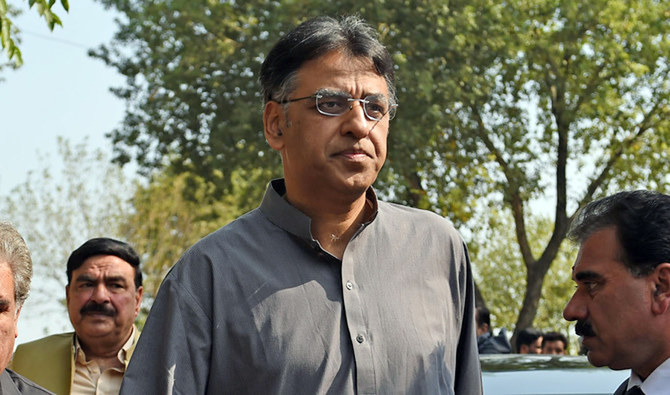

Pakistan finance minister steps down amid IMF talks, budget preparations
- Asad Umar says was offered energy ministry by prime minister in cabinet reshuffle but declined
- Warns no one should expect miracles from the new finance minister
Latest updates


© 2026 SAUDI RESEARCH & PUBLISHING COMPANY, All Rights Reserved And subject to Terms of Use Agreement.