TOKYO: Japan’s exports fell for a fourth straight month in March as China-bound shipments slumped again, reinforcing growing anxiety that weak external demand is likely to have knocked first quarter economic growth. Ministry of Finance data out on Wednesday showed exports fell 2.4 percent in March from a year earlier, compared with a 2.7 percent drop predicted by economists in a Reuters poll, and followed a 1.2 percent decline in February. The data reinforces worries that weak external demand may hurt company profits and in turn curb business expenditures, workers’ wages and consumer spending in a broad hit to growth. Some analysts expect Japan’s economy likely swung back to a mild contraction in the first quarter as declines in exports and capital expenditure dented private consumption. That would pile pressure on Prime Minister Shinzo Abe to once again delay a planned sales tax hike in October needed to fix the world’s heaviest public debt burden at twice the size of its economy. The economy grew at an annualized rate of 1.9 percent in the fourth quarter driven by business and consumer spending. Bank of Japan Governor Haruhiko Kuroda last week stuck to his optimism that Japan’s export-dependent economy will soon climb out of its doldrums as global growth recovers. Kuroda, however, did warn of lingering risks to the global outlook, including the outcome of US-China trade talks and Britain’s potentially messy departure from the European Union. Markets expect the BOJ to stand pat at a rate review next week, though some investors say the recent batch of soft indicators may pile pressure on policymakers to add to the central bank’s already massive stimulus later in the year. Wednesday’s data came on the heels of this week’s bilateral trade talks between Tokyo and Washington. US President Donald Trump has prodded Japanese automakers to boost more jobs in the United States as the White House has threatened to impose tariffs of up to 25 percent on imported vehicles, on the grounds of national security. Imports of Japanese cars make up about two-thirds of Japan’s $69 billion annual trade surplus with the United States. US-bound exports rose 4.4 percent in the year to March, driven by car shipments, which grew 5.1 percent. Imports from the United States declined 0.2 percent, resulting in Japan’s trade surplus with the country rising 9.8 percent year-on-year to 683.6 billion yen. Exports to China, Japan’s biggest trading partner, fell 9.4 percent year-on-year in March, reversing from a 5.6 percent gain in February. Asia-bound shipments, which account for more than half of overall exports, fell 5.5 percent, down for a fifth straight month. Japan’s overall imports rose 1.1 percent in the year to March, undershooting the median estimate for a 2.6 percent annual increase, resulting in a trade surplus of 528.5 billion yen.


Japan exports slump on weak China demand, heaping pressure on economy

Japan exports slump on weak China demand, heaping pressure on economy
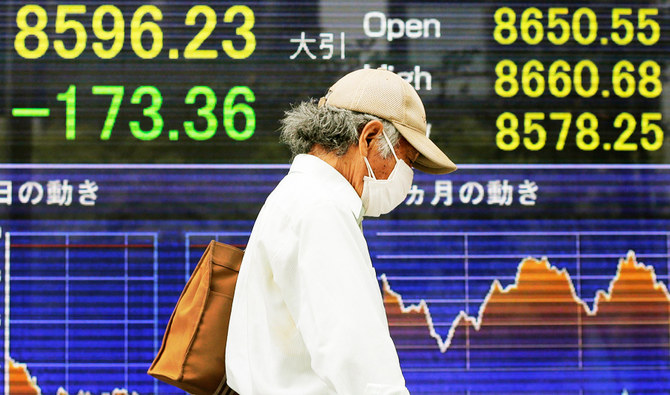
- Ministry of Finance data out on Wednesday showed exports fell 2.4 percent in March from a year earlier
- Exports to China, Japan’s biggest trading partner, fell 9.4 percent year-on-year in March


Saudi-UK partnerships drive trade surge with over 60 initiatives across 13 sectors
RIYADH: Partnerships between Saudi Arabia and the UK cover over 60 initiatives across 13 sectors, with trade between the countries up a third since 2018, according to a top official.
Speaking during the opening remarks of the GREAT Futures Initiative Conference held in Riyadh, the Kingdom’s Minister of Commerce, Majid Al-Qasabi, noted that bilateral trade surged between 2018 and 2023, exceeding £79 billion ($99.12 billion).
With over 1,100 active licenses for UK investors, developments such as the giga-projects in Saudi Arabia and policy reforms are strengthening business opportunities in the Kingdom.
“The growth and the inflow of trade is matched by the growth in foreign direct investment. In 2022 alone, the inflow of British investment into (the) Saudi economy reached more than £4.3 billion,” Al-Qasabi said.
He added: “Our strong bilateral economic ties are underpinned by strong educational and cultural ties. In the academic years of 2020 to 2023, 14,000 Saudi students were pursuing their higher education in the UK.”
The UK’s Deputy Prime Minister Oliver Dowden used his appearance on a panel alongside Al-Qasabi to say that he is “particularly excited about sports and tourism” when it comes to increased cooperation with the Kingdom.
“We will enhance decision-making and collaborations across various sectors, which is wonderful and amazing, enhancing our prosperity as two countries. We also look forward to these collaborations,” he said.
Highlighting the UK as the second largest exporter of services in the world, Al-Qasabi stated that Saudi Arabia is looking into new trade across the cultural, sports, and entertainment areas, as well as financial and insurance spheres.
However, Dowden noted that a few additional sectors, including technology and artificial intelligence, were not covered.
“I think there’s a lot more we can do to collaborate together because there’s huge expertise in artificial intelligence in Saudi Arabia,” Dowden said.
He also flagged up education as an area for growth, saying that by 2030 there should be 10 British schools in the Kingdom.
“Having a presence in Saudi Arabia has always been a strength to the British education system, so that’s a tremendously exciting area for us,” Dowden said, adding that healthcare is also an area for expansion.
Additionally, Saudi Minister of Investment Khalid Al-Falih highlighted that the second largest investor in Saudi Arabia is the UK, which has accumulated about $16 billion in investment stock.
He continued: “I will also mention our regional headquarters program where we have attracted over 400 global multinational companies to choose Saudi Arabia as their hub, I’d say as their home countries. I am proud and happy that 52 of those are from the UK and we are happy to offer this platform to grow and prosper.”
Al-Falih also stated that Saudi Arabia needs to develop a new economy, focusing on sectors that have been historically under-invested in, while also tackling global challenges.
The minister emphasized that the UK and Saudi Arabia, as leading G20 economies, are experiencing significant changes driven by megatrends such as energy and technological transitions, as well as challenges like AI and disruptions in global supply chains.
However, he said: “There needs to be green energy embedded in our supply chain. What we want to do is build these new supply chains that are built on … efficient logistics, technology, automation, Fourth Industrial Revolution, accessing critical materials, not only in the Kingdom but in Africa."
On a hosting front, Minister of Tourism Ahmed Al-Khatib stated that the Kingdom has witnessed a remarkable 390 percent increase in demand for tourism activity licenses, with over 165,000 British travelers visiting Saudi Arabia in the first quarter of this year.
“The issuance of 560,000 electronic visas to the UK tourists since 2019 underscores the growth in a growing interest in visiting our Kingdom. Our aim is to further increase connectivity and expand the presence of traditional sales operators,” Al-Khatib said.
Furthermore, the Secretary of State for Culture, Media and Sport of the UK, Lucy Frazer, stated that in 2022, the nation welcomed over 200,000 visitors from the Kingdom.
She quoted the UK’s national tourism agency VisitBritain’s latest forecast, which predicts 240,000 visits from Saudi Arabia this year.
“This is another area where you are testing the fundamentals. Looking up the tourism infrastructure needed to make Saudi Arabia a magnet for visitors doing what is needed to increase the number of annual travelers to the Kingdom from 14 million to 60 million in the next five years,” Frazer continued.
She also stated that many British sports stars will soon start playing in Saudi Arabia.
On the first day of the event, Red Sea Global CEO John Pagano stated that the first phase of project work will be completed in 2025, as the company is “currently working on the Red Sea International Airport project and have operated eight flights to Riyadh, Jeddah, and Dubai.”
Chemicals firm to open Saudi office
Maurits van Tol, CEO of Catalyst Technologies for Johnson Matthey, has announced that the company will open its office in Riyadh
“We traditionally have catered to the Kingdom from our offices in Bahrain and Abu Dhabi. But what we are also now, we will announce this week, is that we will open our office in Riyadh,” van Tol told Arab News.
“We just signed all the paperwork, and we will have the first people starting to work in the office very soon, and then we have a little bit of a bigger opening somewhat later in the year,” he said.
Van Tol said the office is set to open sometime between late summer and autumn with staff members from Saudi Arabia and the UK.
The company’s expansion is a part of Johnson Matthey’s aim to enhance local and regional collaboration.
Van Tol discussed the company’s expansion during a panel discussion titled “Powering a Greener Future” at the GREAT Futures event in Riyadh on May 13.
During the session, he highlighted Johnson Matthey’s technologies and their role in developing sustainable aviation fuel and other low-carbon solutions.
Van Tol said: “JM technologies will support KSA as it seeks to diversify its energy sources and reach its sustainability goals. We can and will help it make its vision to lead the world in making a circular carbon economy a reality.”
He said Johnson Matthey has been working in the region for 35 years, including collaborating with the King Abdullah University of Science and Technology.
“When you look at the Kingdom’s Vision 2030, there is a lot about reduce, reuse, recycle and remove … it’s also that place at the heart of what we do at Johnson Matthey,” Van Tol said.
“We design intrinsically energy-efficient technologies, but also we have a very broad suite of technologies that can convert renewables, including CO2, with renewable hydrogen, into synthetic aviation fuel,” he added.


Closing Bell: TASI edges down to close at 12,120 points
RIYADH: Saudi Arabia’s Tadawul All Share Index dipped on Tuesday, losing 138.69 points, or 1.13 percent, to close at 12,120.91.
The total trading turnover of the benchmark index was SR7.31 billion ($1.94 billion) as 30 stocks advanced, while 200 retreated.
Similarly, the MSCI Tadawul Index decreased by 16.46 points, or 1.07 percent, to close at 1,519.37.
Also, the Kingdom’s parallel market, Nomu, slipped by 200.31 points, or 0.75 percent, to close at 26,659.06. This comes as 17 stocks advanced, while as many as 41 retreated.
The best-performing stock of the day was Al-Jouf Agricultural Development Co., whose share price surged by 7.58 percent to SR66.70.
Other top performers included Basic Chemical Industries Co. and Al-Babtain Power and Telecommunication Co., whose share prices soared by 5.36 percent and 3.91 percent, to stand at SR36.35 and SR46.50 respectively.
In addition to this, SAL Saudi Logistics Services Co. and Jadwa REIT Saudi Fund also fared well.
The worst performer was Saudi Public Transport Co. whose share price dropped by 9.92 percent to SR18.16.
On the announcements front, Hail Cement Co. announced its interim financial results for the period ending March 31, with revenues amounting to SR73.7 million, up from SR61.8 million in the corresponding period in 2023.
The company attributed the 19.2 percent growth to the increase in quantity of sales and average selling price.
On the contrary, net profits decreased to SR15 million in the first three months of 2024 from SR18.5 million in the same period in 2023, due to an increase in the cost of sales, zakat expense and selling and distribution expenses.
Taiba Investments Co. also announced its financial results for the same period with revenues amounting to SR332.07 million, up from SR110.96 million in the first three months of 2023.
In a statement on Tadawul, the company announced record revenue growth during the first quarter, attributed to Taiba Investment Co.’s acquisition of Dur Hospitality Co., which contributed to the rise in operational revenues.
It added that quarterly operating revenues rose up by SR221.1 million representing a 199.3 percent increase in comparison to the same quarter of the previous year.
Net profits also rose in this period reaching SR110.5 million, marking a 78 percent year-on-year increase.
This was attributed to higher hospitality revenues that were helped by the growth in the number of pilgrims and visitors, rising demand from the institutional sector, and the occurrence of numerous events and conferences in Riyadh during this period.
Rabigh Refining and Petrochemical Co.’s revenues in this period dipped by 27.2 percent to SR7.9 billion compared to SR10.9 billion in the first quarter of 2023.
This fall was attributed to lower sales volumes, due to the unplanned shutdown of the High Olefins Fluid Catalytic Cracker units for necessary repairs and maintenance work.
The company’s net loss surged to SR1.3 billion compared to SR964 million in the corresponding period last year.
The Saudi Public Transport Co.’s revenues slightly increased by 0.2 percent to SR308.5 million in the first quarter this year, compared to SR307.6 million in the corresponding period in 2023.
The increase in revenues in the current quarter compared to the same quarter of last year is attributed to increased operations during Ramadan, the company said in a statement.
Its net loss surged by 2.5 percent to reach SR48.6 million due to the recognition of loss in the joint venture, as well as the recording of a higher amount of impairment on trade receivables, and an increase in cost of finance.
Revenues of Emaar, The Economic City decreased sharply in the first three months of 2024 to SR75 million, down from SR157 million in the same period last year.
This 52 percent decline was mainly attributable to the decline in operational revenues, due to lower lease revenues resulting from the termination of certain leases.
The company’s net loss increased by 105.8 percent to reach SR352 million this year up from SR171 million in the first quarter of 2023.
It attributed this surge to a revenue decline, increased operational expenses, higher finance costs, and updated zakat expenses, with the latter being a one-time adjustment.

Al-Jadaan calls to optimize economic plans to withstand global shocks
RIYADH: Shedding light on the Kingdom’s economic performance, Saudi finance minister said the country’s gross domestic product has increased by more than 15 percent since the launch of Vision 2030.
Speaking at a panel “Reshaping Middle East Economies,” on the opening day of the Qatar Economic Forum in Doha on Tuesday, Mohammed Al-Jadaan urged economic planners to optimize their strategies to curb “economic leakage” and prevent resources or fund from being wasted.
Calling for the adoption of prudent fiscal policies, the minister said spending at a time of global inflation results in increased costs of projects, which according to him, further fuels inflation and “overheat” economy.
Based on the Kingdom’s economic performance, the minister said that Saudi Arabia is in a position to “reshape the Gulf region’s” overall economy.
He said it is not just Saudi Arabia but the entire Gulf Cooperation Council is marching toward “a proper, sustainable and diversified economy that enables the private sector.”
Talking specifically about the Kingdom, the finance minister said: “(Regarding) our non-oil revenues, only in the past seven years, we moved from 10 percent to 37 percent. That is significant. Our non-oil GDP now represent (around) 50 percent of our economy.”
He noted that Vision 2030 was launched in 2016, well before the COVID-19 pandemic, wars in Ukraine and Gaza and problems like inflation and supply chain disruptions.
“All of these collective shocks that are facing the world calls us also to reprioritize, to look at what we are doing, and how can we actually optimize what we are doing, optimize our plans,” Al-Jadaan said.
Giving the reforms “more time” could ultimately be better for the Saudi economy, allowing the private sector to grow alongside the giga-projects, he said.
“If you don’t allow your economy to catch up with your projects, basically what will happen is you will import a lot more,” Al-Jadaan said.
“And you will not allow your economy, your private sector to catch up and build their factories, manufacturing facilities, service providers to actually support the projects that we are building.”
During the same panel, Muhammad Sulaiman Al-Jasser, chairman of the Islamic Development Bank Group, shed light on how the oil boom affected the Gulf Cooperation Counil region.
“When the oil boom came, the government sent us overseas all over the world to go and study and come back and participate in the development of our (respective) countries,” Al-Jasser said.
The IsDB chairman also added: “Resilience, I think is very very important, and the GCC countries seem to be together moving in that direction and now they are much greater believers in their own abilities. Resilience is probably now what distinguishes the GCC economies.”
The 4th Qatar Economic Forum aims to explore the issues driving global boardroom conversations and spotlight the Gulf’s rising prominence.

Saudi Arabia’s ICT spending surges 20% to $11bn
RIYADH: Saudi Arabia has witnessed a 20 percent year-on-year increase in government spending on information and communications technology in 2023, reaching SR41.87 billion ($11.16 billion), according to new data.
The latest report from the Kingdom’s Digital Government Authority revealed that the increase in spending has contributed to enhancing the efficiency of digital government services and improving the experience of beneficiaries.
Additionally, this investment has had a positive impact on the digital economy, marking a milestone in the Kingdom’s transformation journey.
“ICT spending is one of the supporting factors for innovative and flexible solutions that we aspire to provide to all citizens and residents of Saudi Arabia, ensuring the effectiveness of the immense human wealth that populates the country and achieving a high quality of life,” said Faisal bin Ahmed Bakhshwin, deputy minister for digital transformation at the Ministry of Human Resource and Social Development.
On the other hand, Musaed Al-Otaibi, deputy minister for digital transformation and smart cities at the Ministry of Municipal and Rural Affairs and Housing, emphasized: “Digital transformation is one of the pillars of our work at the ministry. ICT spending has enabled us to provide mature and high-quality services with added value through innovative models for citizens.”
Al-Otaibi stated that the ministry continues to strive to improve services and meet the needs of urban residents by providing services that enrich and facilitate their daily lives.
The deputy minister mentioned the government’s attention and interest in citizens’ feedback, incorporating it into the design of suitable services.
Al-Otaibi explained that the ministry aims to achieve a “higher quality of life and enhance innovation in service development” by using emerging technologies that reduce service implementation time and increase operational efficiency for the sector.
The report revealed that government ICT expenditure between 2019 and 2023 totaled an estimated SR120.15 billion, reflecting an overall upward trend. This indicates growth in the field and investment in transformational projects within this vital sector.
The DGA data revealed that over a five-year period, the health and social development sector accounted for the highest portion of government ICT spend, totaling SR20.14 billion or 17 percent of the total expenditure.
Moreover, the military came next as the Kingdom’s technology spending in the sector reached SR19.92 billion from 2019 to 2023, accounting for 17 percent of the total expenditure during the period.
The infrastructure and transportation sector followed, with ICT expenditure totaling SR18.22 billion during the period, reflecting 15 percent of the total amount.
According to the report, over the past five years, Saudi Arabia has witnessed a significant and sustained increase in expenditure on cloud computing and emerging technologies such as artificial intelligence, big data, and the Internet of Things.
This growth reflects the Kingdom’s aspirations to become a global hub for technological innovation and digital services, as envisioned in the pillars of Vision 2030.

Middle East IPO market set for continued growth in 2024: PwC
RIYADH: Initial public offerings in the Middle East are poised for continued positive aftermarket performance this year, following significant post-IPO gains in the first quarter, a new report stated.
PwC’s latest IPO+ Watch report highlighted the Saudi Stock Exchange’s emergence as a dominant force in Gulf Cooperation Council equity market launches activity, hosting the majority during the quarter, underscoring the region’s attractiveness to investors seeking dynamic opportunities.
“Tadawul is reported to remain the most active exchange in the GCC with all but one IPOs taking place on either Tadawul main market or the Nomu parallel market,” the report stated.
On the primary market, three IPOs garnered a combined total of $667 million, while on the secondary market, six offerings raised $57 million in total.
Notable among the recent successes are MBC Group Co. and Avalon Pharma, both witnessing substantial market gains.
However, the report noted that the market’s attention has been captured by the demand for Dubai Parking, which set a new record for subscription levels at the Dubai Financial Market, being oversubscribed by 165 times.
The offerings landscape in the Middle East during the first three months of this year was characterized by activity across various sectors, showcasing a diverse range of investment opportunities.
From consumer markets with companies like Parkin Co. and Modern Mills for Food Products Co., to health industries represented by Avalon Pharma, and technology, media, and telecommunications with MBC Group Co., the IPO wave has touched multiple sectors.
Additionally, smaller-scale market debuts were observed in the financial services, industrials, manufacturing, and automobile sectors.
Muhammad Hassan, capital markets leader at PwC Middle East, expressed optimism, citing Parkin’s oversubscription and double-digit post-IPO gains as indicators of sustained positive momentum.
“We expect the privatization agenda across the GCC, combined with the ambition of private family businesses to go public, will continue to drive issuance supporting positive momentum in GCC IPO activity in 2024,” he added.
Looking ahead, the report anticipated continued strength in the public flotation landscape for the remainder of 2024, buoyed by a robust pipeline.
Private sector companies seeking liquidity and access to capital are expected to drive much of this activity, with Saudi Arabia and the UAE leading the charge. Nevertheless, there’s growing momentum in markets like Oman and Qatar, signaling a broader regional expansion of IPO activity.