LONDON: Governments and companies in the Middle East and North Africa region are making progress in workplace gender diversity, but there is still more work to be done experts at the World Economic Forum on the MENA region said on Saturday.
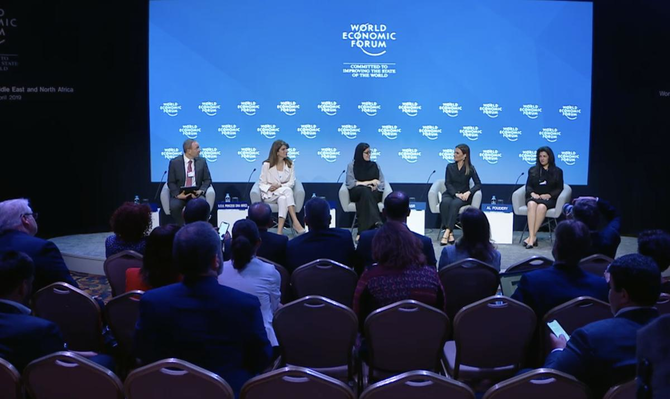
During a panel discussion at the forum, titled the “Rise of Arab Women” and a press briefing asking the question: “What more can be done to drive gender diversity?” experts discussed how gender diversity can play a crucial role in driving business sustainability and improving financial performance.
Moderating the “Rise of Arab Women” panel, PwC Middle East Senior Partner Hani Ashkar said: “Diversity is integral to sustainability and overall success. Boosting the number of women in work is not just a moral imperative but also has a measurable impact on the bottom line.
“This is not going to be easy, and there is no doubt that this will require a real commitment from the public and private sectors alike.
“We will need to work out what works for our region and how to implement it effectively, and at scale, but this pales in comparison to when we look at the cost of doing nothing and continuing as we have,” he said.
During the discussion panel Princess Dina Mired of Jordan said women have so many skills to offer the workplace, and the best way for companies in the region to tap into that would be to make workplaces a meritocracy — also speaks about paternity leave allowing men to share the burden of making families — currently it’s all burdened on women.
Mariam Al-Foudery, group chief marketing officer at Agility said that, while people have a certain perception of women finding it harder to break down barriers in the Middle East, the region actually respects and understands the importance of the family dynamic more than any other region in the world and can lead the way in helping both men and women build families.
PwC surveyed more than 3,000 women and men across Saudi Arabia, the UAE and Egypt for the “Women in Work Index — Insights from Middle East and North Africa” report, which provides policymakers with perceptions and insights on the regional workforce.
During the press briefing on the report, PwC partner Norma Taki highlighted the fact that the MENA regions collectively losing an estimated $575 billion a year due to the legal and social barriers that exist for women’s in joining the workforce.
Her fellow panel speaker and PwC partner David Suarez added that an increase in gender diversity would expand and enrich the talent pool and is a “vital requirement,” particularly in Gulf countries — including Saudi Arabia and the UAE — who are looking to move beyond oil and diversify their economies.
Recent research in the region showed that the UAE was a beacon for promoting a more gender balanced workforce, with a dramatic increase in females in the workplace to 40.6% in 2018 from 29.2% in 1990.
Taki explained how women make up 66% of public-sector workers, with 30% in leadership roles. When survey respondents were asked if they agree with the statement: “My employer treats females equally when it comes to promoting from within”, some 30% of women and 37% of men in the UAE strongly agreed.
In Saudi Arabia, meanwhile, dramatic change occurred over the past 12 months. 2018 was a landmark year for women in the Kingdom, with women getting behind the wheel in June 2018, the Saudi military taking applications from women and granting women the right to open their own businesses without a guardian’s permission.
Suarez praised the UAE and Saudi Arabia, but highlighted that in Egypt cultural attitudes and gender stereotypes would take longer to change, explaining that many men are still resistant to the idea of women working outside the home, which partly explains why female labor-force had increased very little since 1990, when it was 21.3% compared with 22.3% in 2018.
Reducing the gender pay gap is one imperative, but the findings of PwC’s survey reveal that Middle Eastern respondents place an equally strong emphasis on equality in progression in the workplace and acquiring leadership roles.
Additionally, 66% of respondents said they felt that governments should intervene in private-sector companies and set targets for gender diversity.
Existing national policies included a draft law in the UAE last year to ensure men and women receive equal pay. The UAE also introduced three months’ paid maternity leave for government employees last year, increasing pressure on the private sector to keep up. The Saudi Arabian government’s goal to increase female participation in the workforce to 30% as part of its Vision 2030 is underway.


![]()

Good progress in Middle East workplace gender diversity, but still work to do: Experts at WEF
Good progress in Middle East workplace gender diversity, but still work to do: Experts at WEF
Latest updates


Recommended


© 2026 SAUDI RESEARCH & PUBLISHING COMPANY, All Rights Reserved And subject to Terms of Use Agreement.