



‘Creation’
Abdulhalim Radwi, Saudi Arabia
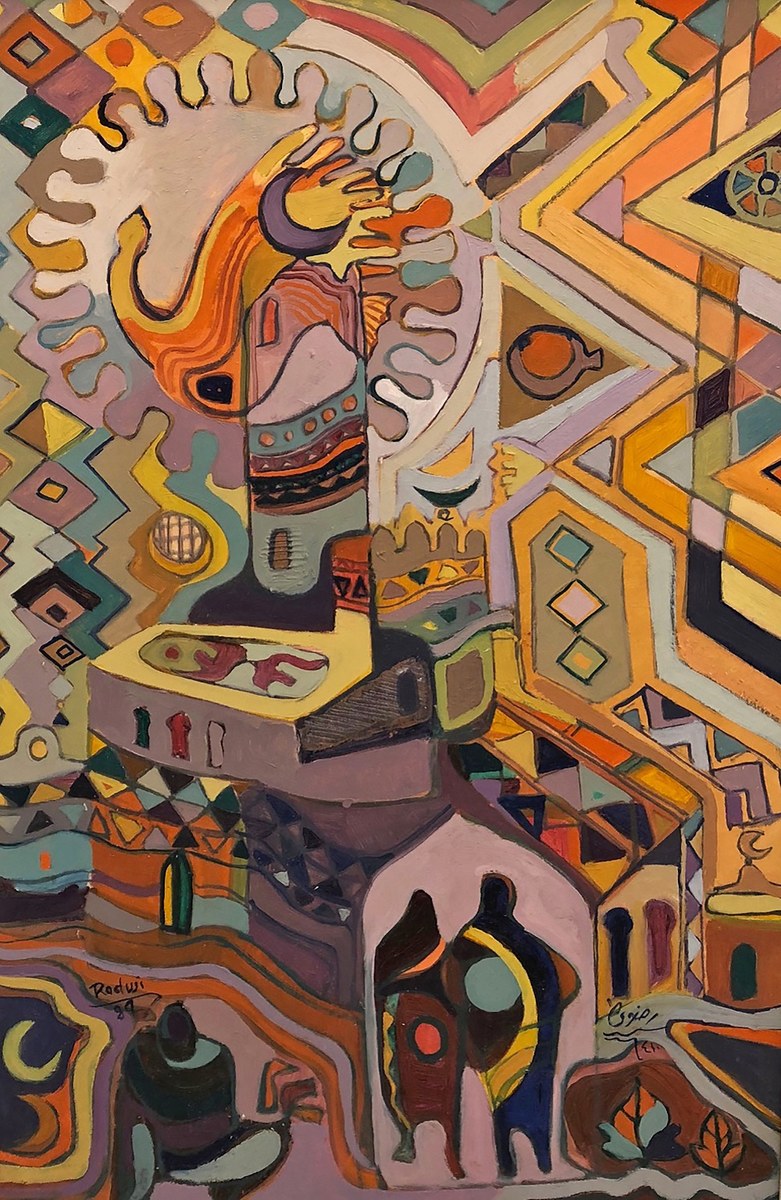
Radwi is regarded as one of the most significant artists in Saudi Arabian history, as one of the pioneers of modern art in the Kingdom. Much of his work referenced the historical architecture, folklore and lifestyle of his homeland. His 1989 painting, “Creation,” was exhibited at Art Dubai last week by Jeddah’s Hafez Gallery.
‘Battlefield’
Manaf Halbouni, Syria
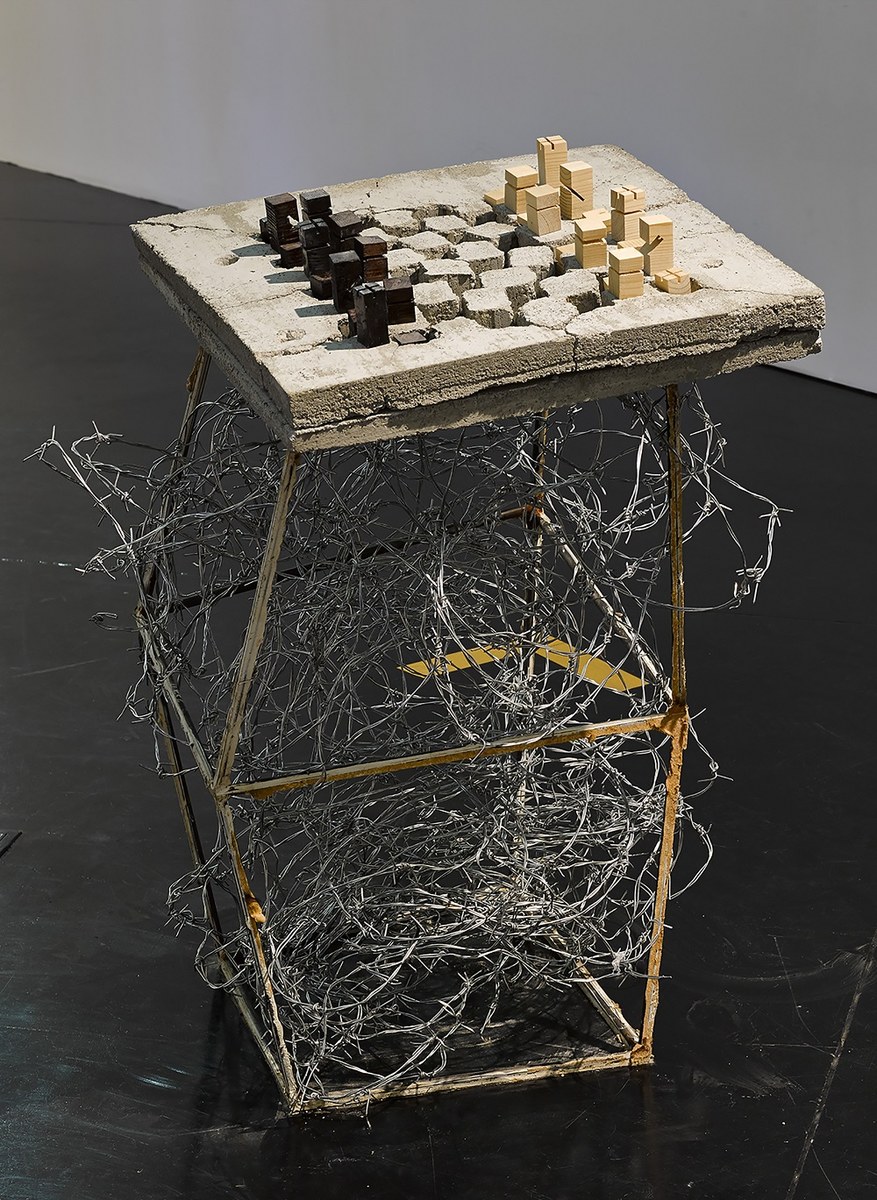
Dresden-based multimedia artist Halbouni had three sculptural works made from steel and concrete on display in Zilberman Gallery’s booth at Art Dubai. In his statement on 2013’s “Battlefield,” Halbouni explained: “Chess looks harmless like every other board game. But if you think longer about it, you see … how complicated it is. Chess is another way to play war. ‘Battlefield’ shows you a destroyed landscape with hiding trenches and walls so that the field looks like a destroyed city.”
‘Confession and Confusion’
Gözde Ílkín, Turkey
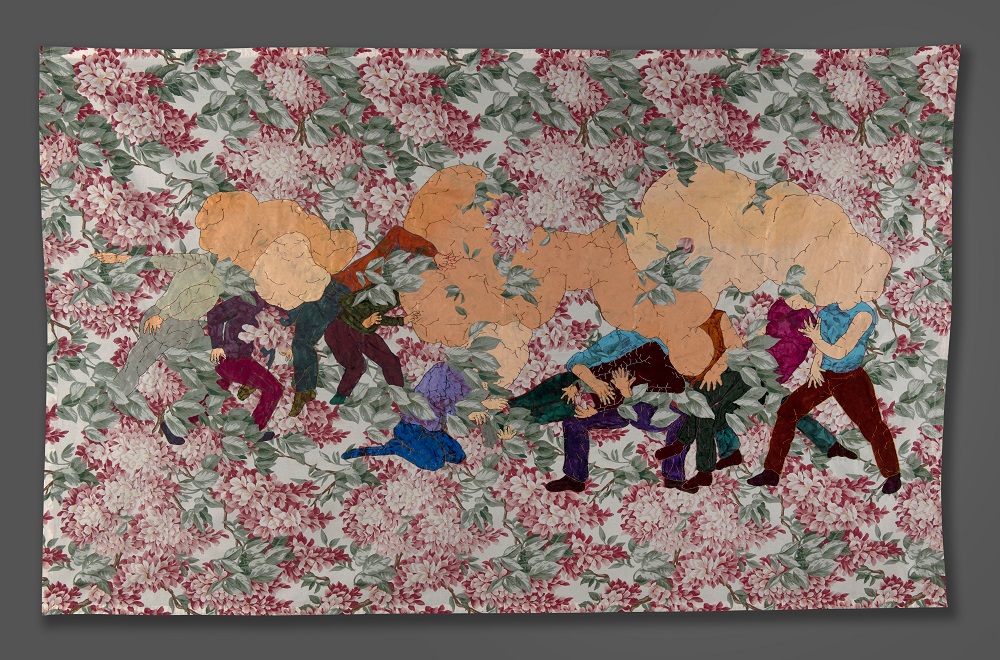
Ílkin works with repurposed fabrics she has collected over the years to create “confrontational interactions that tend to manipulate borders, gender dynamics and ferocious urban transformations.” Her abstract images, which are constructed from reworked table cloths, curtains and duvets, among other things, and “enact political relationships, feelings and promises that are failing to reach a solution, remaining in limbo,” were displayed by Cairo-based Gypsum Gallery at Art Dubai.
‘Becoming With (Blue-Red)’
Ayman Zedani, Saudi Arabia
Zedani, a contemporary artist, was the recipient of last year’s inaugural Ithra Art Prize. He’s back at Art Dubai this year with work displayed at ATHR Gallery’s booth. In an interview last year, Zedani — who studied biomedical science — said he was “interested in experimentation with different media, the properties of unconventional materials, the concept of assemblage and how objects can offer different readings in logical and metaphysical interpretations.”
‘Sumerian Sculpture’
Dia Azzawi, Iraq
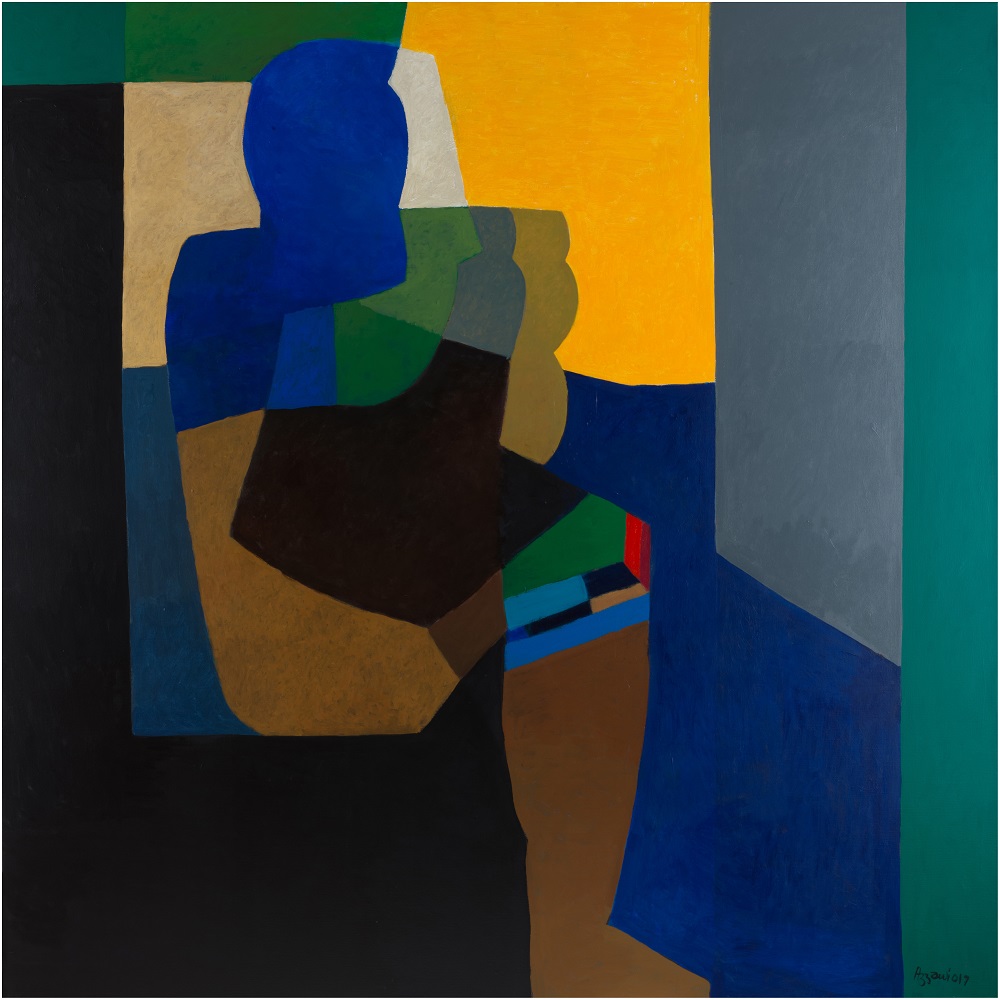
Dubai’s Meem Gallery displayed a selection of recent work from the acclaimed Iraqi artist Dia Azzawi, which, the gallery said, “reflect his abiding fascination with his country’s long and storied past.” Azzawi is a trained archaeologist, and he regularly references Mesopotamian and Sumerian culture in his work. The figure in this image is based on “seated Sumerian sculptures found in the archaeological collections of museums … recognizable by its clasped arms and use of vivid color, with the left leg raised.”
‘Untitled’
George Baghory, Egypt
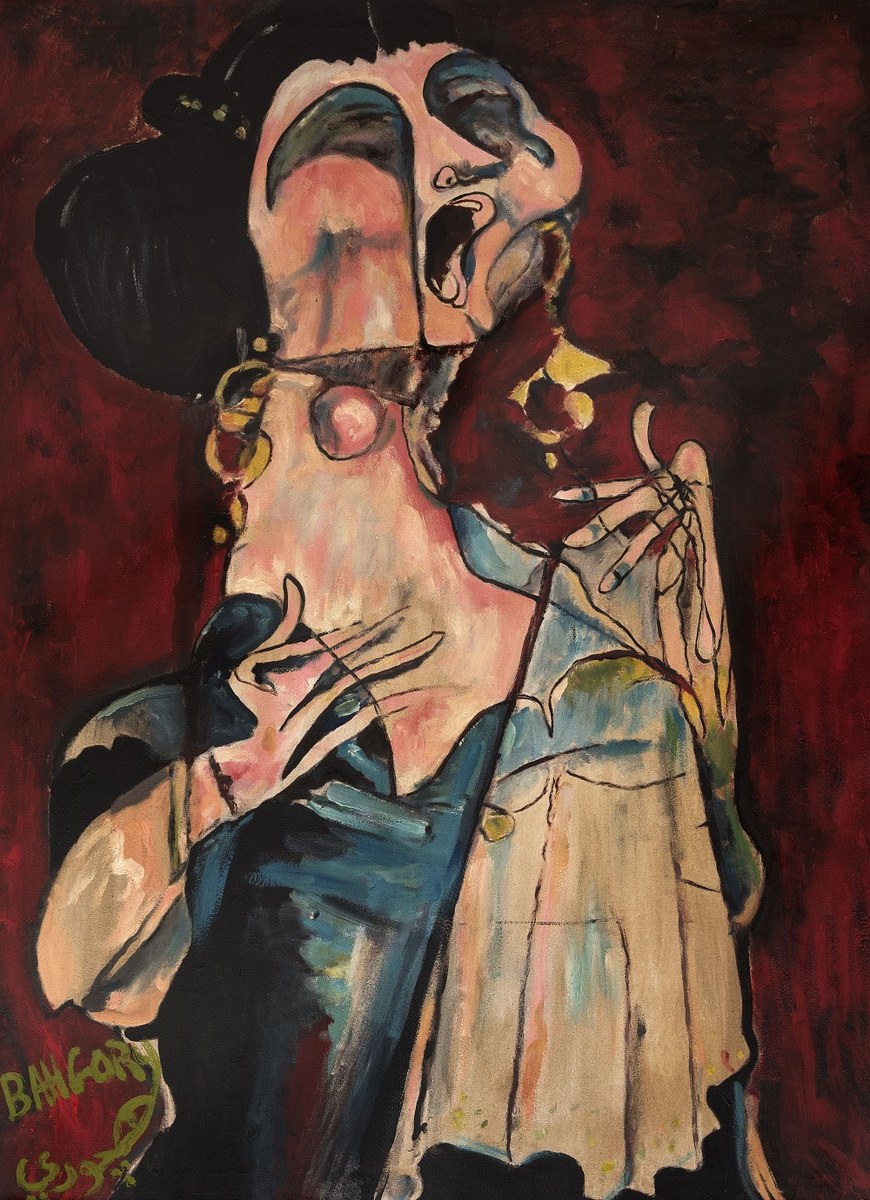
Baghory started out as a political cartoonist before training as a painter and sculptor, and his beginnings as a caricaturist remain evident in the stylized figures and exaggerated facial features in his later work, such as this oil painting from the 2000s. Baghory “creates work relevant to Egyptian pop culture, heritage and identity,” explained UBUNTU Art Gallery in its promo material for Art Dubai. Although the painting is untitled, it may form part of Baghory’s work focused on the legendary Egyptian vocalist Umm Kulthum.
‘Situation 10’
Hamza Bounoua, Algeria
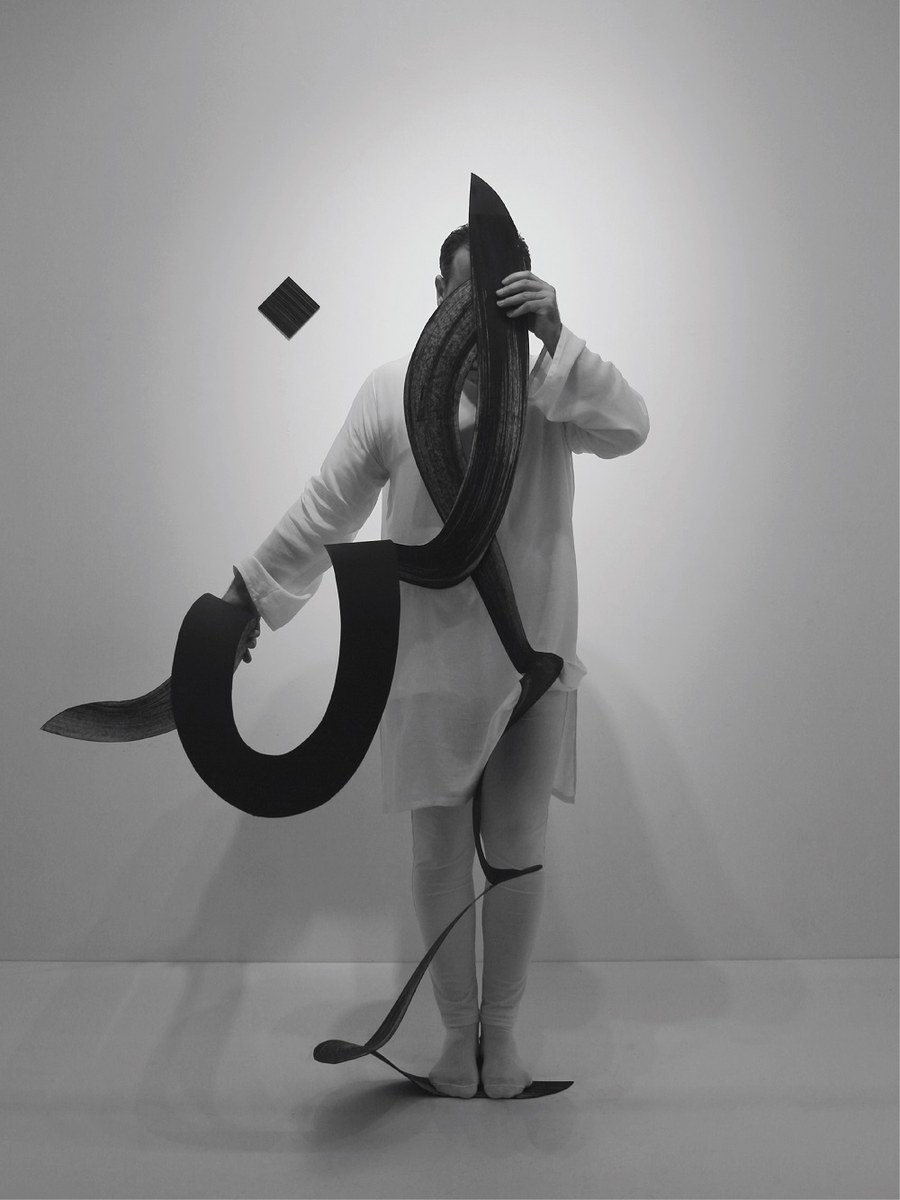
Bounoua’s work is influenced by “Berber, Islamic and African arts and ethnicities,” according to Amman’s Wadi Finan Art Gallery, which displayed Bounoua’s latest works at Art Dubai — photographs showing the artist interacting with some of his calligraphy sculptures, continuing his exploration of letters, geometry, and shadows.
‘Paired Silhouettes’
Samia Halaby, Palestine
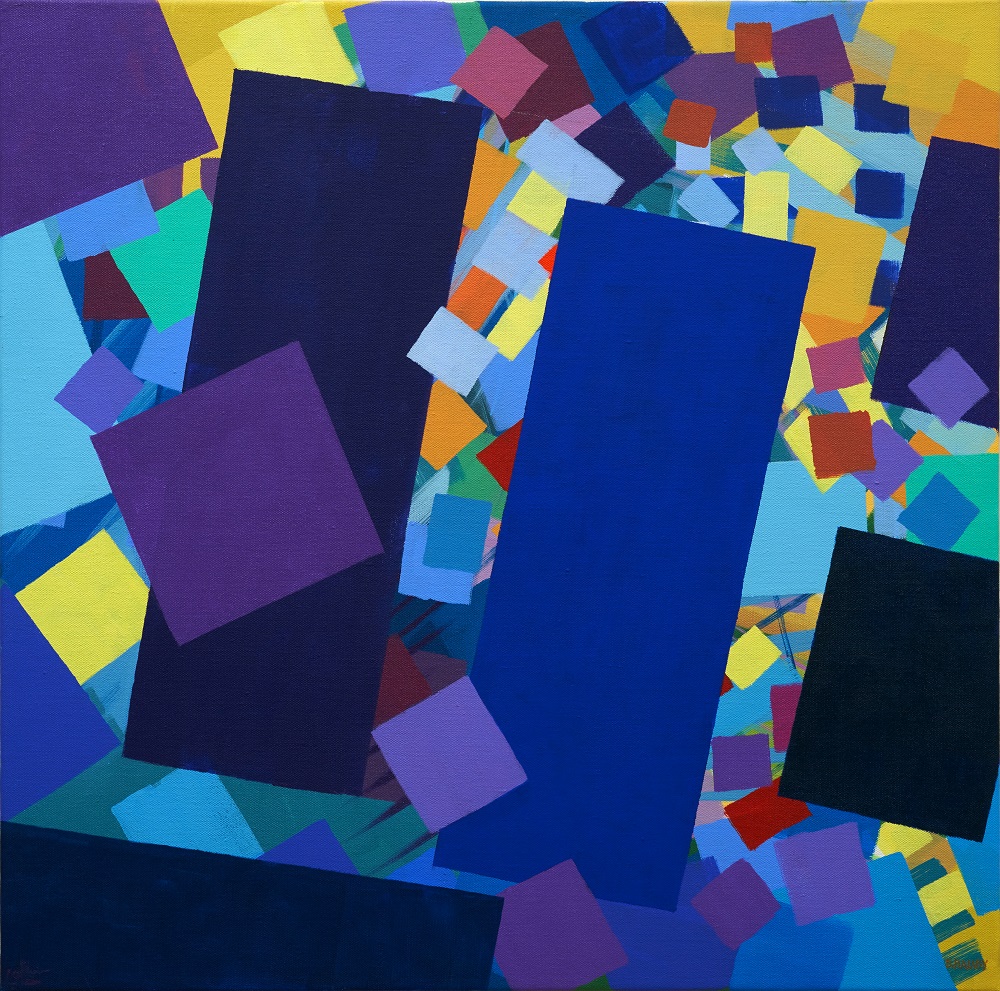
Halaby is widely recognized as a regional pioneer in modern art, particularly abstract works. In its biography of the artist, Ayyam Gallery explained that she “works with the conviction that new approaches to painting can redirect ways of seeing and thinking, not only within the realm of aesthetics, but also as contributions to technical and social advancement.”


