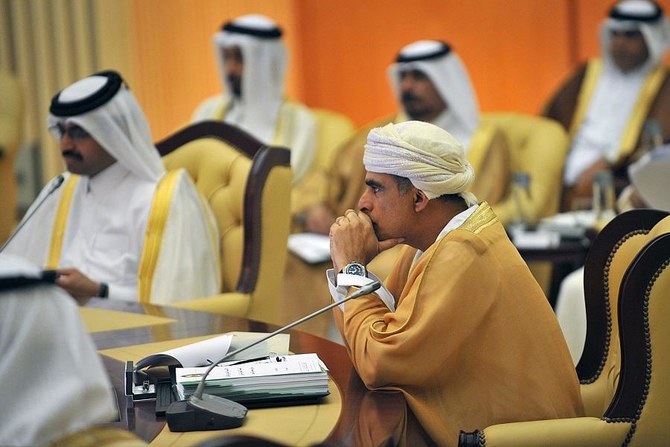
DUBAI: Omani Energy Minister Mohammed bin Hamad Al-Rumhy said he expected global oil prices to stay in a range between $65 and $75 a barrel until the end of the year, the state-run Oman News Agency (ONA) reported on Saturday.
He was also quoted as saying Oman remained committed to the OPEC+ agreement until the end of 2019.
Under the accord reached in December 2018, members of the Organization of the Petroleum Exporting Countries (OPEC) along with Russia and other non-OPEC producers — an alliance known as OPEC+ — agreed to reduce oil supply by 1.2 million barrels per day from Jan. 1 for six months.
The OPEC+ alliance was formed in 2017. Since its inception, oil prices have doubled to more than $60 per barrel, mainly as a result of a series of production cuts by its members.
The official selling price (OSP) for Oman crude in May will rise by $2.50 to $66.98 a barrel, the highest in five months, Reuters calculations based on data from the Dubai Mercantile Exchange (DME) showed on Friday.
However, Saudi Arabia is having a hard time convincing Russia to stay much longer in OPEC-led pact, and Moscow may agree only to a three-month extension. Should Russia pull out of the latest deal on cutting output, oil prices would drop.
Separately, Al-Rumhy said the Oman Oil Co. was conducting a feasibility study regarding taking a 30 percent stake in a new oil refinery project on Sri Lanka’s south coast.
The project will be Sri Lanka’s first new refinery in 52 years after Iran built a 50,000 barrel-per-day refinery near the capital, Colombo, to blend Iran light oils.


Omani oil minister sees prices staying in $65 to $75 range until year-end

Omani oil minister sees prices staying in $65 to $75 range until year-end
- Members of OPEC and other non-OPEC producers agreed to reduce oil supply by 1.2 million barrels per day from Jan. 1 for six months
- Separately, Al-Rumhy said the Oman Oil Co. was conducting a feasibility study regarding taking a 30 percent stake in a new oil refinery project

Kuwait’s non-oil sector steadies in April, UAE maintains growth in April
RIYADH: Non-oil activities in Kuwait demonstrated steady growth in April, buoyed by effective advertising and competitive pricing, supporting the expansion in new orders, an economy tracker revealed.
According to the latest Kuwait Purchasing Managers’ Index by S&P Global, the country’s PMI dipped to 51.5 in April from 53.2 in March.
A PMI reading above 50 indicates growth in the non-oil private sector, while readings below 50 signal contraction.
The report noted that job creation scaled back for the first time in eight months as companies aimed to minimize costs, while the rate of purchase price inflation was one of the sharpest on record in April.
According to the survey, this reduction in workforce numbers, coupled with a shortage of available raw materials, led to a buildup of backlogs of work in April.
“The slowdown in growth seen in April is not cause for immediate alarm as Kuwaiti firms were still able to generate solid expansions in new business and output at the start of the second quarter,” said Andrew Harker, economics director at S&P Global Market Intelligence.
The report mentioned that output prices increased only modestly in April, as companies endeavored to limit price hikes to customers by offering discounts.
Furthermore, input costs also surged sharply in April, driven by a marked rise in purchase prices.
“Growth continued to be predicated, at least in part, on competitive pricing. This put pressure on margins given rapidly increasing input costs, however. In a bid to limit expenses, firms cut back on employment numbers, thereby restricting the extent to which they were able to fulfill orders,” said Harker.
He added: “There are clearly risks that this will prove unsustainable and so companies will be hoping that either cost inflation moderates or that demand strengthens sufficiently to reduce the need for discounting in the months ahead.”
UAE maintains strong growth
Meanwhile, in another report released last week, S&P Global revealed that the UAE’s non-oil private sector maintained robust output growth in April. The Emirates’ PMI reached 55.3, down from 56.9 in March but remained firmly above the 50 mark, indicating expansion.
According to the survey, this slowdown was attributed to floods and rains that hit the country in April.
“April data highlighted strong overall growth across the UAE non-oil private sector as buoyant domestic economic conditions helped to support long-term business expansion plans. However, the latest survey signaled a sharp slowdown in new business gains in the wake of heavy rainfall and flooding,” said Tim Moore, economics director at S&P Global Market Intelligence.
He added: “Companies operating in Dubai recorded a particularly acute loss of sales momentum as adverse weather disruptions hit business and consumer spending.”
S&P Global revealed that backlogs of work increased considerably in April, attributed to temporary business disruptions and heightened pressure on operating capacity.
The report added that non-oil businesses in the UAE remained optimistic about future output over the next year, although the level of optimism eased, dropping to its lowest reading since January.
“Non-energy businesses are nonetheless still highly upbeat about their year ahead growth prospects. Many commented on strong sales pipelines and swift recovery from the impact of heavy rainfall,” noted Moore.
According to the survey, higher levels of employment were recorded in April, driven by new project starts and resilient demand conditions.
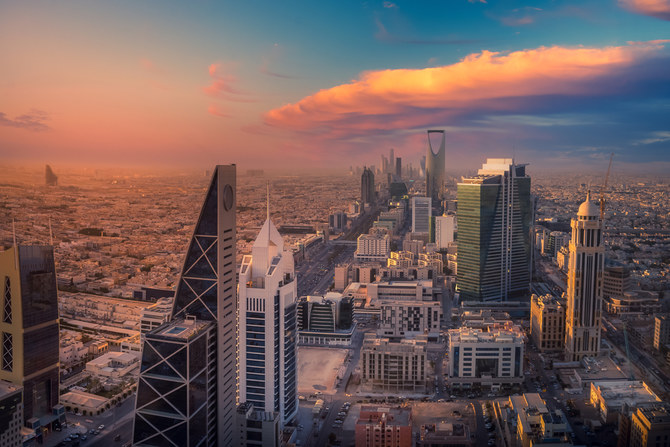
Saudi Arabia’s non-oil sector maintains growth with steady PMI of 57 in April
RIYADH: Saudi Arabia’s non-oil private sector continued its growth momentum in April, driven by strong demand conditions across domestic markets, as indicated by an economic tracker.
The Kingdom’s Purchasing Managers’ Index in April remained unchanged at 57 compared to March, signifying a flourishing non-oil economy in the country, according to the Riyad Bank Saudi Arabia PMI report by S&P Global.
In February, PMI hit a five-month high of 57.2, while it was 55.4 in January.
According to S&P Global, any PMI reading above 50 indicates growth in the non-oil sector, while readings below 50 signal contraction.
David Owen, senior economist at S&P Global Market Intelligence, said: “The latest Saudi PMI has sustained a robust figure of 57.0 for the second consecutive month, signifying a flourishing non-oil economy. This uptrend hints at an anticipated spike in the non-oil GDP, likely exceeding the 4.5 percent mark for this year.”
He added: “Noteworthy is the surge in new orders and inventory expansion, indicative of a proactive response to mounting demand within the market.”
According to the report, expectations of strong sales performance drove companies to increase their purchasing activities in April, while cost considerations caused a decline in job creation during the month.
S&P Global highlighted that the overall rate of input price inflation eased to a nine-month low in April.
“Despite a decline in employment figures, there’s a notable increase in the costs associated with employment to incentivize the workforce. This strategy aims to bolster productivity and ensure the retention of skilled workers within the expanding economy,” added Owen.
Competitive pricing, promotional activity, investment, and expanding client bases, particularly in the domestic market, were other crucial factors that propelled the non-oil private sector in the Kingdom in April, the report noted.
Regarding the future outlook, most of the companies in Saudi Arabia that took part in the survey expressed a positive view due to continued improvement in sales performances in April.
“The prevailing strength in demand, along with strategic marketing initiatives and corporate expansions in both wholesale and retail sectors, further fortifies the positive trajectory of the Saudi economy,” Owen said.
He concluded: “The sustained expansion, coupled with evolving market dynamics, underscores a favorable environment for continued economic prosperity and stability in Saudi Arabia’s non-oil economy.”
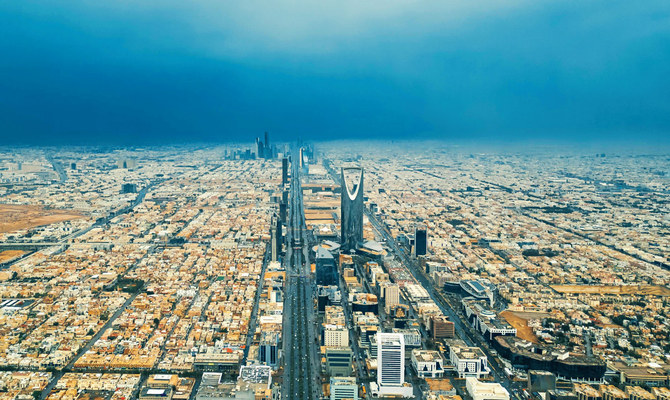
Saudi Arabia’s on the frontline of battle against climate change
- Middle Eastern countries face unique challenges that compound the urgency of tackling this environmental crisis
RIYADH: As temperatures continue to rise worldwide, the Arab region is on the frontline of the battle against climate change.
In the global race to achieve net-zero, the Middle Eastern countries face unique challenges that compound the urgency of tackling this environmental crisis to safeguard their future.
The Gulf region is one of the areas most heavily impacted by climate change, primarily due to the already elevated temperatures that have exceeded the global average.
In recent years, the Arab world has heightened its focus on the ramifications of global warming, particularly its economic impacts, to avert the detrimental consequences.
Events such as MENA Climate Week in Riyadh in 2023, the UAE’s COP28 in 2023, and Egypt’s COP27 in 2022 underscore the region’s commitment to addressing this pressing issue.
Speaking to Arab News, Sal Jafar, CEO of ESG MENA, underscored these efforts, stating: “I have observed firsthand the transformative strides the GCC countries are making in the realm of energy transition and climate change efforts.”
He added: “This region, historically reliant on hydrocarbon economies, is now at the forefront of a pivotal shift toward sustainability and environmental stewardship, underpinned by an ESG framework.”
The intricate relationship between atmospheric changes and financial growth in these nations underscores the necessity of adopting sustainable development practices.
A recent report by the Arab Monetary Fund states that by the year 2050, the region may experience a significant reduction in water availability and agricultural productivity.
This decline, which is connected to climate-related water scarcity, could result in economic losses equivalent to 14 percent of the area’s gross domestic product.
Saudi Arabia, a pivotal player in the Middle East and a significant oil producer, embodies the region’s complexities and potential for transformation.
The Kingdom has been keen to amplify its efforts in energy transition for at least a decade, Yousef Al-Shammari, the CEO of CMarkits, a UK-based energy research consultancy firm, told Arab News.
These measures began with the launch of the King Abdullah City for Atomic and Renewable Energy in 2013, he noted, saying: “At that time, the aim was to minimize crude oil consumption by utilizing alternative sources of energy. Especially because the local consumption of crude is projected to keep rising because of national consumption of electricity and, of course, road transport demand.”

This region, historically reliant on hydrocarbon economies, is now at the forefront of a pivotal shift toward sustainability and environmental stewardship, underpinned by an ESG framework.
Sal Jafar, CEO of ESG MENA
Crude oil demand is projected to rise to as high as 8 million barrels per day, while the Kingdom produces 10 million barrels. This will inevitably lead to an “economic security risk” and result in the nation’s first motive of ensuring energy efficiency, Al-Shammari said.
However, with rising concerns about escalating temperatures and environmental sustainability, the nation launched its Vision 2030 in 2016 to position itself as a global leader in clean energy production and divert its economy from oil dependency.
The road to net-zero
The Kingdom has embarked on various initiatives to reduce its carbon footprint and diversify its economy beyond oil.
Mitigative efforts include ambitious targets of 44 million tonnes of carbon dioxide captured annually by 2035 and 2 million tonnes of CO2 seized and utilized daily to produce glycol, urea and green methanol, as well as clean fuels, according to the 14th IEA-IEF-OPEC Symposium on Energy Outlooks.
This is being made possible through the circular carbon initiative, which was introduced during the Kingdom’s presidency of the G20, the CEO highlighted, saying: “The circular carbon initiative that includes removal reduce, reuse, and recycle,” he explained, adding: “Saudi Aramco is pursuing a very ambitious program on that line. I think there is one major project, which is starting in 2027, which will be the world’s largest CO2 capture project.”
The facility, which Aramco is said to play a significant role in, seeks to capture 9 million tonnes per annum of CO2 by 2027, with the aim of increasing its capacity to 44 million tonnes per annum by 2035, Al-Shammari outlined.
In October of 2022, the Kingdom’s sovereign wealth fund launched its regional Voluntary Carbon Market company during the sixth edition of the Future Investment Initiative in Riyadh.
This move allowed for tradable CO2 shares to be launched on an exchange, with major players in the Saudi energy field, like Aramco and SABIC, taking part.
The idea of the VCM is to allow companies to pay to compensate for their CO2 emissions. Additionally, the market’s voluntary nature presents a greater chance for success than compulsory sectors implemented in other regions, Al-Shammari outlined.
He said: “It’s voluntary, which means it can have a bigger impact than compulsory carbon markets, which we have seen in Europe, which did not really lead to any carbon reductions. The idea is, by being voluntary, it essentially enables companies to make economic sense of it. So when you have an economic return by having these investments in carbon markets, that would pay off the cost of capturing carbon. So somehow, it encourages producers to minimize their carbon emissions.” He added: “There is so much research and literature that has been done on that and the optimism about the
voluntary market is so huge and encouraging producers to minimize emissions compared to the compulsory markets.”
Greening the world
Equipped with a strategic location at the crossroad of three continents, the Kingdom is well positioned to lead in renewable energy exports globally.
Two ambitious projects outlined in the Symposium on Energy Outlooks include exporting 150,000 tonnes of clean ammonia globally and building the world’s largest green hydrogen project in NEOM.
Therefore, the nation’s location essentially allows it to export its potentially massive renewables supply east or west, Al-Shammari highlighted.
As European countries look to produce and import green hydrogen, Saudi Arabia will remain the continent’s supplier “for the foreseeable future,” he outlined.
He said: “As a part of the decarbonization plans, if you want to produce green hydrogen in Germany, it’s going to cost you $5 a kilogram and you’re going to produce it in Saudi Arabia, it’s going to cost you between $1 and $2 a kg.”
He added: “In the meantime, for the foreseeable future, Germany, which is Europe’s largest economy, will be dependent on and will need to import green hydrogen from cheap places like Saudi Arabia.”
Similarly, Saudi energy giant ACWA Power currently holds the world’s most extensive green hydrogen storage unit, with 1.2 million tonnes of ammonia produced per annum.
The company can “easily” import and export this large sum from its site in the northwest region of the Kingdom to Europe.
These efforts are allowing the country to shift its global image from a crude oil exporter to a major player in all energy fields.


Ukraine keen to cooperate with KSA in digitalization push: vice minister
- European nation’s growing prowess in technology could help Saudi Arabia in its digital transformation journey
RIYADH: Saudi Arabia’s technological landscape is set to get a boost as Ukraine has expressed its eagerness to cooperate with the Kingdom in multiple sectors including agri-tech, fintech, and cybersecurity.
Speaking to Arab News during his visit to the Saudi capital, Oleksandr Bornyakov, Ukraine’s vice minister of digital transformation, said the European nation’s growing prowess in technology could help Saudi Arabia in its digital transformation journey.
During his visit to the Kingdom, the vice minister held meetings with the officials of the Kingdom’s information and investment ministries and the General Authority of Small and Medium Enterprises also known as Monsha’at.
“My visit is kind of like exploring — breaking the ice. Since we are the policymaking body in Ukraine, we know everybody in Ukraine from the tech sector. We want to hear from the local government
about what kind of problems they face, and what kind of things they need, and then, decide what’s the best fit for fulfilling those. I think there’s an interest in bringing this expertise to Saudi Arabia,” said the vice minister.
He added: “From an educational perspective we build a framework of how we teach people from school to university. So they become very talented engineers. We have expertise in almost every sector like healthcare, automotive, energy, and finance. And when countries like Saudi Arabia, trying to digitize any of these fields, I think we could be helpful.”
He said that his visit to Riyadh seeks to establish a relationship on the government level, which will in turn help them to cooperate with private sector entities including startups in the future.
During his visit to the Kingdom, the Ukrainian vice minister also presented several digital products to Saudi officials that can be used on the government-to-government level.

The world is changing fast, and I can’t imagine my life without many digital things that I have become used to. So I think any country that wants to follow up on this and, be on the edge of the technology has to change and invest a lot in this.
Oleksandr Bornyakov, Ukraine’s vice minister of digital transformation
He said that Saudi Arabia is quickly developing, and there is enormous potential for technological firms in the Kingdom.
Bornyakov added that Saudi Arabia should build an entrepreneurship culture in the Kingdom so that local talents in the country can leapfrog in the technological sector with innovations and products.
“The world is changing fast, and I can’t imagine my life without many digital things that I have become used to. So I think any country that wants to follow up on this and, be on the edge of the technology has to change and invest a lot in this. Because, in the West, many great things happen. Even Google, it came from students,” the official said.
He added: “I think, Gulf countries and Saudi Arabia in particular also want to have this, this entrepreneurship culture. And, we know how to teach people how to do that, and, be part of this. I think that’s why we have this mutual interest. And I feel that Saudi Arabia is open to that experience.” Bornyakov further noted that Saudi Arabia’s business-friendly environment for foreign investments is one of the main reasons behind his current tour of the Kingdom.

“Here, there is an investment environment. You can easily come to create a business in one or two days, then open a bank account, and then you are good to go. So this is one of the reasons that we decided to do this tour and, figure out who’s doing what,” he added.
The vice minister also lauded Saudi Arabia’s efforts to diversify its economy away from oil aligned with the goals outlined in Vision 2030.
“I think diversifying is a good idea. It’s actually what’s happening in Ukraine. When I started in 2019, the contribution of the IT sector to the gross domestic product was 2.5-2.6 percent, and now it is close to 5 percent. As of today, 41 percent of all Ukrainian export services are IT.
“I think it is also something interesting here. The energy sector might be strong, for how many years, we do not know,” he said.
According to Bornyakov, Ukraine is also steadily reducing its dependence on grains and heavy machinery, and technological products from the IT sector are becoming major contributors to the nation’s economy.
“Historically, Ukraine was what? Grain and heavy machinery. Unfortunately, due to war, we lost a lot of factories and heavy machinery. And because we thought about IT, even though, less than a decade ago, but still, the sector was evolving very fast. We now have a source of export revenue, which is almost $8 billion every year, and just maybe five years ago, it was $3 billion or $4 billion,” he added.
HIGHLIGHT
Oleksandr Bornyakov’s visit to Riyadh seeks to establish a relationship on the government level, which will in turn help them to cooperate with private sector entities including startups in the future.
Bornyakov also talked about the success of Ukraine’s Diaa application which allows Ukrainians to use digital documents on their smartphones instead of physical ones for identification and sharing purposes, along with accessing over 130 government services.
According to the vice minister, there are 20 million active Diaa users in Ukraine, and he claimed that no other government app in the world can boast about such a huge user database. He also added that such applications have huge potential in the Gulf Cooperation Council region, which will reduce the hassles of paper passports and other government documents, as it allows people to carry everything on a smartphone.
“We want to implement the vision of President Zelensky to build a country in smartphone. Then we created a government super app called Diaa. We started by putting all the papers of a citizen like driver’s license, car titles, insurance, diplomas, birth certificates, tax IDs, and passport, everything on the phone, so you don’t carry paper. So, we were the first country in the world to introduce digital passports,” said Bornyakov.
He added: “There is a huge demand for such apps since Gulf countries have a union, GCC. And if you travel, and if you want to identify yourself, you will have to use different passports and different procedures. We have a solution to solve all of these problems.”
According to the vice minister, Ukraine has opened a source code for these applications, which makes countries use these codes to develop applications as per their requirements.
“Recently, we have opened source code, so you don’t have to pay us. So you can take this and we can showcase and you can use the source code to build, something that you own as this union (GCC), and use it for the sake of its people. And that is one of the things we are happy to share with the world,” he added.


Saudi Arabia’s fintech sector driving digital transformation
- More than $1 billion has been invested in local fintech firms, says report
CAIRO: Saudi Arabia’s fintech sector has made significant strides as it nears its goal to become a regional financial hub, according to a report by Arthur D. Little.
In its latest study titled “Realizing Potential of Fintech in Kingdom of Saudi Arabia,” the international management consulting firm highlighted the rapid growth and innovation within the sector, spearheaded by initiatives such as Fintech Saudi.
Launched in April 2018 by the Saudi Central Bank, also known as SAMA, and the Saudi Capital Markets Authority, Fintech Saudi has been a pivotal force in promoting the Kingdom as the leading fintech hub in the Middle East and North Africa.
The initiative includes programs such as an accelerator, career fair, fintech tour, and summer sessions, contributing to a 20-fold increase in the number of fintech companies in the Kingdom since the program’s establishment.
To date, more than SR4 billion ($1 billion) has been invested in local fintech companies, with over 100,000 individuals participating in related events and training programs, the report said.
The adoption of a national strategy in May 2022 marked a significant advancement in the country’s fintech sector.
The strategy is built on six pillars, which include establishing the Kingdom as a regional fintech hub, fostering a regulatory environment conducive to growth, providing funding for startups, enhancing skills training, accelerating support infrastructure, and promoting local and international collaboration.
Ambitious goals
The Vision 2030 goals include the establishment of at least 525 fintech companies by 2030, up from 200 in 2023, the creation of 18,000 fintech job opportunities, up from approximately 5,400 in 2023, contribute SR13.3 billion to the gross domestic product, a substantial increase from around SR3.75 billion in 2023, and achieve SR12.2 billion in direct venture capital contributions, compared to SR5.2 billion in 2023.
Fintech Saudi has catalyzed this growth through various initiatives, including the Fintech Accelerator Program, the Fintech Saudi Innovation Hub, and an online Fintech directory.
Additionally, the establishment of a fintech regulatory sandbox by SAMA has allowed for controlled live testing of fintech innovations, easing their transition to the open market. Further boosting the sector, the Saudi Venture Capital Co., backed by CMA and the Financial Sector Development Program, has launched a SR300 million fund focused on fintech startups, with plans to invest an additional SR6 billion in startups and small and medium enterprises across various sectors.
So far, SVC investment in 35 VC funds has facilitated over 900 deals and SR1.9 billion in investments. Additionally, the Saudi National Technology Development Program has introduced the Technology Development Financing Initiative, providing debt funding to support startups.
A cashless society
“Saudi Arabia has embarked on a journey to transform society to be less dependent on cash transactions,” the report noted, highlighting the FSDP as instrumental in this shift by fostering a regulatory environment conducive to the growth of payment companies.
The ambition of Vision 2030 is notably high, aiming to increase the proportion of non-cash transactions to 80 percent by 2030, up from just 18 percent in 2016.
Remarkably, by 2021, cashless payments constituted 62 percent of all transactions, significantly surpassing the interim targets, the report stated.

Saudi Arabia has embarked on a journey to transform society to be less dependent on cash transactions.
Mohammad Nikkar, principal at Arthur D. Little
This rapid adoption has been supported by the integration of innovative payment solutions, including digital wallets, local transfers, QR code payments, and the SADAD system for bill payments.
“According to data released by SAMA, digital wallet usage has seen an exponential rise from 315,000 in 2018 to 17 million by 2022, representing over half of Saudi Arabia’s population,” the report stated.
Initially, bank transfers dominated as the primary method for topping up these wallets, but by 2022, around 80 percent of top-ups were being made via debit or credit cards, indicating a shift in consumer behavior.
The report also sheds light on the increasing reliance on digital wallets among expatriates for international transfers, with non-Saudi users of digital wallets increasing from 17 percent in 2018 to 45 percent in 2022.
Among the leaders in this burgeoning market are stc pay and urpay. stc pay, in particular, has distinguished itself as the first fintech unicorn in the Kingdom, with a notable 25 percent year-on-year increase in profits in 2022, as stated in the report.
Alternative financing
The report, co-authored by Mohammad Nikkar, principal at Arthur D. Little, and Arjun Vir Singh, partner at the firm, delved into Saudi Arabia’s alternative financing sector, notably buy now, pay later and debt crowdfunding, which has become the second-largest fintech subsector after Saudi Payments.
BNPL usage has surged from 76,000 customers in 2020 to over 10 million in 2022, with market leaders like Saudi-based Tabby
and Tamara expanding across the Gulf Cooperation Council, the report explained.
Debt crowdfunding is also growing as a vital funding source for SMEs. Since 2019, investors have issued over 1,800 loans worth more than SR1.1 billion, with SR770 million disbursed in 2022 alone.
However, challenges persist with rising interest rates and fluctuating approval rates.
Challenges
“While the future for fintech in Saudi Arabia looks bright, there are still some important challenges to overcome,” the report stated.
Increasing Saudi Arabia’s visibility on the international stage is crucial. The report emphasizes the need to enhance the Kingdom’s global profile by articulating its unique fintech ecosystem offerings to attract more global entrepreneurs and investors.
“Streamlining regulatory frameworks. Efforts to simplify the setup and licensing processes are underway to create a more navigable regulatory environment for fintech entities. Continued enhancements in this area will support both local and international ventures,” the report added.
Furthermore, expanding funding avenues is also essential. The development of more accessible financial mechanisms such as accelerators and grants is expected to invigorate the investment climate, allowing a diverse range of fintech initiatives to flourish, the report explained.
Addressing the talent gap is also a priority as strategies should be implemented to cultivate local expertise and address challenges like high turnover and competitive salary demands.
Moreover, optimizing investment in infrastructure to reduce the cost of essential technology, while ensuring compliance with local data regulations, is also a vital aspect.
Lastly, fostering international partnerships is key to the long-term success of Saudi fintechs, helping them adapt and thrive in the global market, the report explained.
“By addressing these areas thoughtfully, Saudi Arabia can enhance its fintech ecosystem, ensuring robust growth and sustainable development in the years to come,” it added.
Transformational drivers
The consultancy identified six transformational drivers essential to overcoming existing challenges and ensuring robust growth within the Kingdom’s fintech landscape.
The report emphasized the need for elevating Saudi Arabia’s global positioning in the fintech domain. The Kingdom aspires to enhance its international presence by illustrating its unique value propositions and inviting participation from global fintech innovators.
This could be achieved through forging international alliances and showcasing Saudi advancements at global fintech symposiums, potentially increasing its influence not just in the MENA region but globally.
On the regulatory front, the report suggests that Saudi Arabia refine its regulatory processes and align them more closely with international best practices, particularly in burgeoning sectors like open banking.
Strengthening the angel investor network and fortifying public-private partnerships are also seen as vital steps to provide foundational support for early-stage initiatives and reinforce growth for mature firms.
Additionally, the report advocates for significant investment in educational programs tailored to fintech and associated industries.
Lastly, the report highlights the importance of managing infrastructure costs by encouraging a competitive tech provider market and local data-hosting solutions, supported by government incentives for technological advancements.