Pakistan’s Islamic University region’s hub for promoting Arabic language

1 / 13
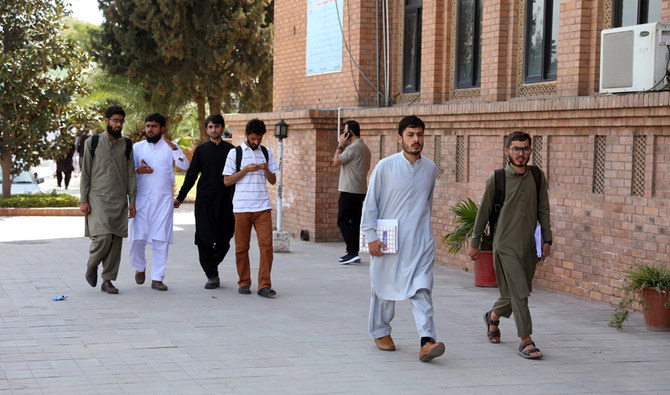
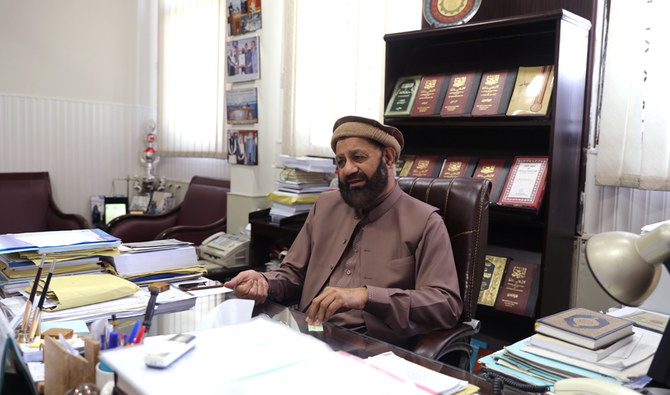
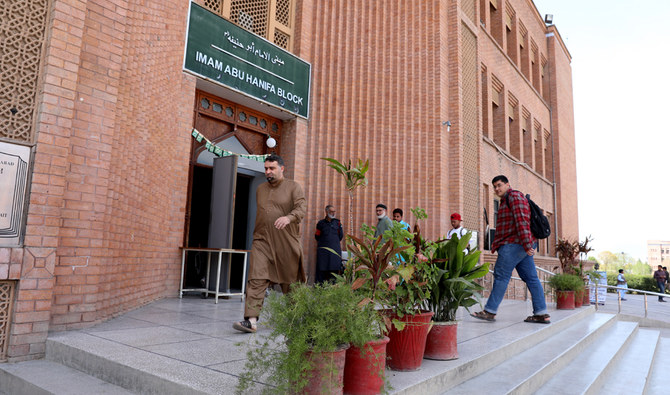
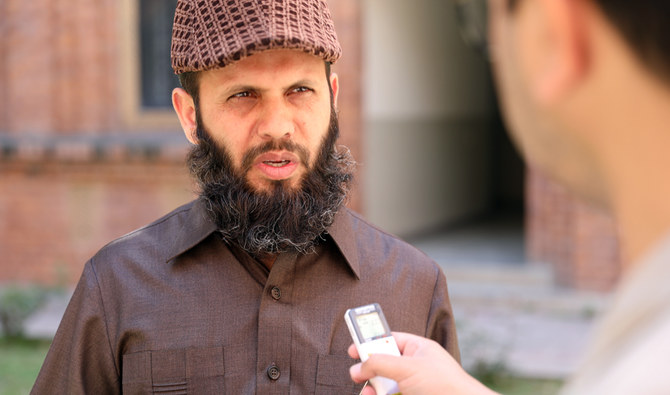
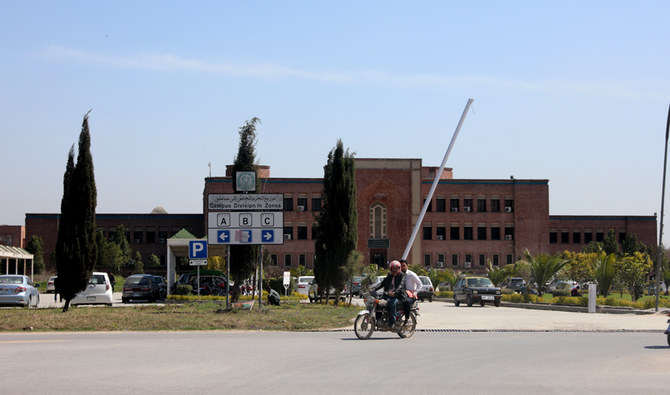
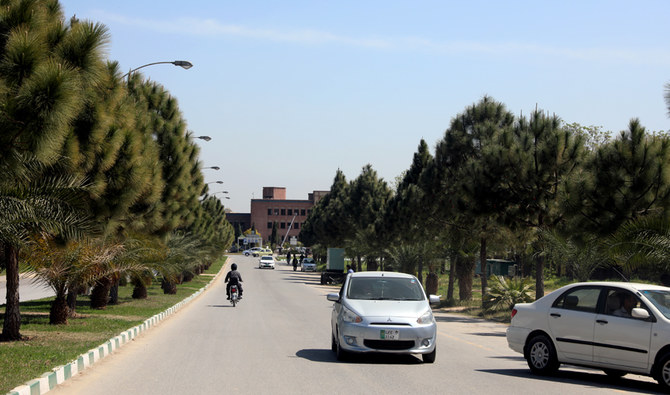
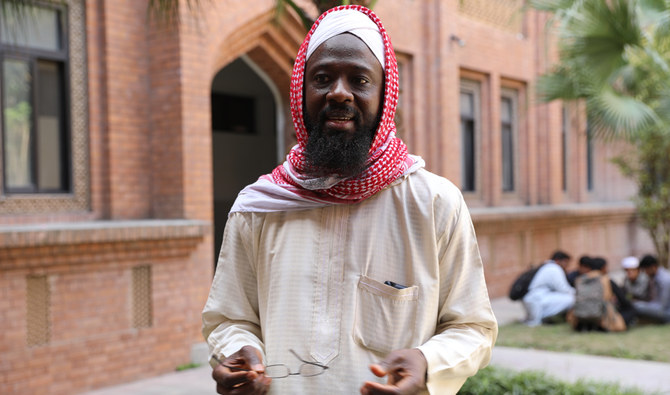
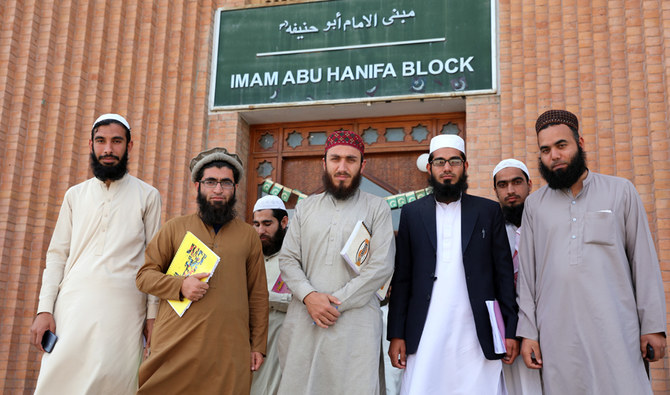
The International Islamic University of Islamabad’s (IIUI) new campus. Deans of Faculty (Pakistani & Foreigners) along with students at the IUI. (AN photo)
2 / 13
The International Islamic University of Islamabad’s (IIUI) new campus. Deans of Faculty (Pakistani & Foreigners) along with students at the IUI. (AN photo)
3 / 13
The International Islamic University of Islamabad’s (IIUI) new campus. Deans of Faculty (Pakistani & Foreigners) along with students at the IUI. (AN photo)
4 / 13
The International Islamic University of Islamabad’s (IIUI) new campus. Deans of Faculty (Pakistani & Foreigners) along with students at the IUI. (AN photo)
5 / 13
The International Islamic University of Islamabad’s (IIUI) new campus. Deans of Faculty (Pakistani & Foreigners) along with students at the IUI. (AN photo)
6 / 13
The International Islamic University of Islamabad’s (IIUI) new campus. Deans of Faculty (Pakistani & Foreigners) along with students at the IUI. (AN photo)
7 / 13
The International Islamic University of Islamabad’s (IIUI) new campus. Deans of Faculty (Pakistani & Foreigners) along with students at the IUI. (AN photo)
8 / 13
The International Islamic University of Islamabad’s (IIUI) new campus. Deans of Faculty (Pakistani & Foreigners) along with students at the IUI. (AN photo)
9 / 13
The International Islamic University of Islamabad’s (IIUI) new campus. Deans of Faculty (Pakistani & Foreigners) along with students at the IUI. (AN photo)
10 / 13
The International Islamic University of Islamabad’s (IIUI) new campus. Deans of Faculty (Pakistani & Foreigners) along with students at the IUI. (AN photo)
11 / 13
The International Islamic University of Islamabad’s (IIUI) new campus. Deans of Faculty (Pakistani & Foreigners) along with students at the IUI. (AN photo)
12 / 13
The International Islamic University of Islamabad’s (IIUI) new campus. Deans of Faculty (Pakistani & Foreigners) along with students at the IUI. (AN photo)
13 / 13
The International Islamic University of Islamabad’s (IIUI) new campus. Deans of Faculty (Pakistani & Foreigners) along with students at the IUI. (AN photo)
Updated 30 March 2019
Follow

Pakistan’s Islamic University region’s hub for promoting Arabic language

  • Since 1980, 40,000 Pakistani and foreign graduates have learnt Arabic from Pakistani and Middle Eastern faculty
  • Currently, around 1,500 Chinese students are learning Arabic at the university

ISLAMABAD: The government owned International Islamic University (IIUI) has been central to promoting the Arabic language in Pakistan, the varsity’s officials said, and credits itself for being the single largest institute responsible for the expansion of the language in South and Central Asian countries.

Since its establishment in 1980, the institute, which has separate campuses for men and women, has produced over 40,000 Pakistani and foreign graduates fluent in Arabic after training under Pakistani and Middle Eastearn faculty, said Najeeb Ahmed, secretary to the president of the IIUI.  

Dr. Muhammad Tahir Hakeem, the dean of the Shari’ah and Law Faculty, said the university was “unique” because it was compulsory for students to learn both Arabic and English in order to complete a degree program while applicants had to be fluent in at least one of the two languages.

The idea for IIUI was conceived by the Organization of Islamic Cooperation at a conference in 1980 where it was agreed that several Islamic learning centers would be set up around the world, including in Pakistan.

IIUI thus started with only nine students as a single degree program inside Islamabad’s notable Quaid-i-Azam University, formerly Islamabad University. Since then, it has grown into a formidable center of Arabic learning where thousands of students from around the world come to learn the language for academic purposes or to help them secure employment in Gulf countries in the future.

Today, IIUI has nine faculties, six autonomous academies, institutes and centers, and 142 academic programs, informed Farooq Adil, spokesperson for the IIUI.

Of its 30,000 students, 14,000 are females, and 2,000 are foreigners from 43 countries studying at a massive campus that covers the entire H-10 sector in Islamabad.


Security forces kill nine Pakistani Taliban militants in restive northwest, military says

Updated 21 December 2025
Follow

Security forces kill nine Pakistani Taliban militants in restive northwest, military says

  • The militants were killed in separate operations in Khyber Pakhtunkhwa's Dera Ismail Khan and Bannu districts
  • Pakistan this week summoned Afghanistan’s deputy head of mission to demand action against the Pakistani Taliban

ISLAMABAD: Pakistan security forces have killed nine Pakistani Taliban militants in two separate engagements in the northwestern Khyber Pakhtunkhwa (KP) province, the military said on Sunday, amid a surge in militancy in the region bordering Afghanistan.

Four militants were killed in an intelligence-based operation in KP's Dera Ismail Khan, while five other Pakistani Taliban members were gunned in an exchange of fire with security forces in the Bannu district, according to the Inter-Services Public Relations (ISPR), the military's media wing.

Weapons and ammunition were also recovered from the deceased "Indian-sponsored" militants, who remained actively involved in numerous activities against security forces and law enforcement agencies and target killing of civilians. There was no immediate response from India to the statement.

"Sanitization operations are being conducted to eliminate any other Indian sponsored kharja [militant] found in the area," the ISPR said in a statement. "Pakistan will continue at full pace to wipe out menace of foreign sponsored and supported terrorism from the country."

KP has seen a surge in militancy in recent years, with the Pakistani Taliban, or the Tehreek-e-Taliban Pakistan (TTP), and other militant groups frequently targeting security forces convoys and check-posts, besides targeted killings and kidnappings of law enforcers and government officials.

Pakistan this week summoned Afghanistan’s deputy head of mission and demanded “decisive action” against the TTP after four Pakistani soldiers were killed in an attack on a military camp in KP’s North Waziristan district that also killed four assailants, according to the Pakistani foreign office.

Islamabad has long accused Kabul of allowing its soil and India of backing militant groups, including the TTP, for attacks against Pakistan. Kabul and New Delhi have consistently denied this.

The uptick in militant violence triggered fierce clashes between Pakistan and Afghanistan in Oct. The two countries agreed to a ceasefire in Doha on Oct. 19, but tensions remain high between the neighbors.