Pakistan’s Islamic University region’s hub for promoting Arabic language

1 / 13
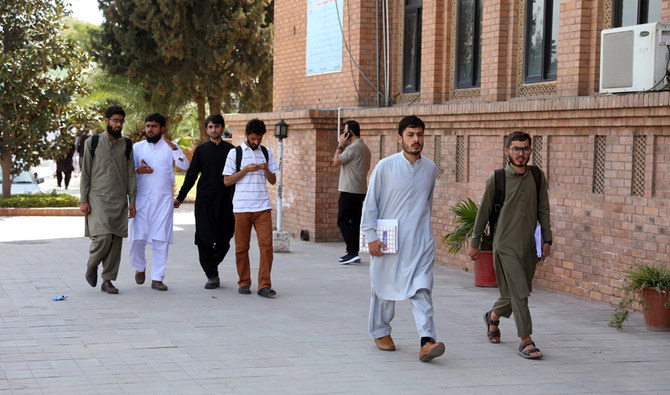
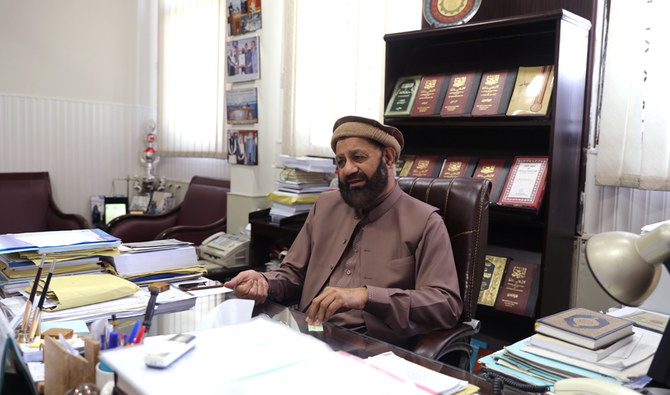
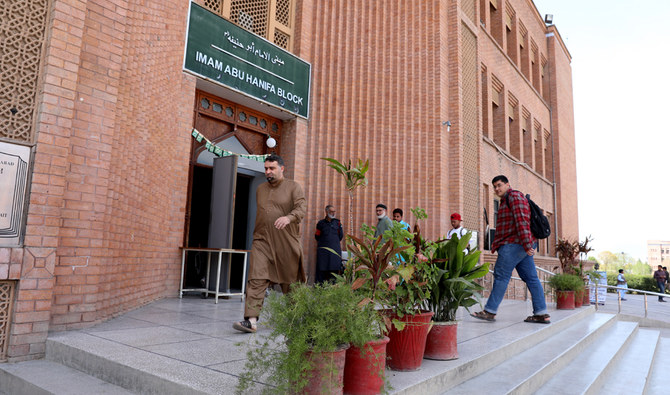
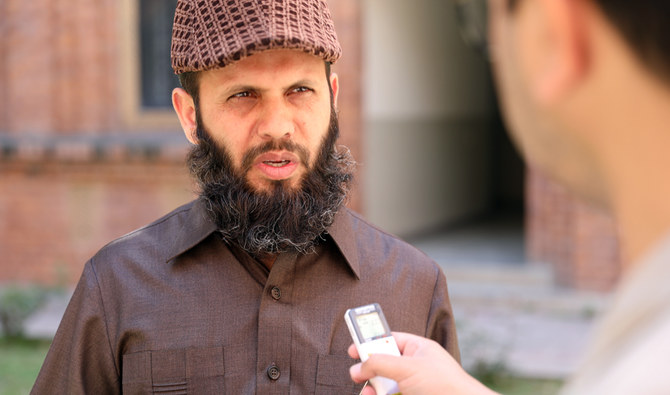
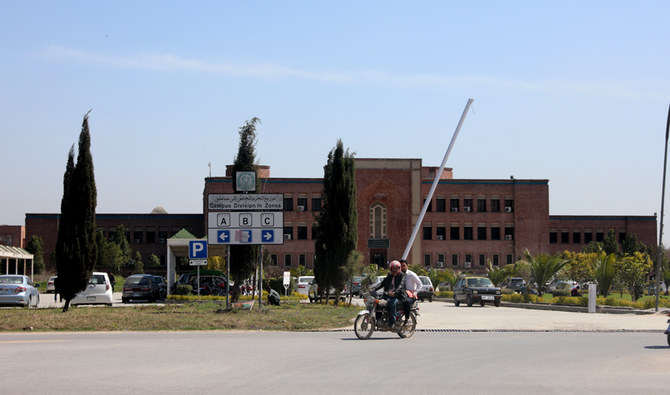
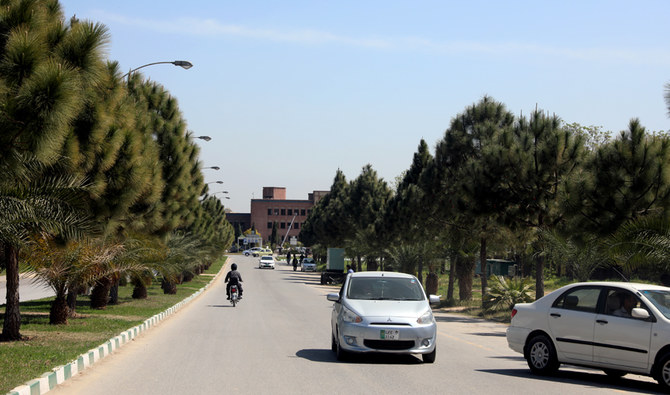
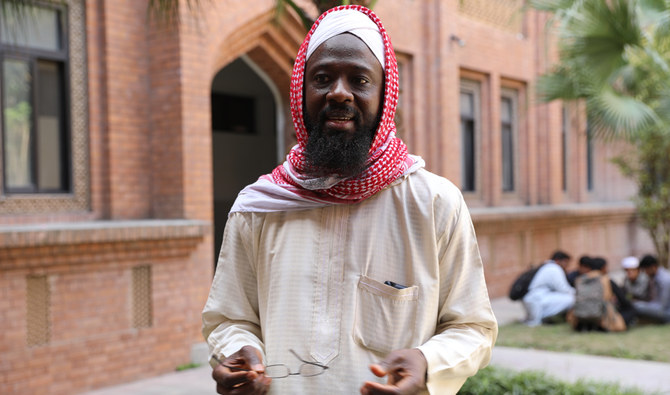
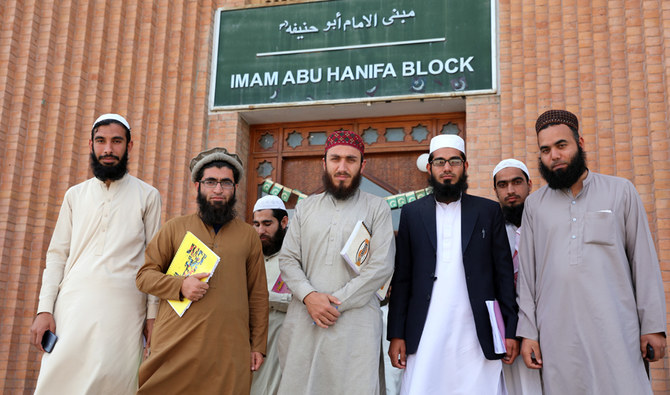
The International Islamic University of Islamabad’s (IIUI) new campus. Deans of Faculty (Pakistani & Foreigners) along with students at the IUI. (AN photo)
2 / 13
The International Islamic University of Islamabad’s (IIUI) new campus. Deans of Faculty (Pakistani & Foreigners) along with students at the IUI. (AN photo)
3 / 13
The International Islamic University of Islamabad’s (IIUI) new campus. Deans of Faculty (Pakistani & Foreigners) along with students at the IUI. (AN photo)
4 / 13
The International Islamic University of Islamabad’s (IIUI) new campus. Deans of Faculty (Pakistani & Foreigners) along with students at the IUI. (AN photo)
5 / 13
The International Islamic University of Islamabad’s (IIUI) new campus. Deans of Faculty (Pakistani & Foreigners) along with students at the IUI. (AN photo)
6 / 13
The International Islamic University of Islamabad’s (IIUI) new campus. Deans of Faculty (Pakistani & Foreigners) along with students at the IUI. (AN photo)
7 / 13
The International Islamic University of Islamabad’s (IIUI) new campus. Deans of Faculty (Pakistani & Foreigners) along with students at the IUI. (AN photo)
8 / 13
The International Islamic University of Islamabad’s (IIUI) new campus. Deans of Faculty (Pakistani & Foreigners) along with students at the IUI. (AN photo)
9 / 13
The International Islamic University of Islamabad’s (IIUI) new campus. Deans of Faculty (Pakistani & Foreigners) along with students at the IUI. (AN photo)
10 / 13
The International Islamic University of Islamabad’s (IIUI) new campus. Deans of Faculty (Pakistani & Foreigners) along with students at the IUI. (AN photo)
11 / 13
The International Islamic University of Islamabad’s (IIUI) new campus. Deans of Faculty (Pakistani & Foreigners) along with students at the IUI. (AN photo)
12 / 13
The International Islamic University of Islamabad’s (IIUI) new campus. Deans of Faculty (Pakistani & Foreigners) along with students at the IUI. (AN photo)
13 / 13
The International Islamic University of Islamabad’s (IIUI) new campus. Deans of Faculty (Pakistani & Foreigners) along with students at the IUI. (AN photo)
Updated 30 March 2019
Follow

Pakistan’s Islamic University region’s hub for promoting Arabic language

  • Since 1980, 40,000 Pakistani and foreign graduates have learnt Arabic from Pakistani and Middle Eastern faculty
  • Currently, around 1,500 Chinese students are learning Arabic at the university

ISLAMABAD: The government owned International Islamic University (IIUI) has been central to promoting the Arabic language in Pakistan, the varsity’s officials said, and credits itself for being the single largest institute responsible for the expansion of the language in South and Central Asian countries.

Since its establishment in 1980, the institute, which has separate campuses for men and women, has produced over 40,000 Pakistani and foreign graduates fluent in Arabic after training under Pakistani and Middle Eastearn faculty, said Najeeb Ahmed, secretary to the president of the IIUI.  

Dr. Muhammad Tahir Hakeem, the dean of the Shari’ah and Law Faculty, said the university was “unique” because it was compulsory for students to learn both Arabic and English in order to complete a degree program while applicants had to be fluent in at least one of the two languages.

The idea for IIUI was conceived by the Organization of Islamic Cooperation at a conference in 1980 where it was agreed that several Islamic learning centers would be set up around the world, including in Pakistan.

IIUI thus started with only nine students as a single degree program inside Islamabad’s notable Quaid-i-Azam University, formerly Islamabad University. Since then, it has grown into a formidable center of Arabic learning where thousands of students from around the world come to learn the language for academic purposes or to help them secure employment in Gulf countries in the future.

Today, IIUI has nine faculties, six autonomous academies, institutes and centers, and 142 academic programs, informed Farooq Adil, spokesperson for the IIUI.

Of its 30,000 students, 14,000 are females, and 2,000 are foreigners from 43 countries studying at a massive campus that covers the entire H-10 sector in Islamabad.


Pakistan launches digital cash aid for low-income families during Ramadan, PM says

Updated 19 February 2026
Follow

Pakistan launches digital cash aid for low-income families during Ramadan, PM says

  • Ramadan relief moves from state-run Utility Stores to targeted digital wallet transfers
  • Government to transfer financial assistance through wallets to support sehri, iftar expenses

ISLAMABAD: Pakistan will provide financial assistance to low-income households through digital wallets during the fasting month of Ramadan, Prime Minister Shehbaz Sharif said on Thursday, announcing a government relief initiative aimed at helping families afford daily meals.

The support program comes as many Pakistanis continue to face elevated food and utility costs despite easing inflation, with Ramadan traditionally increasing household spending on staple foods, fruits and energy consumption.

For decades, government-run Utility Stores Corporation outlets were central to Ramadan relief in Pakistan, selling subsidized flour, sugar, ghee and pulses through special “Ramzan packages” that drew long queues in low-income neighborhoods. In recent years, however, authorities have steadily scaled back the system amid mounting losses, corruption complaints and logistical inefficiencies, shifting instead toward targeted cash transfers delivered through digital wallets and banking channels. 

The change reflects a broader policy move away from state-managed commodity distribution toward direct financial assistance intended to give households flexibility while reducing leakages in subsidy programs.

“The Government of Pakistan has launched a Ramadan package under which financial assistance will be transferred to deserving individuals through digital wallets so that households can maintain sehri and iftar meals,” Sharif said in a message issued by his office.

The prime minister said Ramadan encourages compassion and collective responsibility toward vulnerable segments of society, adding that welfare support was part of the state’s duty during the holy month.

Officials say the digital cash transfers approach improves transparency and reduces corruption risks while enabling faster payments nationwide, particularly in urban low-income communities.

But the shift to fully digital assistance also brings challenges. 

Access to smartphones and reliable mobile Internet remains uneven, particularly in rural areas and among older recipients, while many low-income households use SIM cards registered to someone else, complicating verification.