KARACHI: Residents and local traders in Gwadar expressed mixed emotions on Friday as Prime Minister Imran Khan laid the foundation stone for the $230 million New Gwadar International Airport in the city which is fast becoming the economic hub of the country.
“We are unaware of what benefits we will be getting from the new international airport. However, the thing we know for sure is that it has increased VIP movement and closed our business for three days,” Ghulam Hussain Dashti, President of ‘Anjuman Tajran Gwadar’, a body representing small traders in Gwadar, said.
The city which lies in the southwestern Balochistan province is the crown jewel of China’s $60 billion China Pakistan Economic Corridor (CPEC) in terms of energy and infrastructure projects in Pakistan.
The plan for Gwadar includes turning it into a trans-shipment hub and a mega port to be built alongside special economic zones from which export-focused industries will ship goods around the world. Additionally, roads, rail link and energy pipelines will connect the deepwater Gwadar port to China’s western regions.
Once completed in three years, the Gwadar airport, for which an agreement was signed in May 2017, will be the second-largest such facility in Pakistan.
However, several from the nearly 138,438 local residents said they were waiting to reap benefits from previous projects.
“We want development and progress in Gwadar. We want our city to prosper. But we the locals should be partners in this prosperity,” Dashti told Arab News.
Meanwhile, Sardar Shaukat Popalzai, President of the Balochistan Economic Forum told Arab News that the ground-breaking ceremony for the airport will not have “any immediate impact.”
“As the operations of the commercial port and that of the free-zone continues to take time, the ground-breaking ceremony, at the moment, is not going to have any immediate impact. However, once the city becomes an active port city, things will change,” Popalzai said.
He added that, unfortunately, such events create more mental agony for the area’s population. “With no water and electricity and even without basic necessities how can people consider these moments as positive development?” he asked, before quickly adding a caveat – if CPEC’s commitment of socio-economic development is realized, the people of Gwadar would enjoy its fruits and help change the economic scenario of the world.
“The federal and provincial governments should step up the development of hinterland and more importantly the required infrastructure which is badly lacking at this time,” Popalzai said.
Meanwhile, President of the Gwadar Chamber of Commerce & Industry, Mir Naveed Baloch, is optimistic that the development would result in an improved standard of living for the local population.
“The development everywhere in the world has impacted the lives of local population and Gwadar becoming a major economic and trade hub will certainly improve the standard of life of people here,” Baloch told Arab News.
He added that the new Gwadar airport is being built on 4,400 acres of land and would be a transit international airport just like the one in Dubai, UAE.
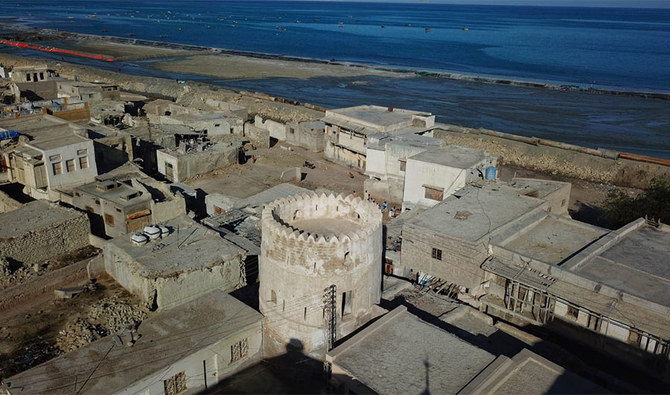
“Gwadar has an excellent seashore and the entire coastal belt has God gifted treasures which offer a mesmeric view for the tourists,” he said.
“The development and connectivity through roads and air will bring happiness in the life of people of Gwadar in particular and the rest of Balochistan in general,” he said.
Anwar Shah, a local youth, concurred. He said that if those involved in the planning of CPEC and Gwadar airport took the locals’ concerns into consideration, the entire initiative could prove to be a milestone.
“The locals should be the immediate beneficiary,” he said.


![]()
![]()
![]()

Curiosity and hope in Gwadar as PM Imran Khan launches new airport


Curiosity and hope in Gwadar as PM Imran Khan launches new airport
- With international access, tourists will be able to explore mesmerizing beauty of Balochistan, officials say
- Premier lays the foundation stone for the $230mn facility
Latest updates



© 2026 SAUDI RESEARCH & PUBLISHING COMPANY, All Rights Reserved And subject to Terms of Use Agreement.