

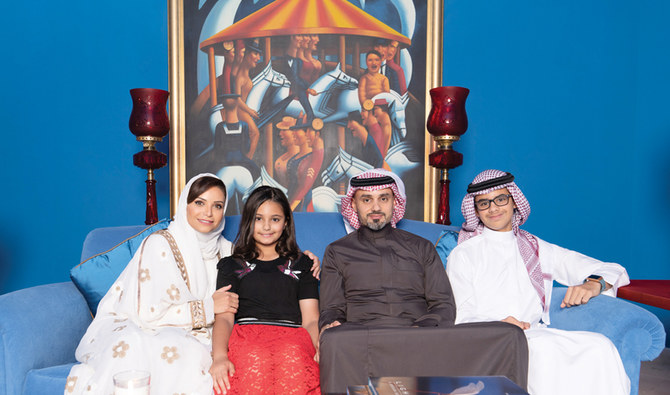
TheFace: Rozana Al-Tayyar, professional mediator in business disputes

Family photo of Rozana Al-Tayyar. (AN photo by Ziyad Alarfaj)
Updated 22 March 2019
Follow

TheFace: Rozana Al-Tayyar, professional mediator in business disputes

  • Her experience as a financial analyst  partly managing complex relationships gave her the perfect education in how to become a mediator
  • "I see stories from every angle, and I help clients collaborate to see the other sides, and reach an agreement," she says

The business arena is a tough one, and ultimately, it is all about ensuring the success and growth of an endeavor. They do not always work out. Partners go through various disputes, often very costly and time-consuming, and unfortunately, they sometimes end up in court.

I am a business mediator — a third party to disputes briefed to help resolve them amicably, long before they reach that stage.

I am the daughter of a diplomat and grew up in London before moving to Athens with my family. I majored in computer science and engineering, which led to a placement at an oil refinery company in my senior year at college. I wanted to learn and I wanted to challenge myself, and soon after graduating, when we moved to Vienna, I was offered a job at the Saudi British Bank (SABB).

Starting as a financial analyst, part of my role was managing complex relationships. I spent 14 years at SABB honing my people skills, earning the trust of clients, learning how to negotiate and to read body language. It gave me the perfect education in how to become a mediator.

I founded my company TASWEA (meaning “settlement”) four years ago, when not many people knew or appreciated corporate mediation as a concept. In modern business culture, however, managing relationships and reputations is vital, and many people would rather resolve things with a professional behind closed doors than risk damage by feuding in public. It soon caught on.

As part of our culture, we are afraid of conflict but are quick to take sides, judge and apportion blame. But we mediators have a saying: “There are three sides to every story — there are the sides of both parties, and then there is the truth.” I see stories from every angle, and I help clients collaborate to see the other sides, and reach an agreement.

A recent UK study found that 70 percent of cases that go through professional mediation find an amicable solution. We allow each party to feel empowered, to express their emotions in a safe environment instead of betting the fate of their business on a legal route.

The best people to decide solutions to conflicts are often those involved in them. This is the most important point of mediation. All I do is help facilitate that dialogue, and as a mediator I find it extremely rewarding to make clients realize they have that power. 


Saudi Arabia witnessing comprehensive cultural development, says expert

Updated 14 February 2026
Follow

Saudi Arabia witnessing comprehensive cultural development, says expert

  • Clotilde Entrecanales of Acciona hails pace of change in Kingdom

JEDDAH: Museums, exhibitions and art centers play a crucial role in the development of free and educated societies such as the one now burgeoning in Saudi Arabia, an expert has told Arab News.

Clotilde Entrecanales, the Spanish art historian and cultural executive who heads Acciona Living & Culture, a leading creator of technology-driven interactive museums, exhibits and events, said the Kingdom is making efforts to expand the role of culture development to show the world the greatest possible cultural offer.

She added that the Kingdom has quickly infused new energy into the region, and is rapidly establishing itself as a global cultural hub through massive investment in world-class museums, public art and international events, aligning with its 2030 vision.

She said: “With around 70 percent of the population under 30, cultural consumption looks very different than in Europe or the US. These spaces can’t feel like quiet, isolated institutions … they need to be fast, dynamic, brave and deeply connected to the city, blending into everyday urban life rather than sitting apart from it.”

Asked about the role of these sites in the evolving global cultural landscape, particularly in emerging cultural hubs like Saudi Arabia, Entrecanales said: “Our vision is to be a purpose-led partner for cultural and entertainment institutions, helping them be more relevant, connected, inclusive and sustainable.”

She added: “In emerging cultural hubs like Saudi Arabia, that approach feels especially relevant. The cultural transformation underway is moving fast — with major heritage and cultural destinations being developed and opened to the world.”

Speaking about her impression of the Kingdom’s approach to blending heritage with modernity face, Entrecanales said: “Others who attempt to achieve this balance often end up turning heritage into a theme, a layer of storytelling or a cultural program. What feels different about Saudi’s approach is how much pressure there is to treat heritage as the foundation, not just the surface.

“When you’re building at this speed and scale, there’s always a risk that history becomes a backdrop instead of a backbone. The projects that work best are the ones that slow down just enough to let the past set the rhythm for the present.”

Regarding opportunities and challenges, she said: “The opportunity is nothing less than positioning Saudi Arabia as a global cultural center. The challenge, as always, lies in balancing the speed and scale of that ambition with long-term sustainability and a sense of authenticity that remains credible and rooted.”

She added: “You can really feel this in places like the Islamic Arts Biennale, which shows hundreds of historical artefacts of the Islamic world, while re-framing them through contemporary scenography and designs by some of the best design studios in the world; or in AlUla, a world-class heritage site that hosts a major contemporary platform like Desert X, allowing ancient context and present-day artistic practice to coexist in a way that feels genuine.”

Under her guidance, ACCIONA Cultura aspires to create museums and cultural experiences that function as landmarks while fostering sustainable, inclusive and immersive interactions.

She elaborated on how the company is integrating technology, culture, and sustainability to preserve and promote the region’s cultural heritage: “We always start with human connection and storytelling: what’s the story, what should people leave with? Tech comes later.”

Recently, ACCIONA Cultura has been involved in significant projects in Saudi Arabia and is looking forward for more.

She said: “Right now, for example, we’re designing and curating a museum gallery where the entire space is shaped by the practice of a Saudi artist. Another example is the Net Zero exhibition at the King Abdulaziz Center for World Culture (Ithra), where we brought together Saudi and international artists to explore sustainability and our relationship with the planet, including voices like Dina Haddadin, Mohammed Al-Faraj, and Zahrah Al-Ghamdi.”

She added: “One of the projects I’m most proud of isn’t a museum, but our NEXT IN Summit, which we’ve hosted in two editions in our ACCIONA Campus in Madrid, highlighting the Kingdom’s unprecedented cultural momentum as it builds future-facing institutions with a startup mindset.”

About further collaboration with Saudi Arabia, she said: “Let’s just say … something’s definitely simmering in the kitchen.”

Commenting on being recognized among the Blooloop 50 Museum Influencers for 2025, she said: “It means a lot. More than anything, it feels like a nod to the years of teamwork and dedication behind Acciona Cultura, rather than to me personally.”