

TheFace: Rozana Al-Tayyar, professional mediator in business disputes

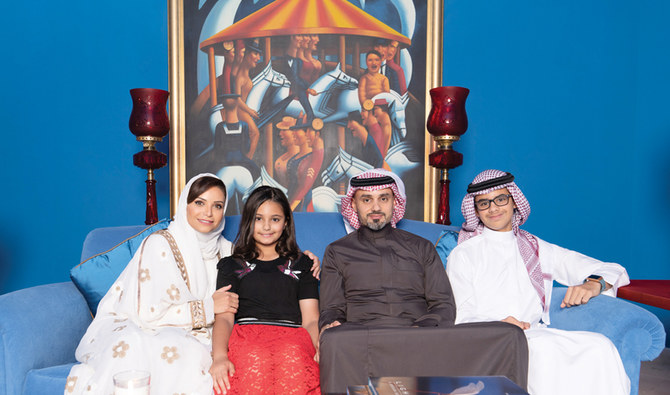
Family photo of Rozana Al-Tayyar. (AN photo by Ziyad Alarfaj)
Updated 22 March 2019
Follow

TheFace: Rozana Al-Tayyar, professional mediator in business disputes

  • Her experience as a financial analyst  partly managing complex relationships gave her the perfect education in how to become a mediator
  • "I see stories from every angle, and I help clients collaborate to see the other sides, and reach an agreement," she says

The business arena is a tough one, and ultimately, it is all about ensuring the success and growth of an endeavor. They do not always work out. Partners go through various disputes, often very costly and time-consuming, and unfortunately, they sometimes end up in court.

I am a business mediator — a third party to disputes briefed to help resolve them amicably, long before they reach that stage.

I am the daughter of a diplomat and grew up in London before moving to Athens with my family. I majored in computer science and engineering, which led to a placement at an oil refinery company in my senior year at college. I wanted to learn and I wanted to challenge myself, and soon after graduating, when we moved to Vienna, I was offered a job at the Saudi British Bank (SABB).

Starting as a financial analyst, part of my role was managing complex relationships. I spent 14 years at SABB honing my people skills, earning the trust of clients, learning how to negotiate and to read body language. It gave me the perfect education in how to become a mediator.

I founded my company TASWEA (meaning “settlement”) four years ago, when not many people knew or appreciated corporate mediation as a concept. In modern business culture, however, managing relationships and reputations is vital, and many people would rather resolve things with a professional behind closed doors than risk damage by feuding in public. It soon caught on.

As part of our culture, we are afraid of conflict but are quick to take sides, judge and apportion blame. But we mediators have a saying: “There are three sides to every story — there are the sides of both parties, and then there is the truth.” I see stories from every angle, and I help clients collaborate to see the other sides, and reach an agreement.

A recent UK study found that 70 percent of cases that go through professional mediation find an amicable solution. We allow each party to feel empowered, to express their emotions in a safe environment instead of betting the fate of their business on a legal route.

The best people to decide solutions to conflicts are often those involved in them. This is the most important point of mediation. All I do is help facilitate that dialogue, and as a mediator I find it extremely rewarding to make clients realize they have that power. 


Saudi hospitality boom sparks innovation beyond the plate

Chefs at Julien prepare meals to pair with Diageo drinks. (AN photo by Basmah Albasrawi)
Updated 4 sec ago
Follow

Saudi hospitality boom sparks innovation beyond the plate

RIYADH: As restaurants and hotels in Saudi Arabia refine their culinary identities, beverages are increasingly being treated as crafted experiences in their own right, shaped by technique and intention.

At the Four Seasons Riyadh, Diageo hosted a private tasting at Tonic Bar followed by a 10-course dinner at Julien, offering a snapshot of how this evolution is beginning to take shape, as international players and local venues test new approaches to pairing and presentation. 

Speaking to Arab News, Nick Rees, marketing director of Diageo MENA, pointed to the rapid growth of the nonalcoholic segment globally and in the region: “There’s a far faster growing percentage of it (the industry) is non-alcohol … There (are) trends globally … A lot of it will be pointed to wellness, mindful drinking.”

Rees said that Saudi Arabia’s fast-developing culinary and hospitality scene calls for beverages that match the level of excellence seen in kitchens across the Kingdom.

“It’s kind of the lack of choices and that’s where we want to be able to provide people the option, and people here absolutely have the same kind of talent and desire as their counterparts behind the kitchen,” he said.

“That’s where our role is to give people the kind of core ingredients for them to be able to work with … we have many more brands that we would love to introduce to the Kingdom.”

The dinner at Julien paired dishes with drinks made using Tanqueray 0.0, Captain Morgan 0.0, and Guinness 0.0, offering a glimpse into the range of styles Diageo is bringing to the market.

Flavor profiles ranged from light and refreshing combinations with cucumber and capers brine to richer, malt-forward blends, each designed to complement the accompanying dishes, from ravioli to black cod. 

Rees emphasized that pairing food with thoughtfully crafted beverages is becoming an essential part of the hospitality experience. 

“In the Kingdom, we’re looking at giving people the experience that currently is not available to them because I know for sure that the kind of quality and expertise and craftsmanship that can go into creating some of these drinks is absolutely as exciting as the work that the chefs would do with their food,” he said.

Anthony Abou Haider, head of Gulf at Diageo, said the company sees long-term potential in Saudi Arabia’s hospitality sector. 

“It’s such an opportunity to be a part of this transformation journey,” he told Arab News. “We’re not looking for a short-term gain, we’re looking at a very long-term gain here because whatever we do now is building for the future.”