TEHRAN: Iran has denied a claim by the Turkish interior minister that it took part in a joint operation on Monday targeting Kurdish rebels in the border area.
In recent weeks, Ankara has talked up the prospects of joint military action with Tehran against the Kurdistan Workers’ Party (PKK) and its allies but Monday marked the first time it had spoken of a joint operation being carried out.
“Iran’s armed forces have no role in this operation,” the official IRNA news agency quoted an “informed source” in the general staff as saying on Monday evening.
However Iran “will forcefully confront any group that seeks to create unrest on our country’s soil,” the source added.
Earlier on Monday, Turkish Interior Minister Suleyman Soylu said: “We started staging a joint operation with Iran against the PKK on our eastern border as of 8 am (0500 GMT).”
Soylu did not specify where the joint operation was taking place but President Recep Tayyip Erdogan has said previously that joint military action would focus on PKK rear bases in Iraq near where the three countries’ borders meet.
The Turkish military has carried out repeated bombing campaigns against PKK targets in Iraq’s northern mountains during its more than three-decade campaign to crush the rebels’ campaign for Kurdish self-rule in southeastern Turkey.
In recent years, Tehran too has carried out operations in northern Iraq against suspected rear bases of the PKK’s Iran-focused ally, the Party of Free Life of Kurdistan (PJAK).
PJAK is one of a number of Kurdish rebel groups that have fought the Iranian security forces in ethnic Kurdish districts along the border.
Another PKK ally, the People’s Protection Units (YPG), is the main Kurdish armed group in Syria where, to the fury of Ankara, it has been a key ally in the US-led campaign against the extremists of the Daesh group which is now drawing to a close.


![]()
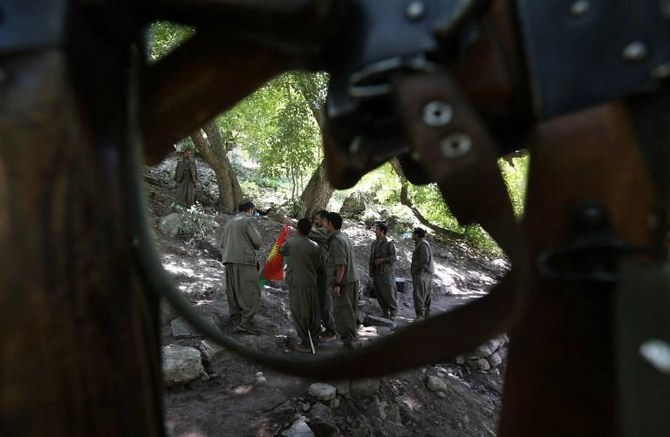
Iran denies joint raid with Turkey against Kurd rebels
Iran denies joint raid with Turkey against Kurd rebels
- Minister Suleyman Soylu said the countries were conducting joint operations without specifying location
- Iran previously carried out operations against Party of Free Life of Kurdistan


Latest updates


© 2026 SAUDI RESEARCH & PUBLISHING COMPANY, All Rights Reserved And subject to Terms of Use Agreement.